
2024
2024 was a full and rewarding year, with fieldwork stretching from February through December. It took me to new places and introduced me to many new faces along the way. So, with that being said, let’s start in February. The 16th field season for the Burrowing Owl demography study was organized, including two new core members: Solai LeFay and Gabriela Mendez. Solai joined as a new master’s student, with her research on the Burrowing Owls at the Depot. Previously, she had worked with other owl species through the Owl Research Institute. Gabriela came all the way from Brazil, where she had previously worked with owls for her master’s. Together, the three of us were ecstatic to lead the season.
In February, Solai and I left for northeast Oregon for a week’s worth of prep work on the Depot. Others from the Oregon National Guard and the Confederated Tribes of the Umatilla Indian Reservation joined us. The days were spent clearing the artificial burrows and upgrading sites with better-designed burrows. The mild winter led to an abundance of male owls that stayed and wintered in the study area.
In April, I joined Dave Oleyar and others for a week in southeast Arizona for the HawkWatch Following Forest Owls program. Here, we surveyed for the six small owls of study and even caught a few, including an Elf Owl on my 21st birthday. What a present!
The start of the BUOW season came flying in with the start of May. Gabriela, Solai, and I quickly determined that it was going to be a special year, not just for the connection we had together, but also for the abundance of owls on the Depot. Every site we checked had a nest, and by the end of the year, we had recorded over 100 nests and over 500 young. What a record-shattering year. Within the season, a few others made appearances, including DJ! For the final three weeks of May, DJ, along with Joris De Raedt (a fabulous scientific illustrator from Belgium), Anahi Formoso (a passionate biologist from Argentina), and Dries Van Nieuwenhuyse (a master statistician with a focus on wildlife research), joined us in the field for daily tasks and a few side projects. Lindsay Chiono (a wildlife habitat ecologist with the Confederated Tribes of the Umatilla Indian Reservation) frequently joined us in the field as well.
While Solai and Gabriela wrapped up the final two weeks of the BUOW season, I made my way to Arizona, once again joining Dave Oleyar and Kassandra Townsend in the field. We worked with citizen scientists from Earthwatch to research the six focal owl species — Elf Owl, Northern Pygmy-Owl, Flammulated Owl, Northern Saw-whet Owl, Whiskered Screech-Owl, and Western Screech-Owl. You can find out more about this program by visiting HawkWatch International’s website.
A few weeks later, in July, I was able to join the incredible Marcus Mika on the northern Following Forest Owl study site in Utah. Here, Flammulated Owls are the main focus of study as they are abundant in the study area. This was my first hands-on experience with this species, as well as the Northern Saw-whet Owl. The beauty of both species stood out to me in their own unique ways. The new experiences and skills I gained from my short period here are invaluable to me.
In early December, I finished my finals for the fall term and headed to Aruba, a small island country in the southern Caribbean. Here, I joined an eager team on a mission to collect morphological data on the endemic subspecies of the Burrowing Owl found in Aruba. The team consisted of DJ, Anahi, Dries, and me again, but also some new faces, including Lauren Meads and Lia McKinnon (both from the Burrowing Owl Conservation Society of BC), Keith Swindle and Rachel Neville (two experienced and insightful biologists), Cynthia Steiner (a genetics guru from the San Diego Zoo), and Greg Peterson (the director of the local non-profit Aruba Birdlife Conservation). Together, we made our way around the island collecting crucial data for the conservation of the Burrowing Owl.
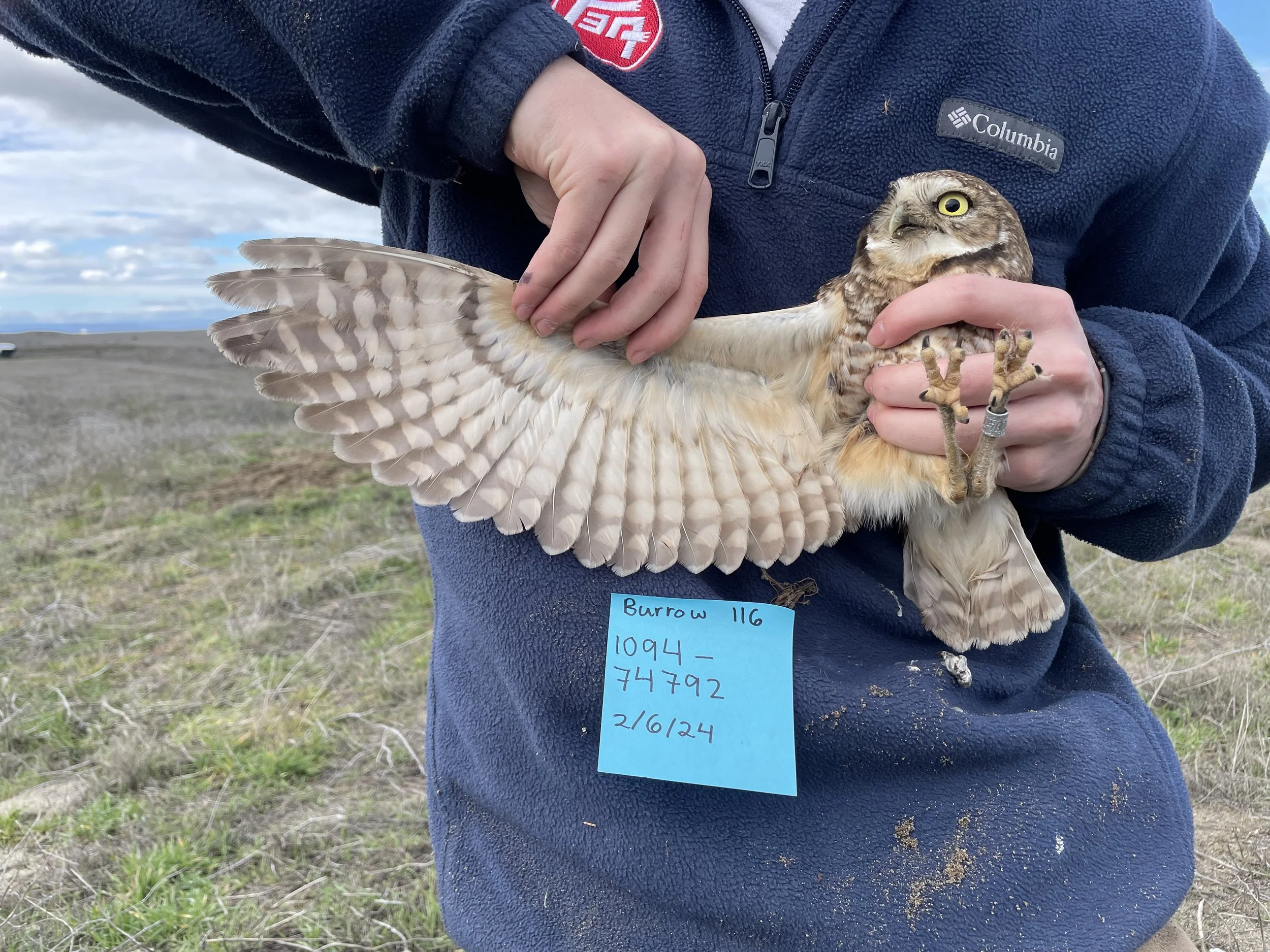
Wing photo of a male BUOW.
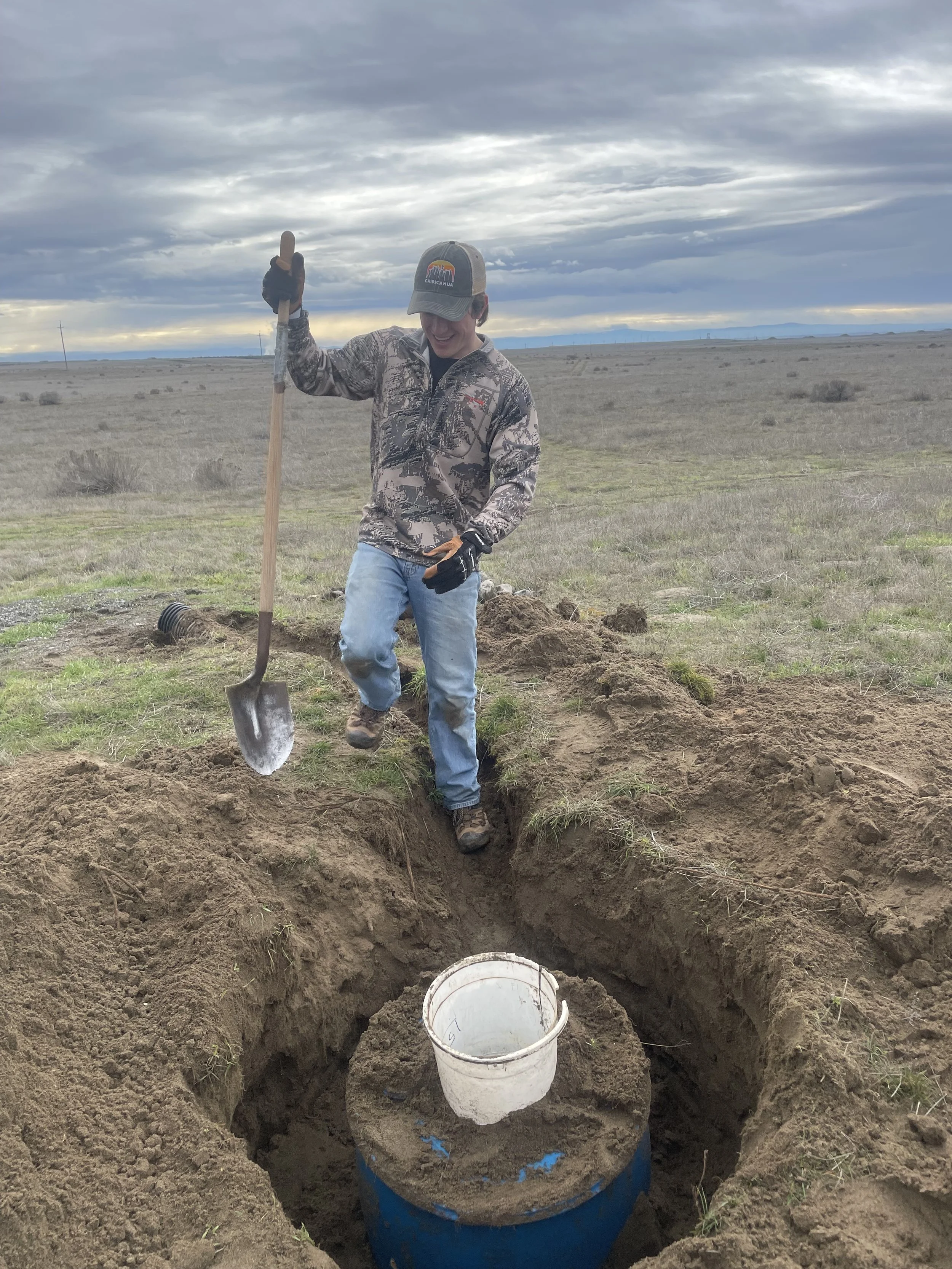
Digging out and replacing an old burrow.
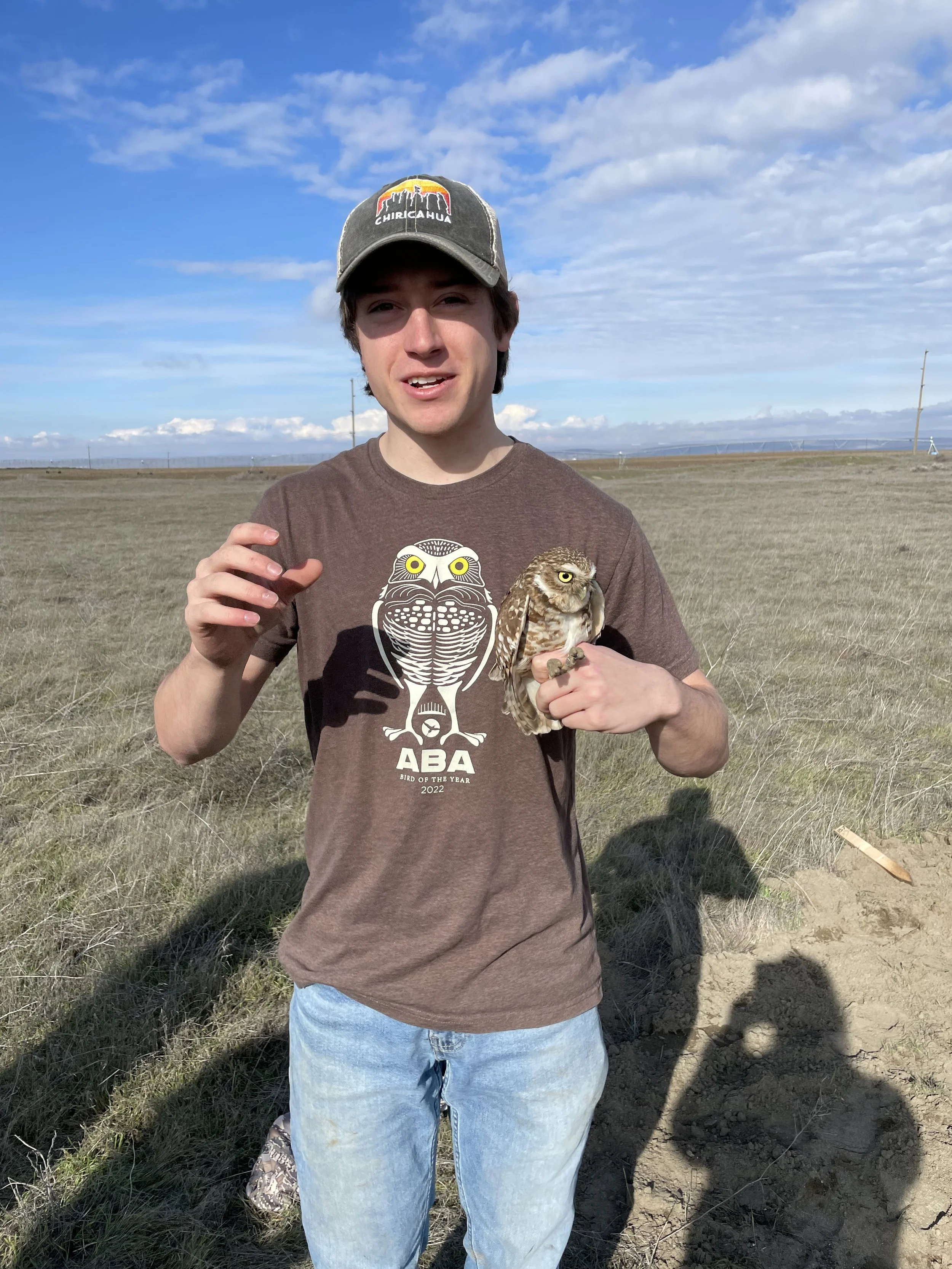
Me talking with the group about Burrowing Owls.
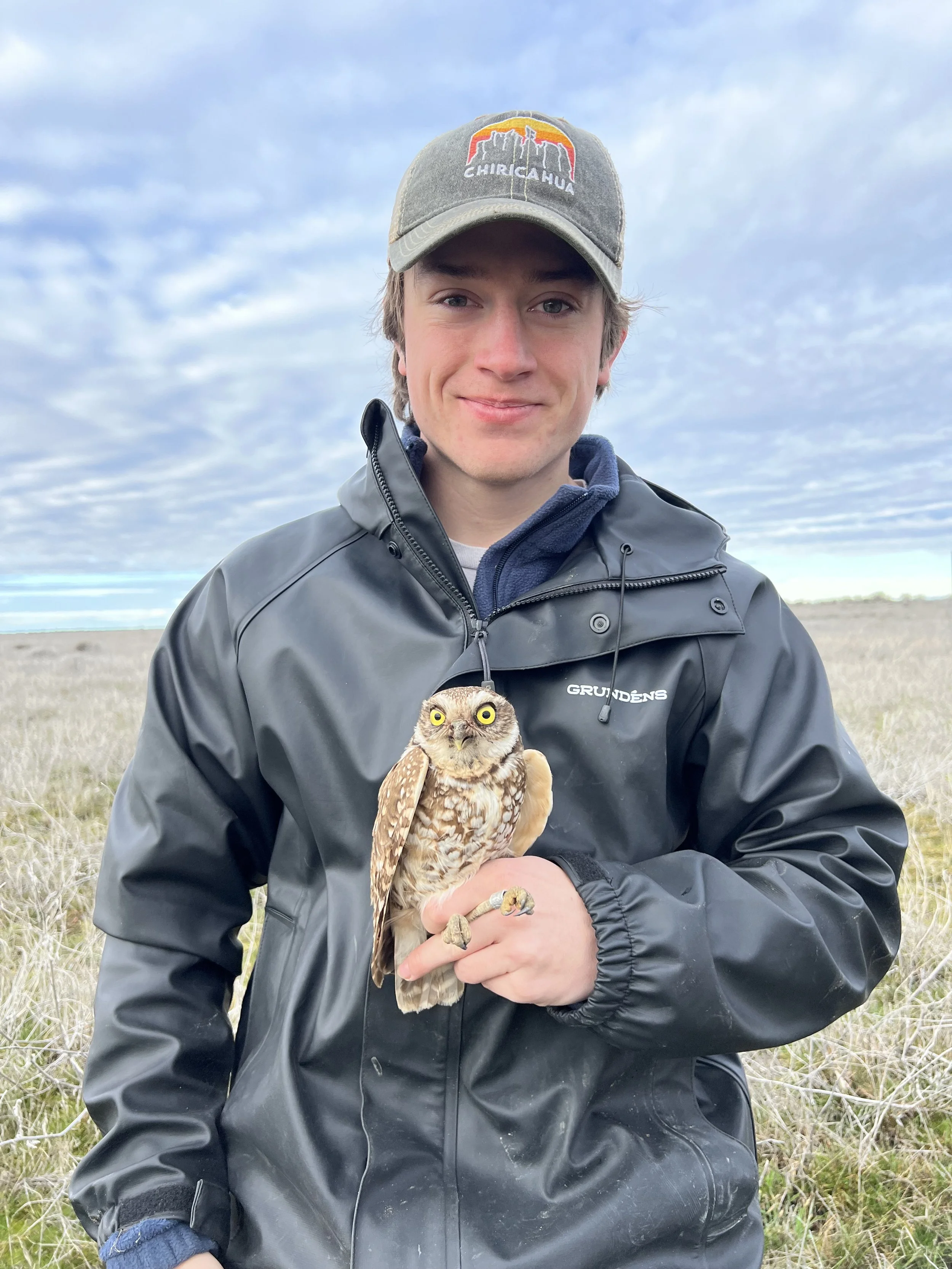
A BUOW and I posing for a quick pic.
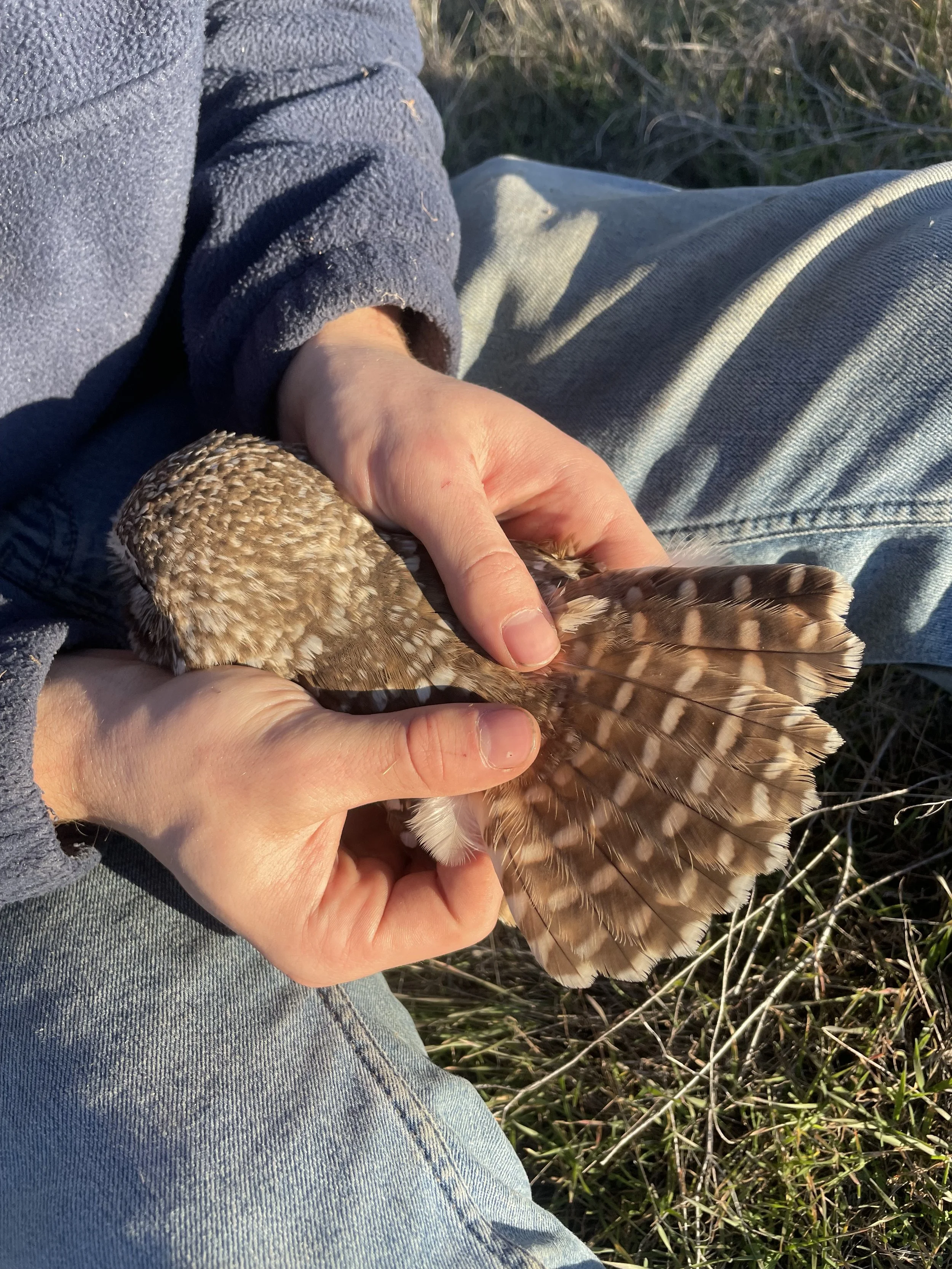
Tail feathers of a BUOW.
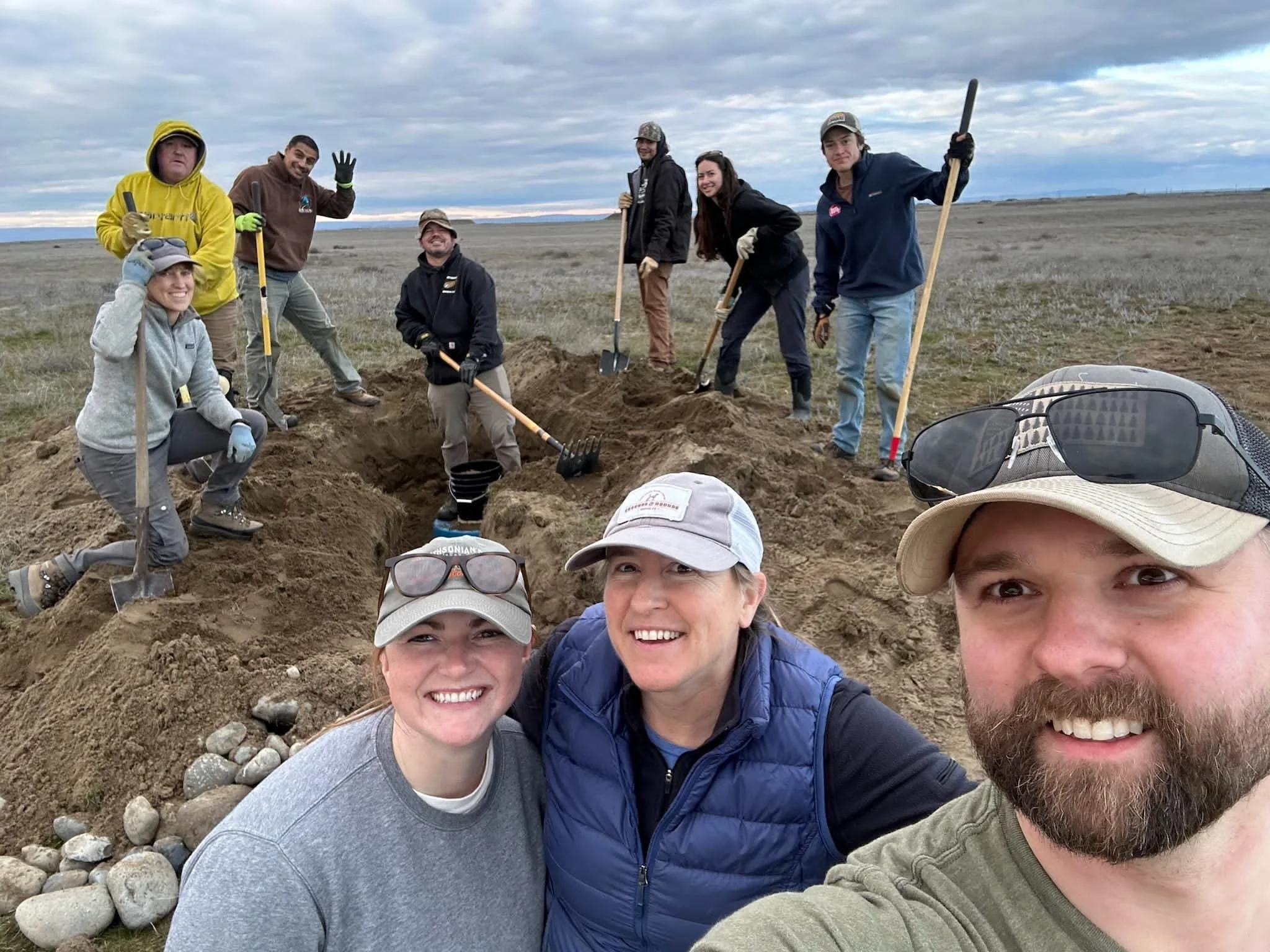
Group selfie as we installed an upgraded burrow.
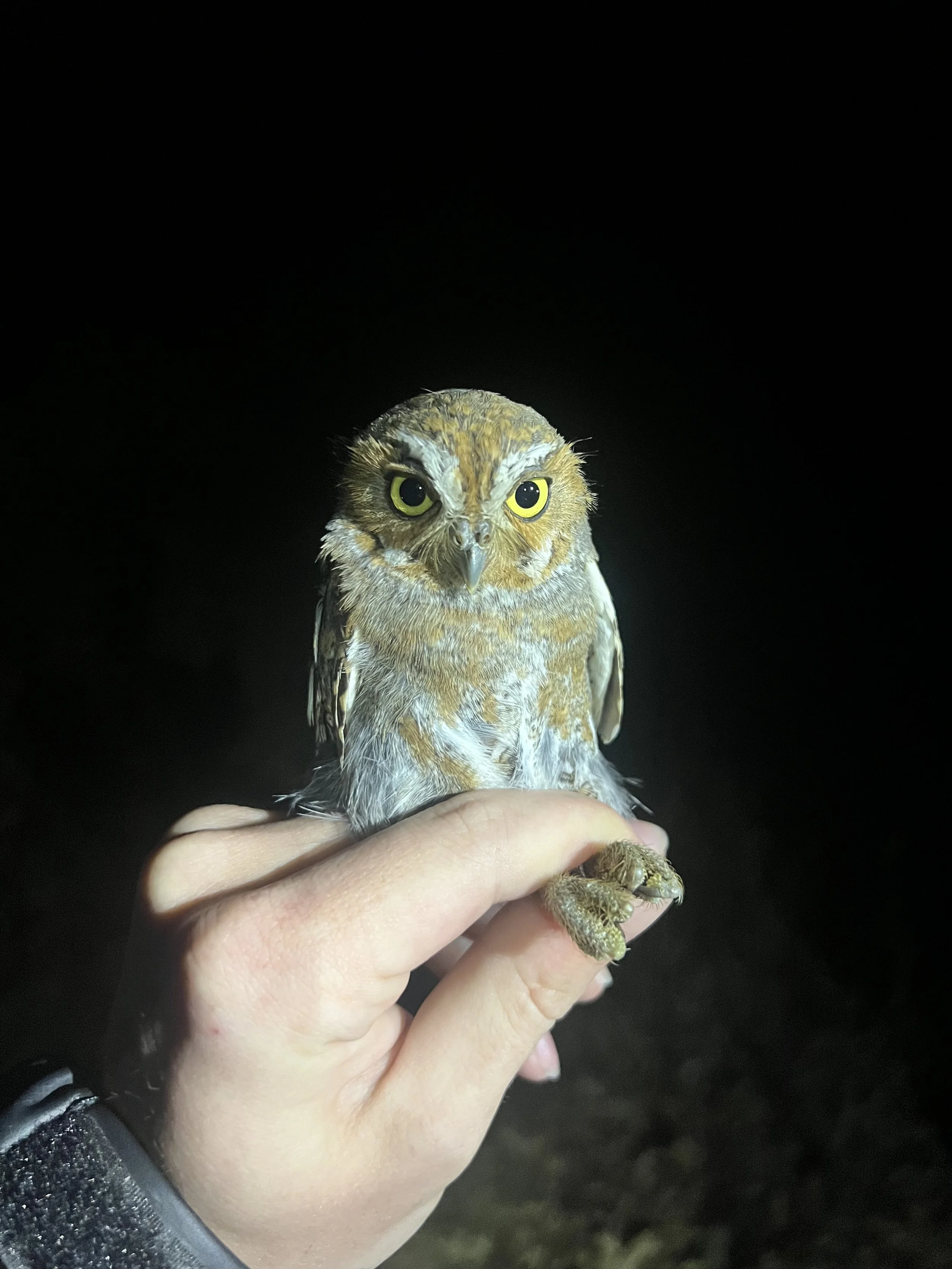
The Elf Owl we caught on my birthday!
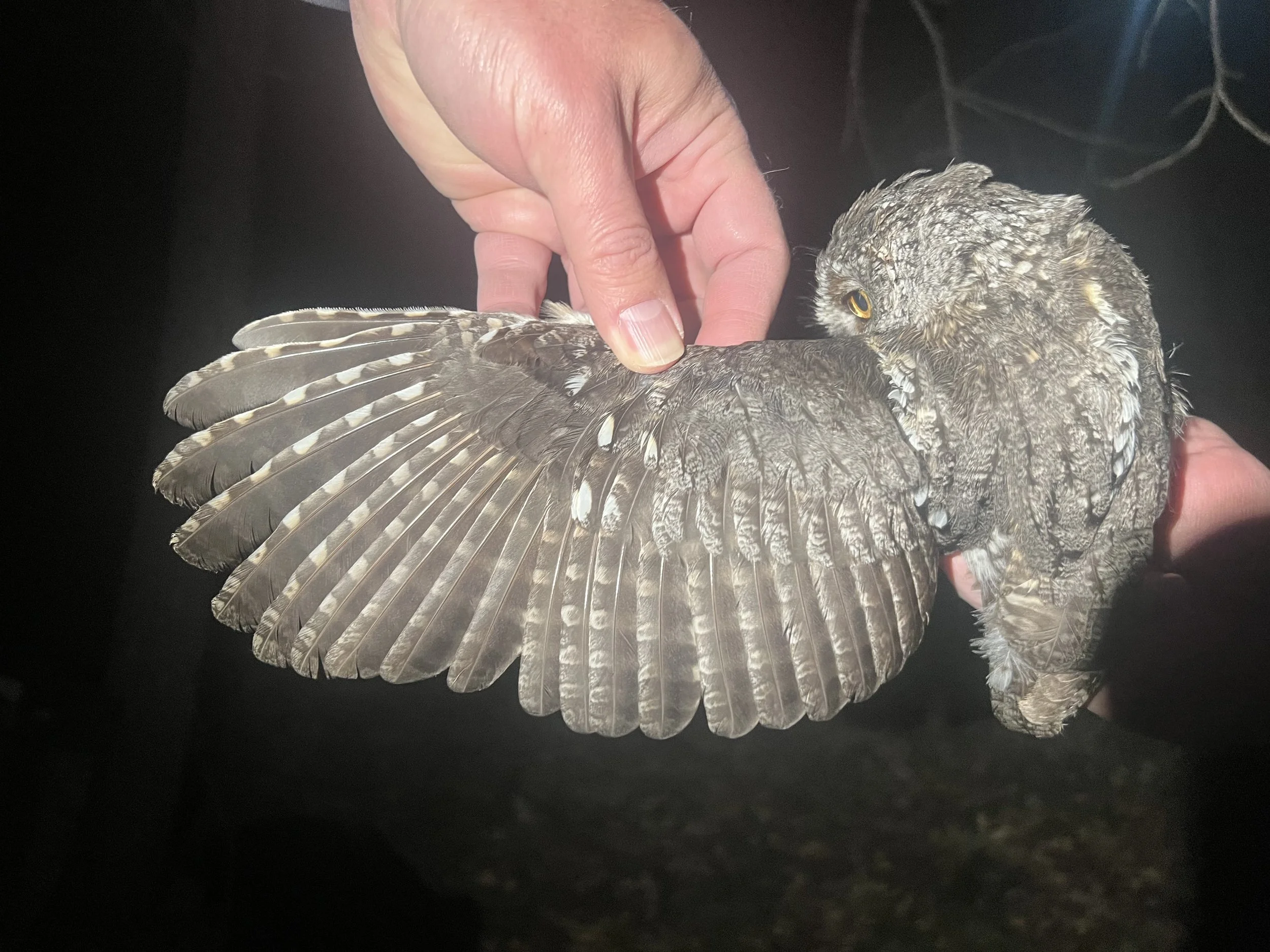
Screech owl wing.
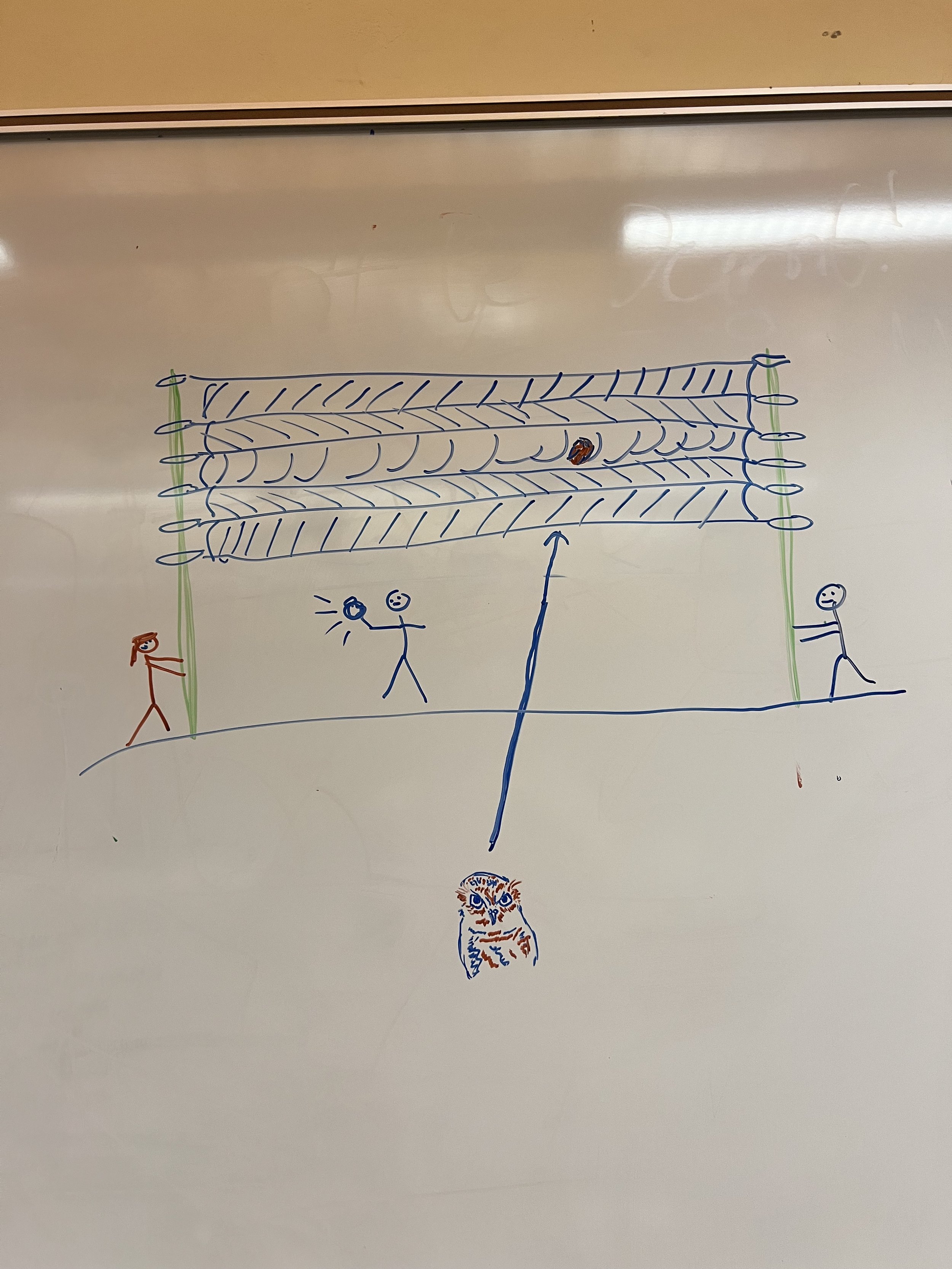
Dave's illustration. He's getting better!
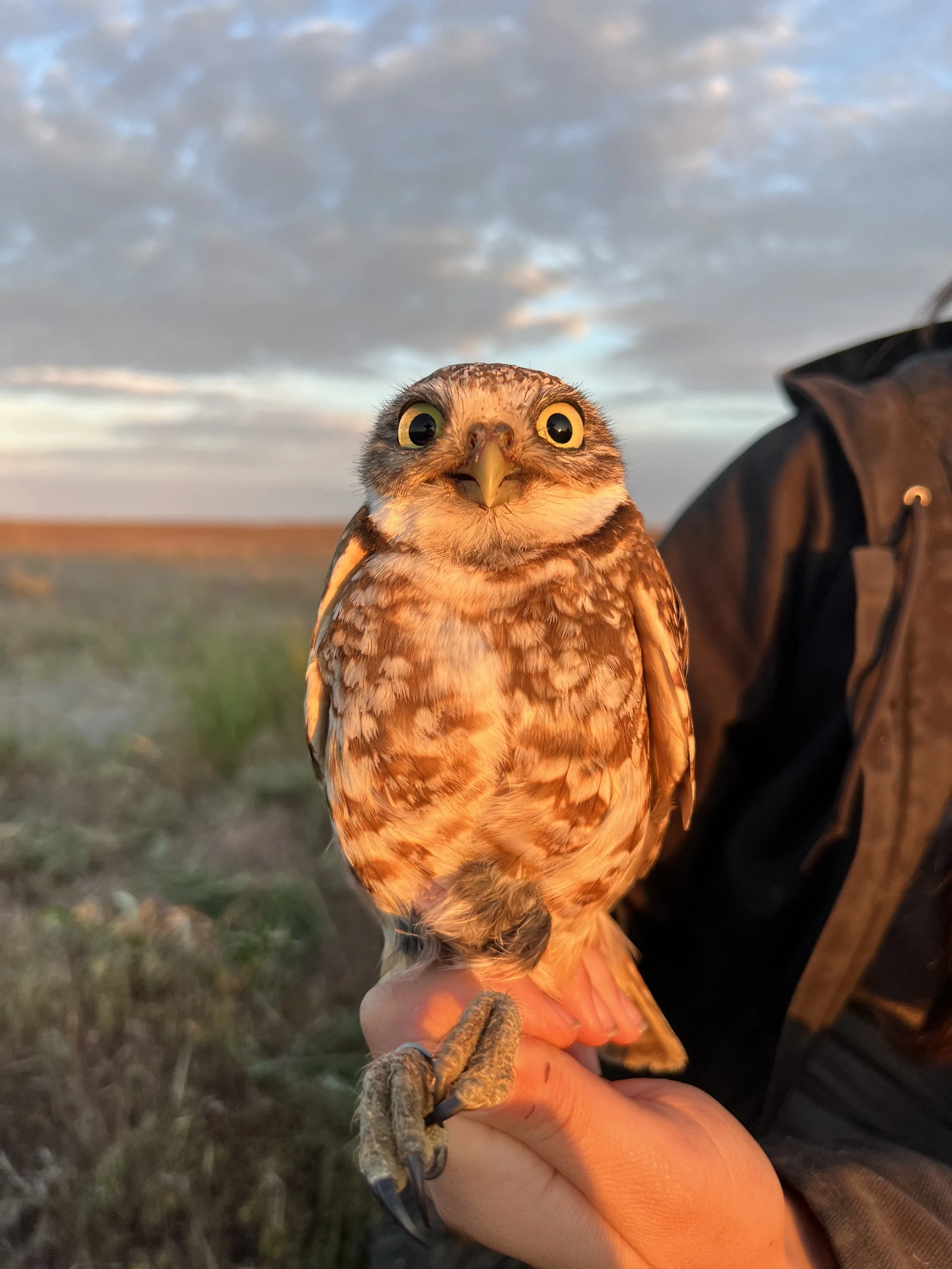
One of the first captured BUOW of the field season.
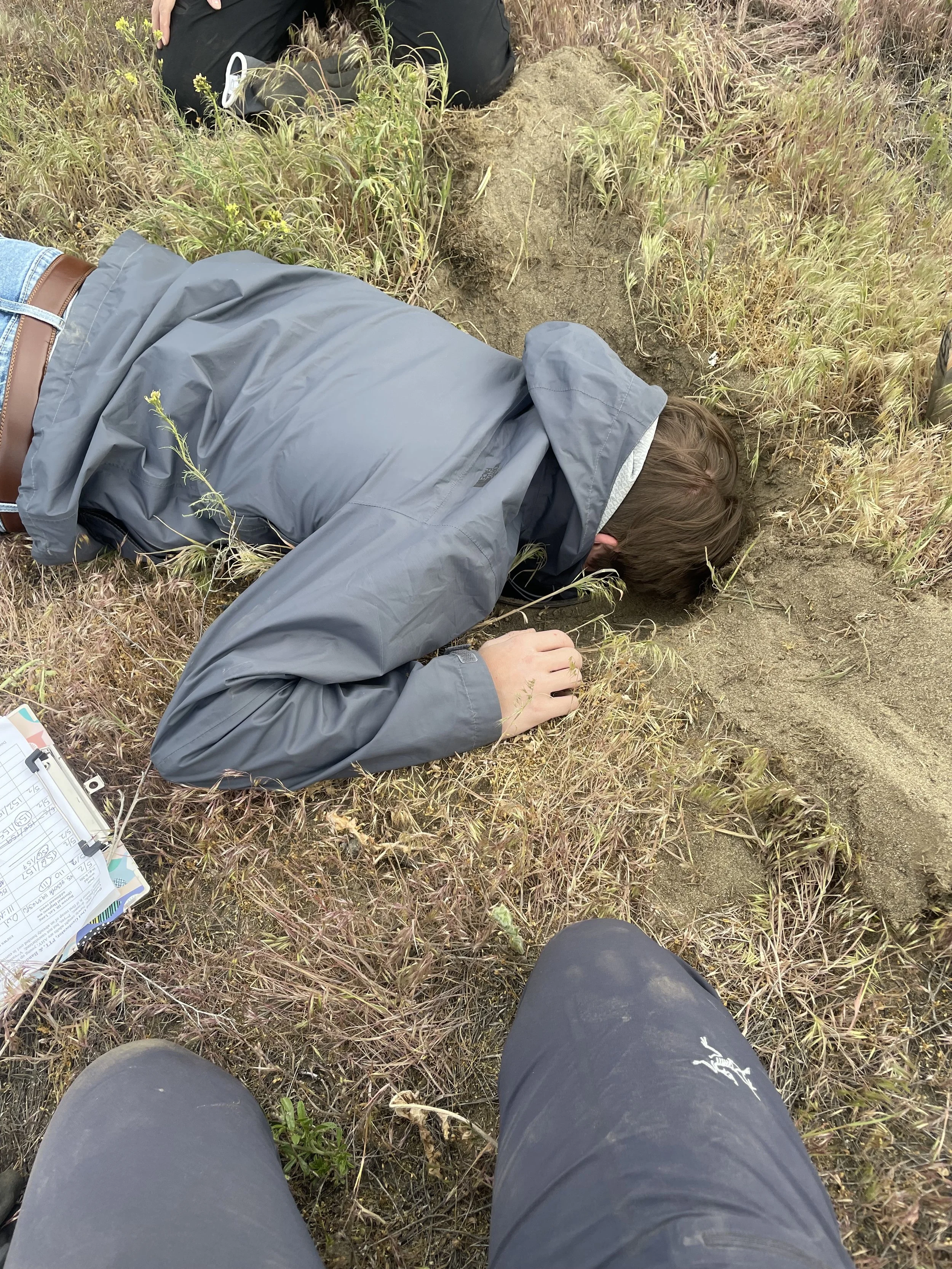
Average Burrowing Owl biologist moment.
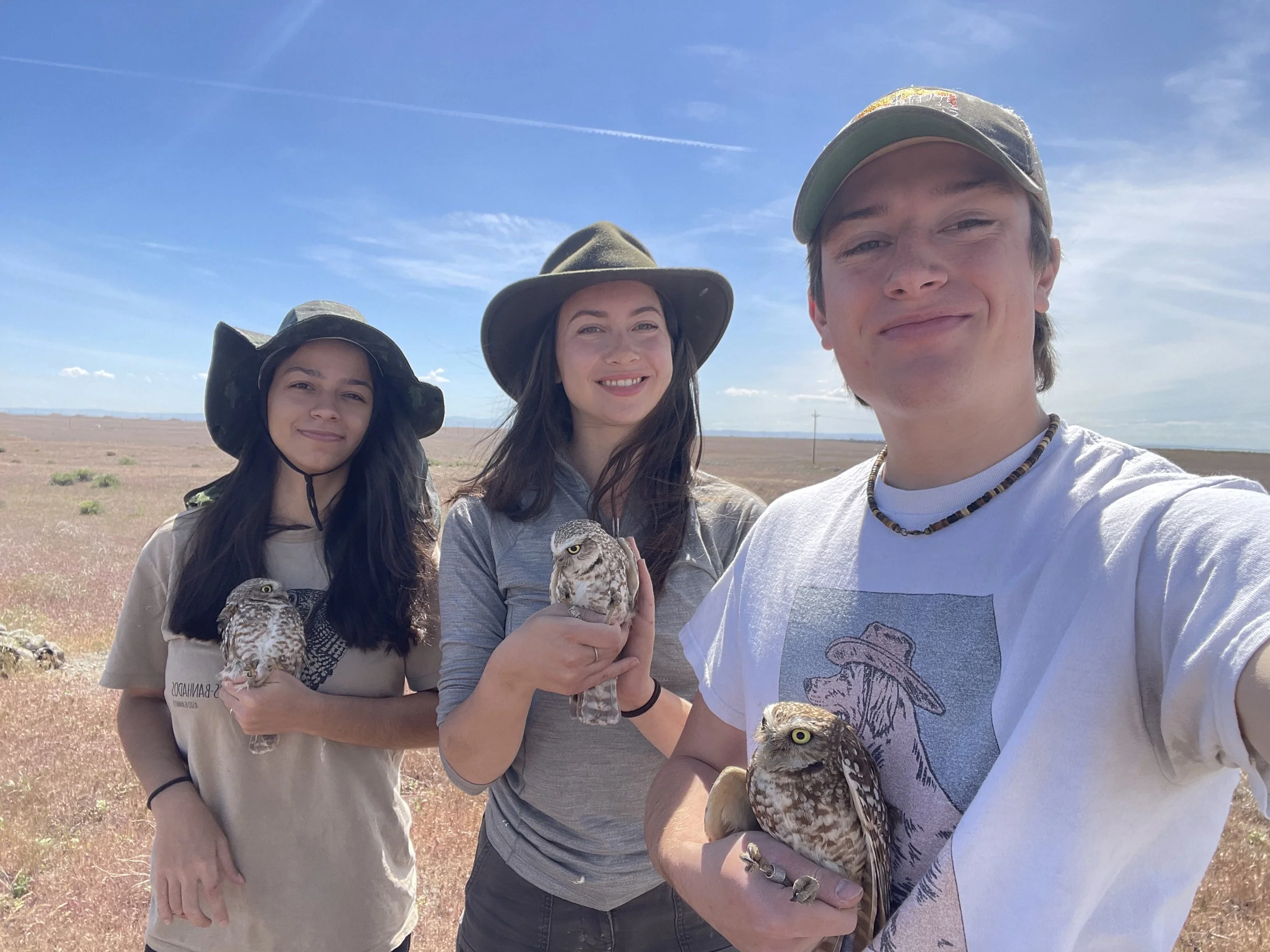
Selfie of the core team.
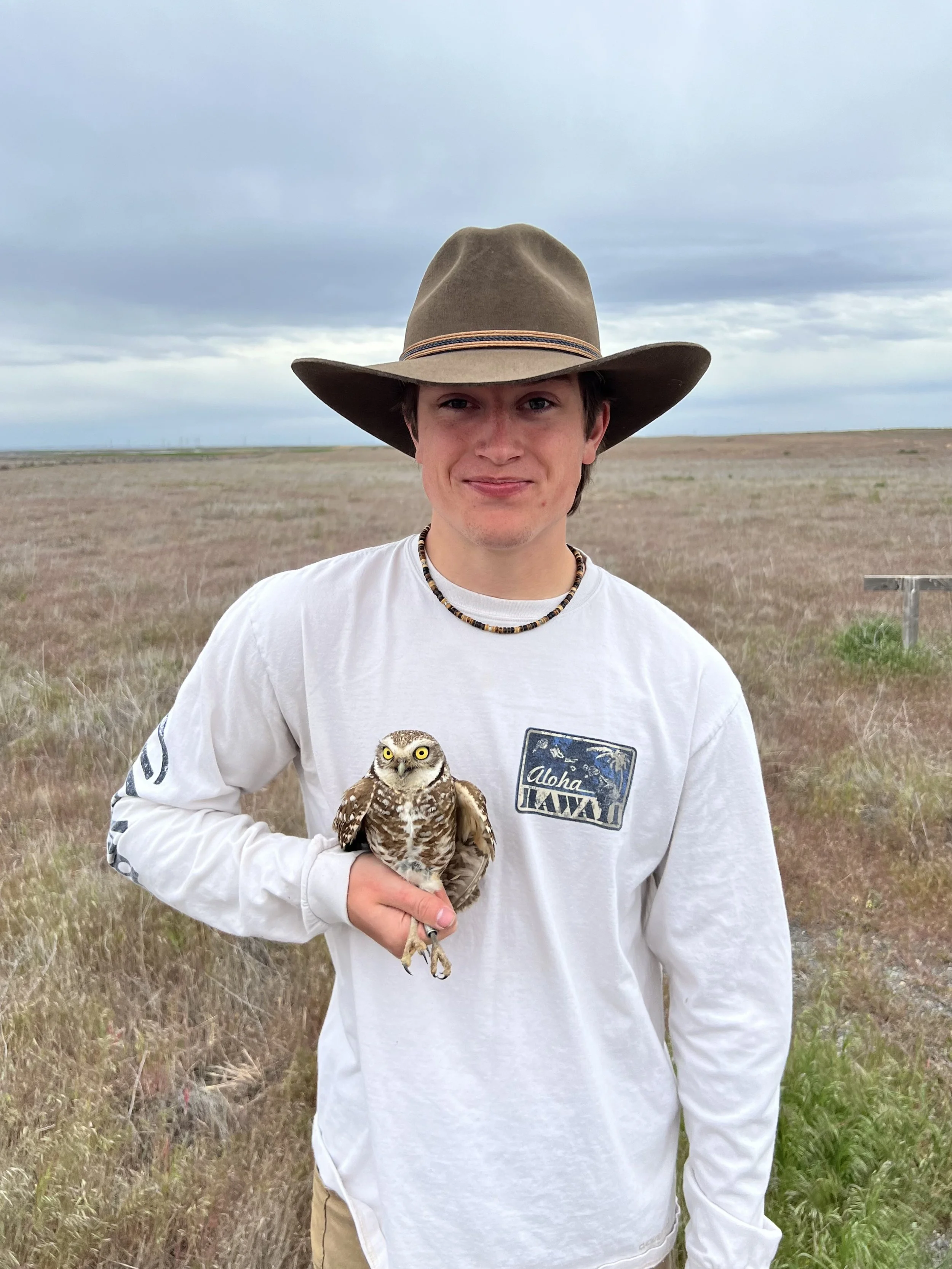
Myself and a gorgeous BUOW.
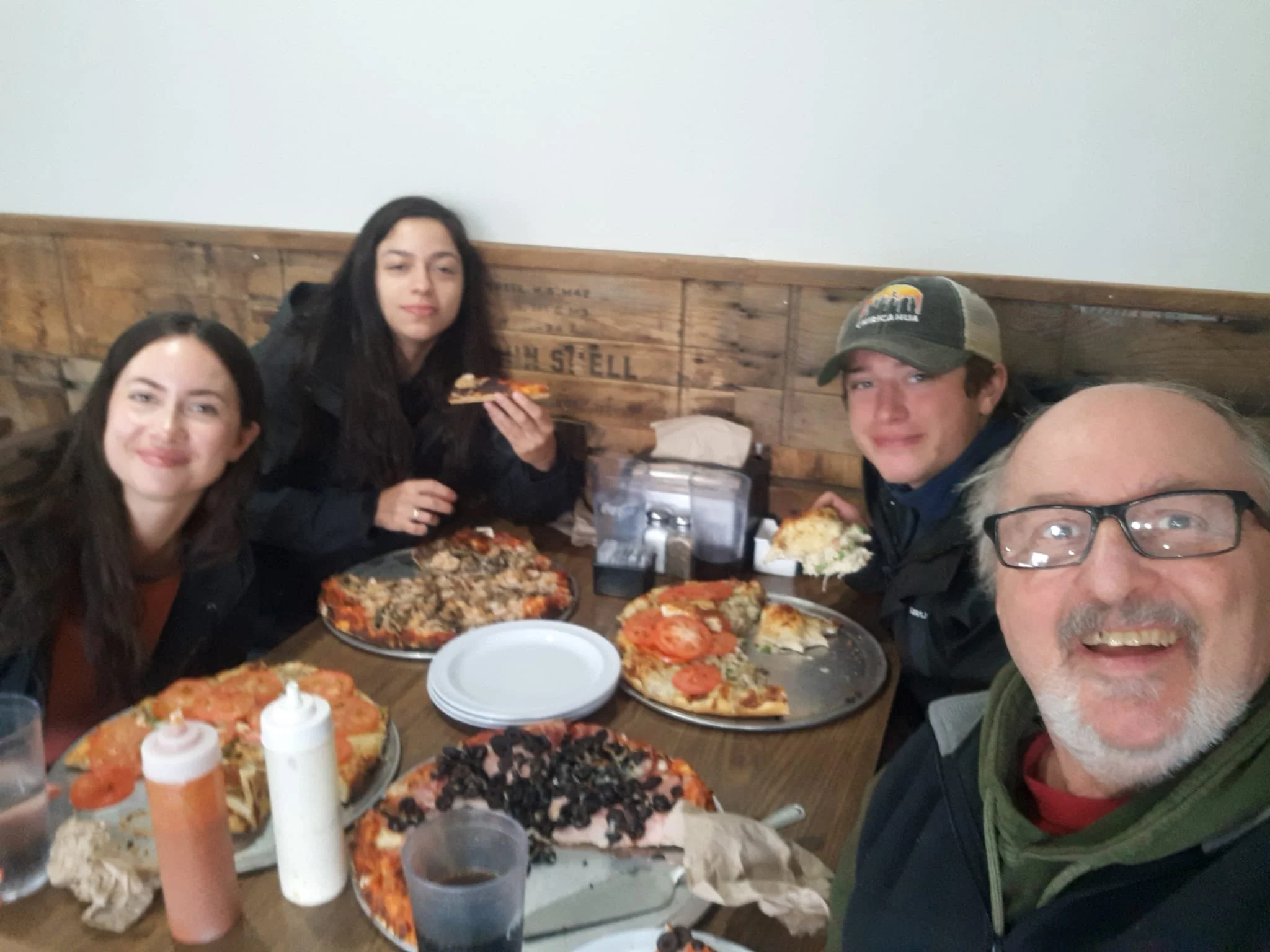
DJ and the core team eating pizza!
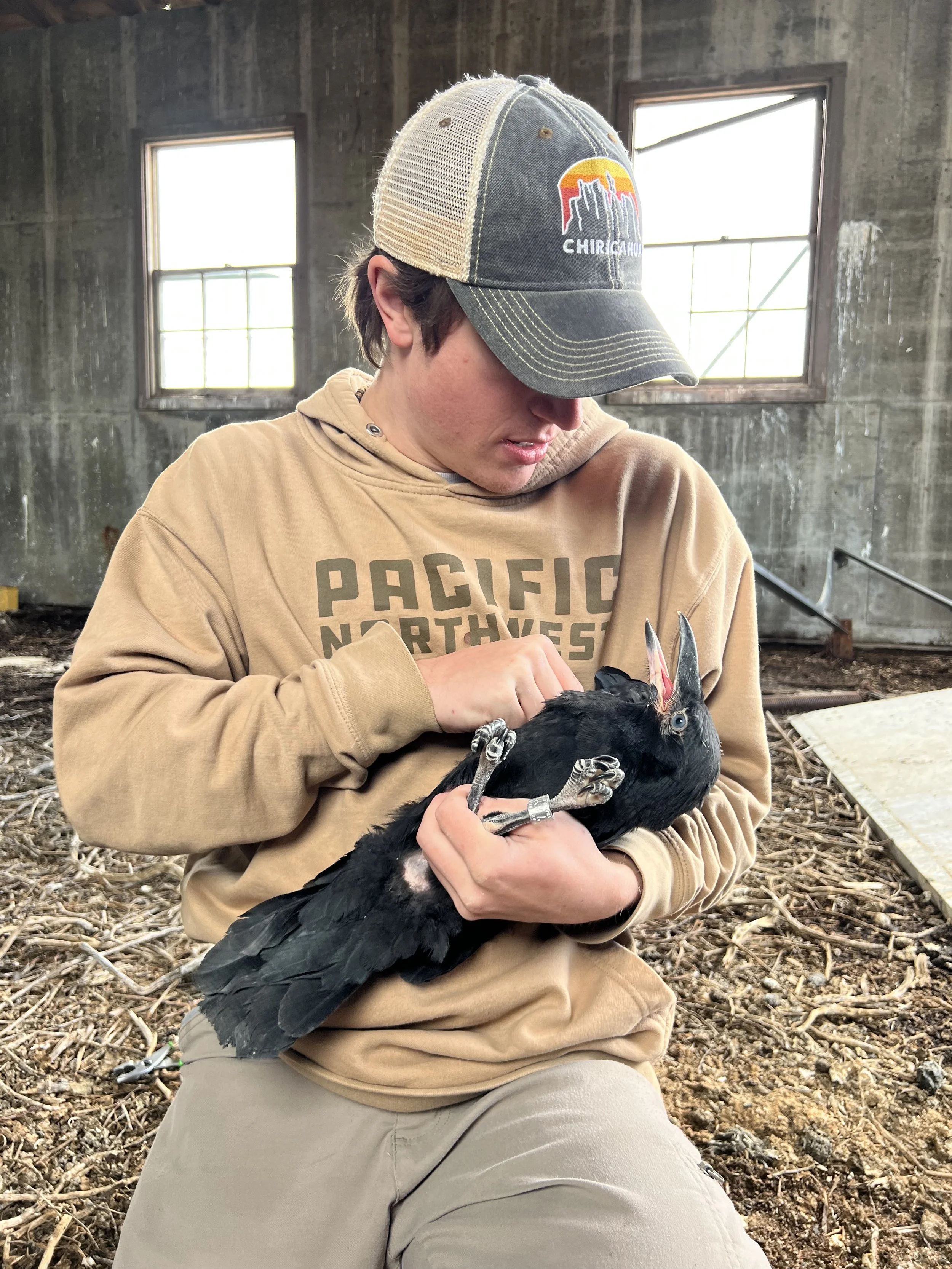
Myself and a Common Raven chick.
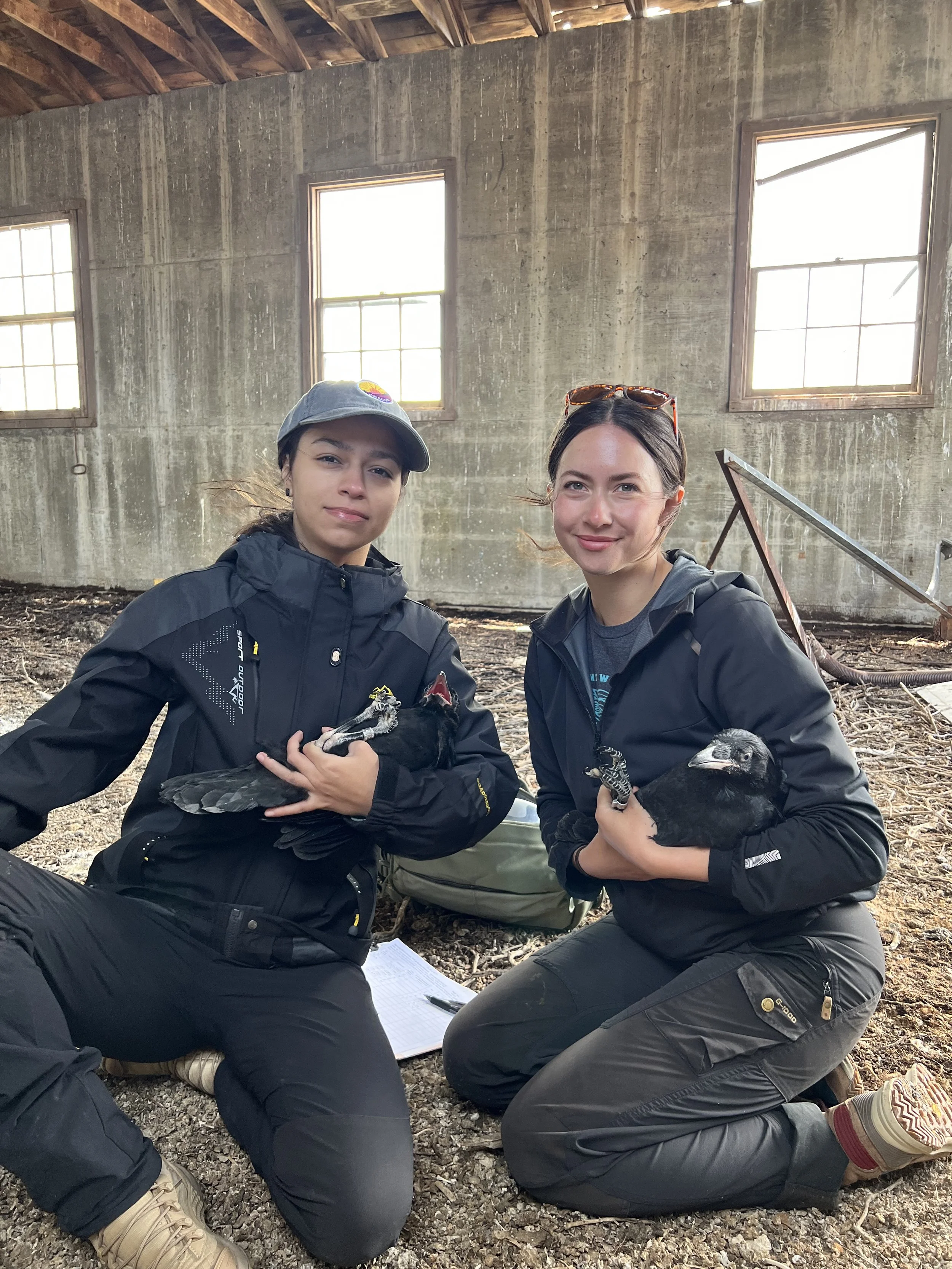
Solai and Gabriela, both with Raven chicks.
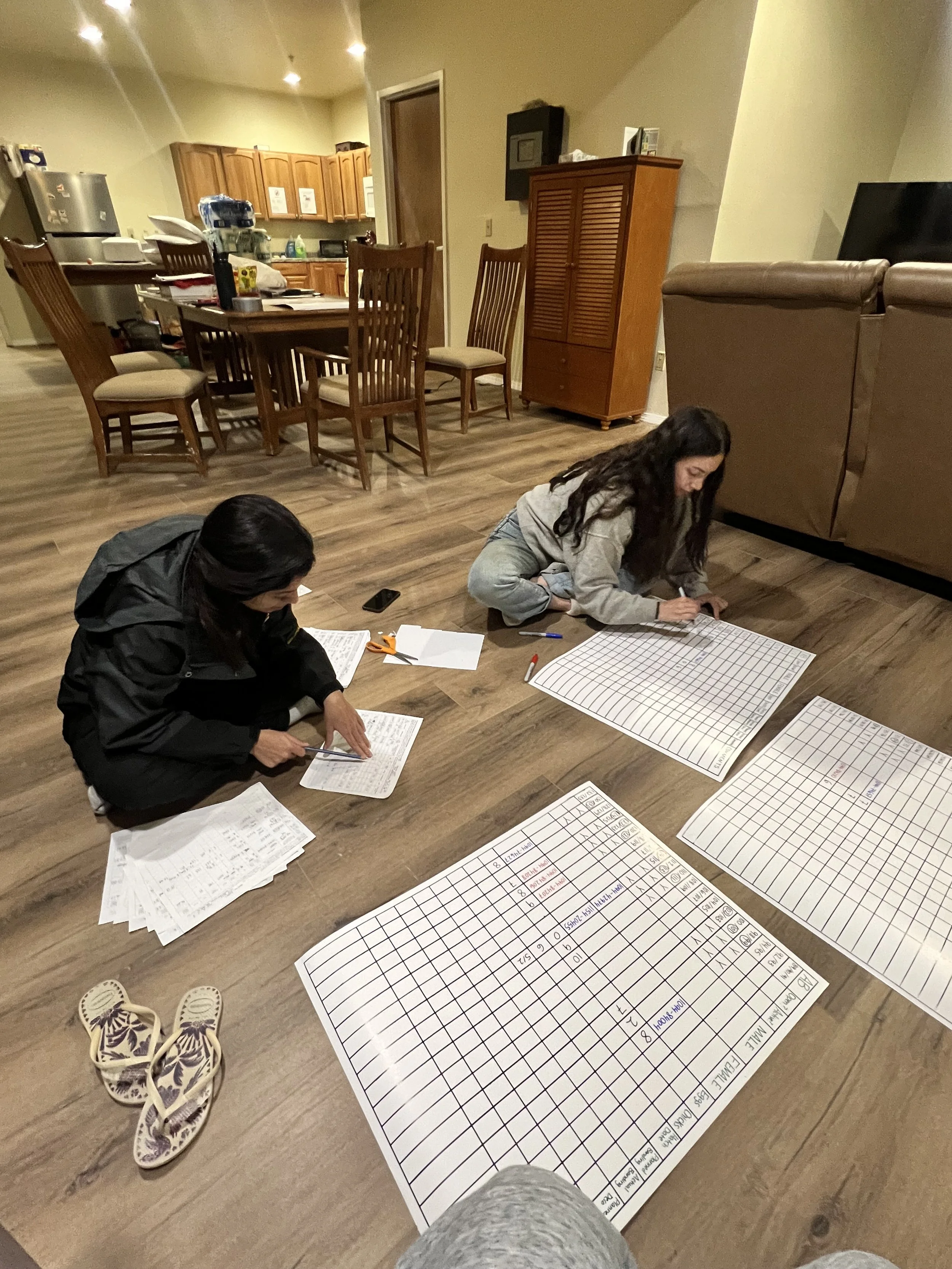
Solai and Gabriela working on the scoreboards.
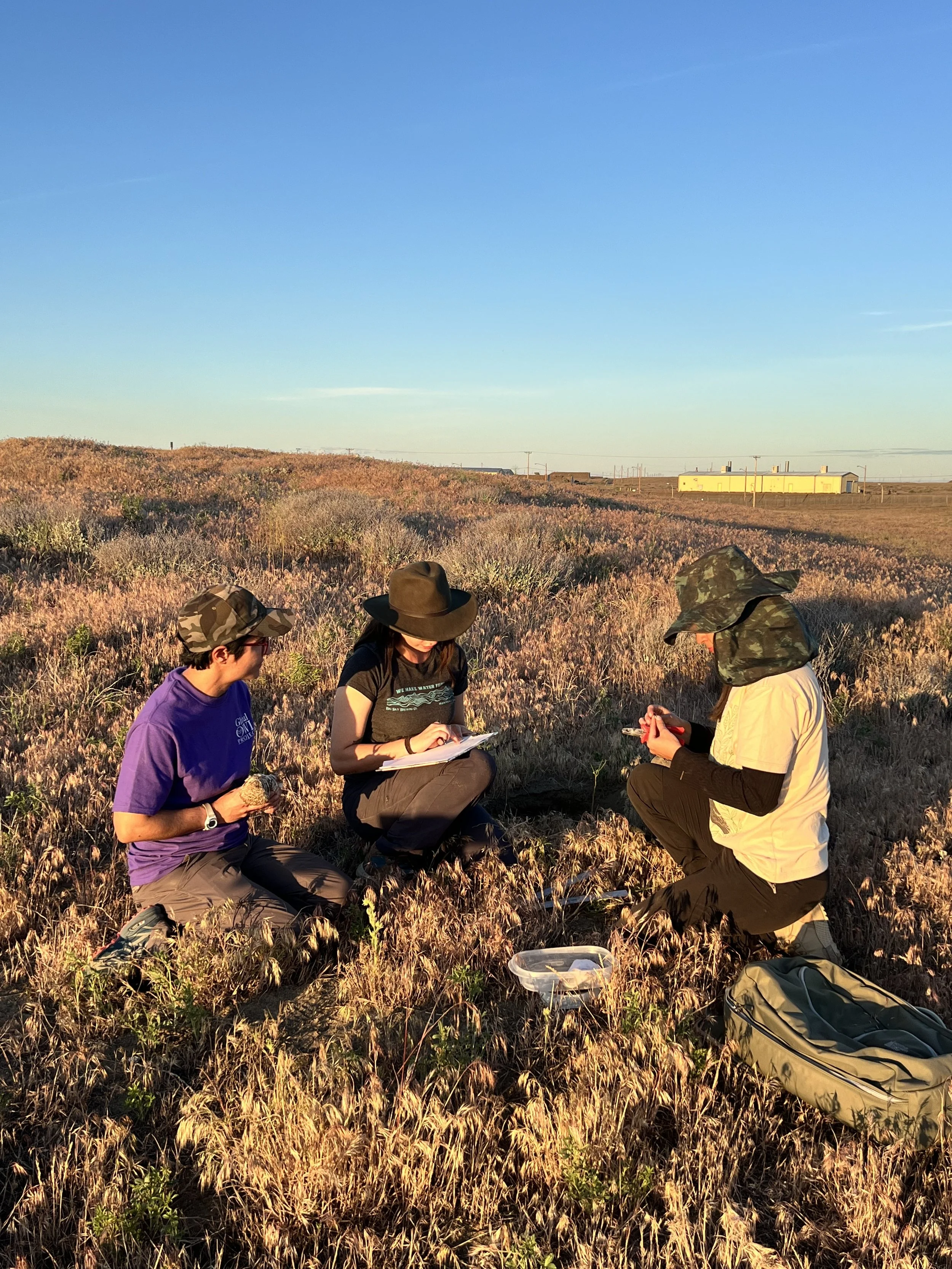
Anahi, Gabriela, and Solai processing a bird.
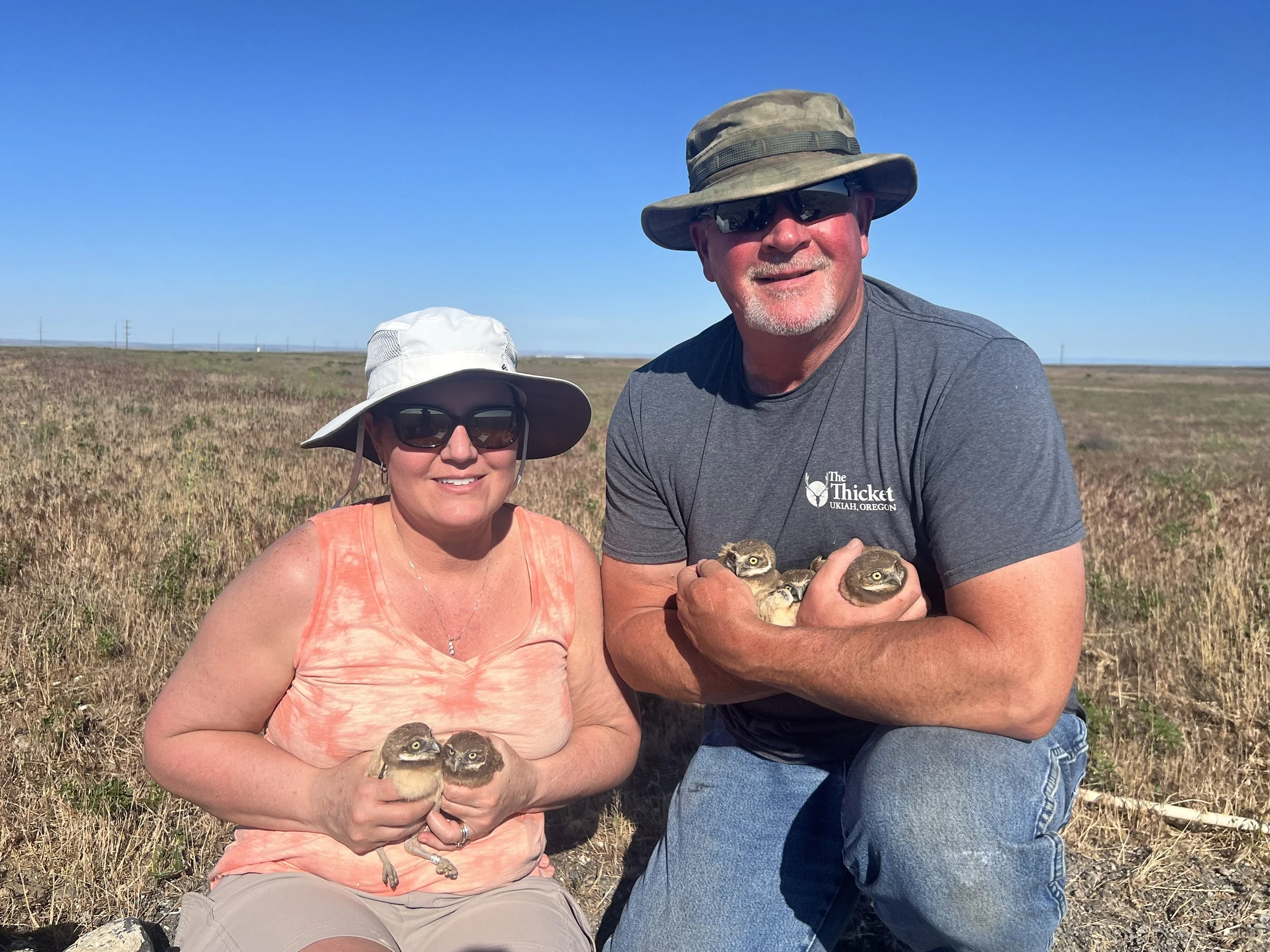
My parents finally making an appearance! It was very special to me.
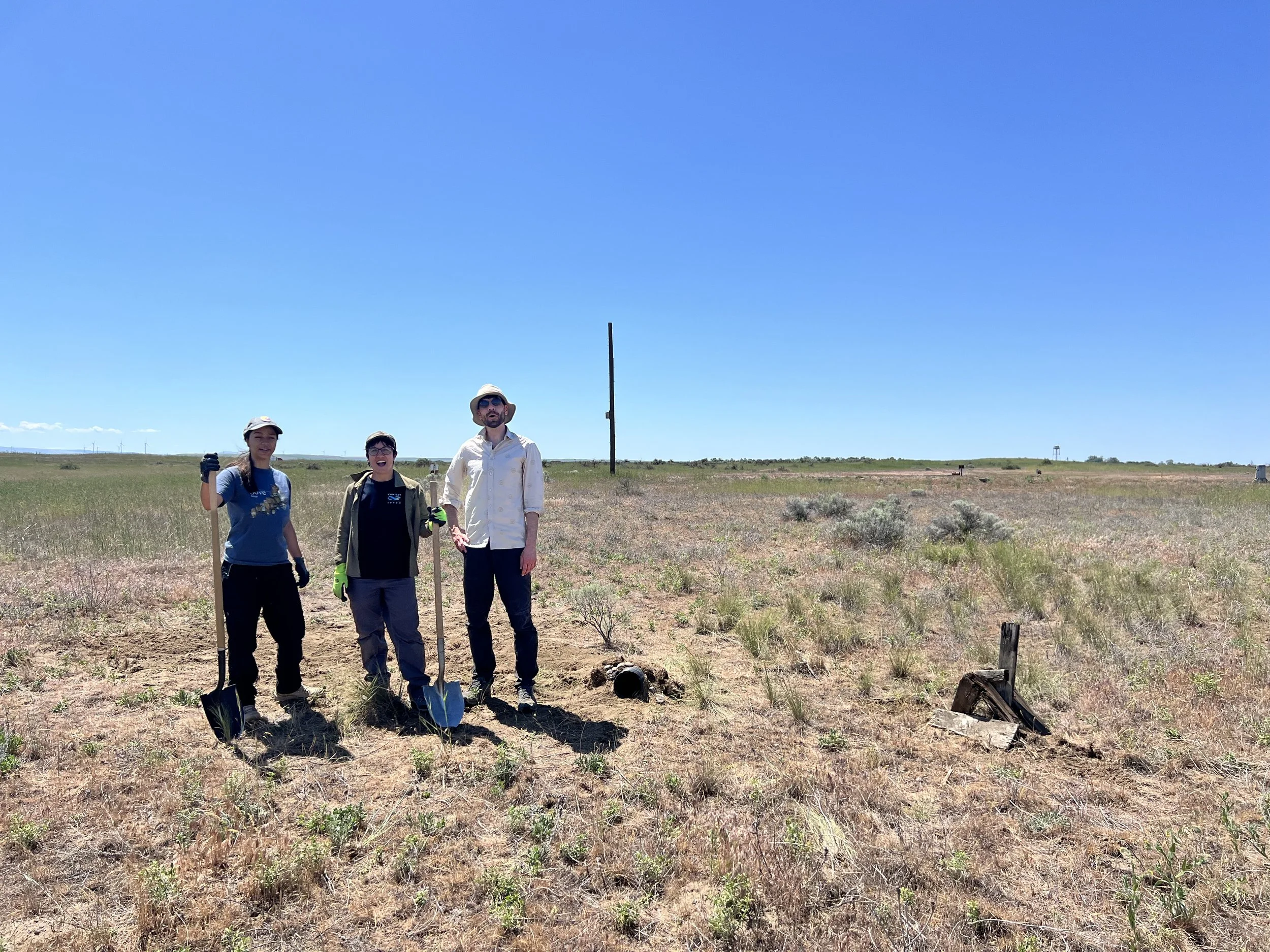
Gabriela, Anahi, and Joris after installing a new burrow.
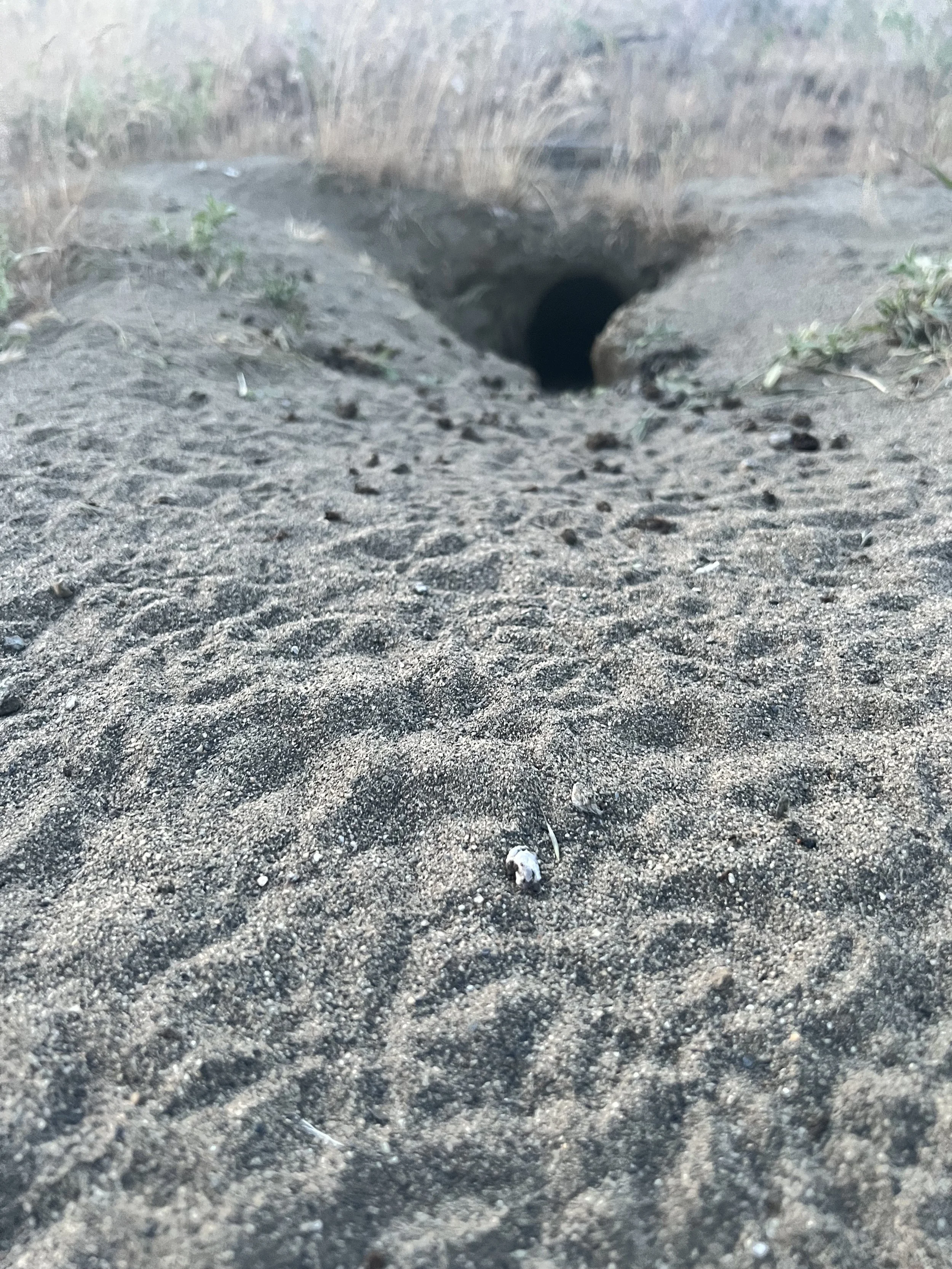
Newly found badger-dug burrow.
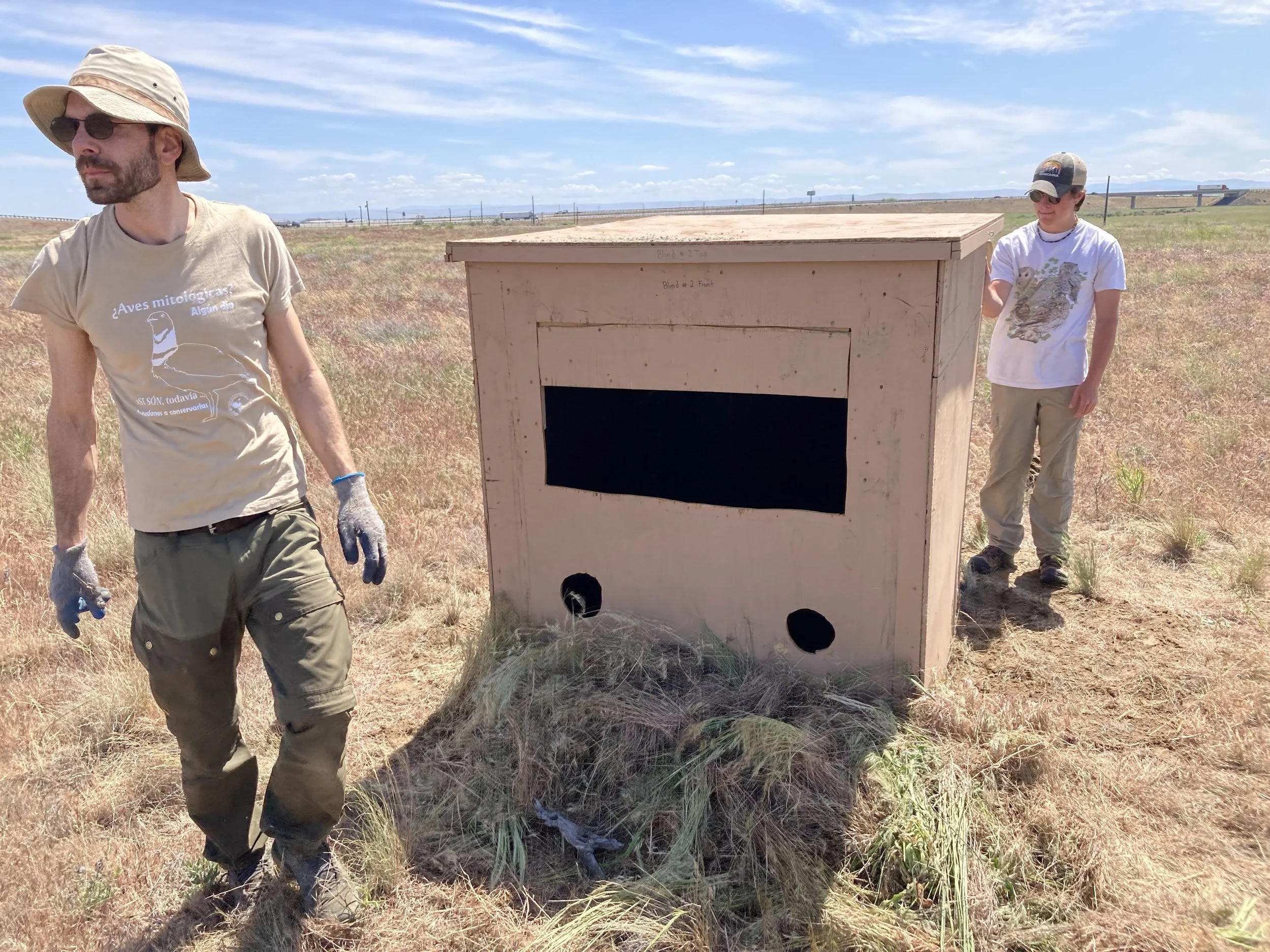
Joris and I setting up a photography/viewing hide.
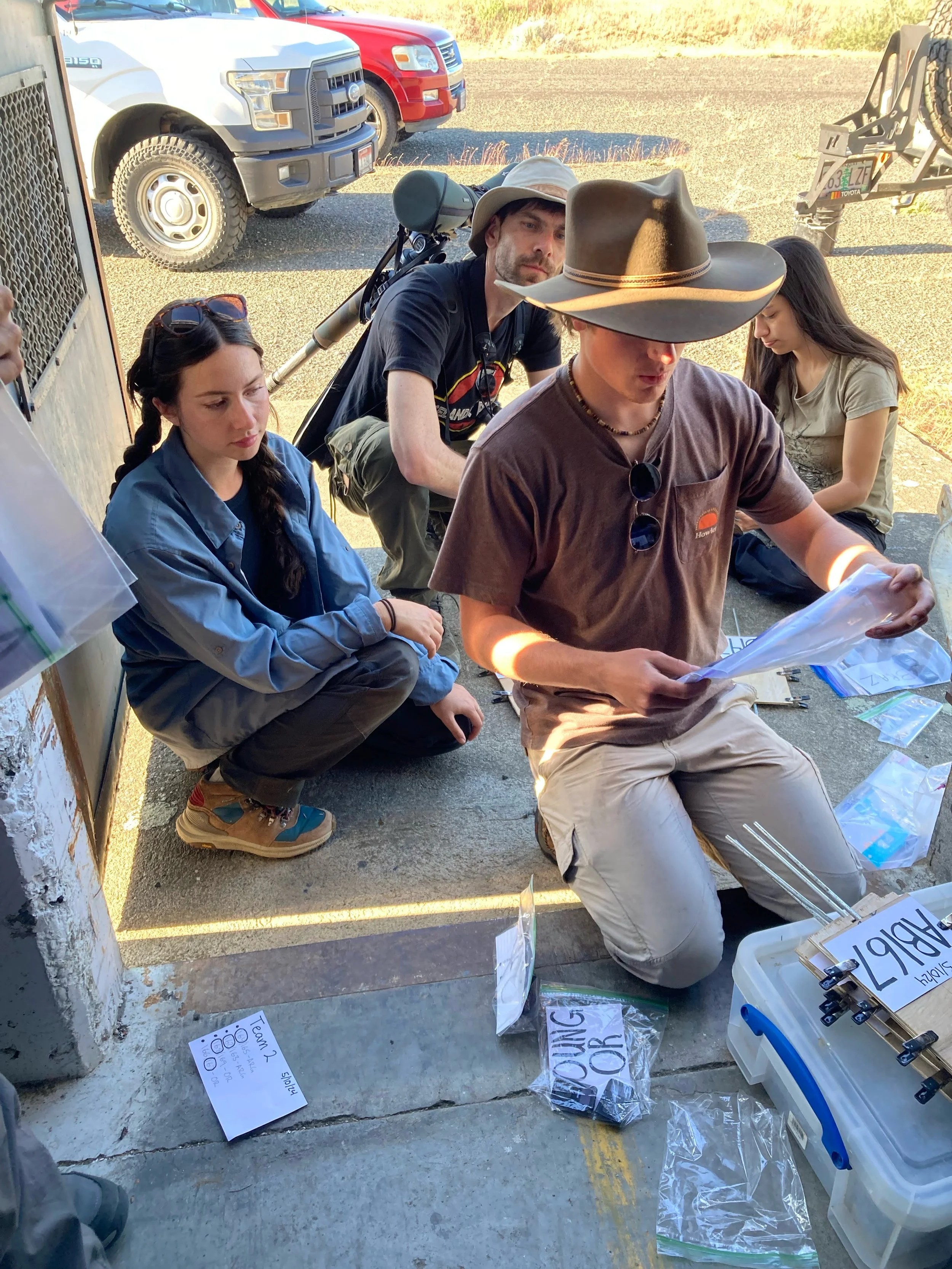
The team and I preparing for an evening of data collection.
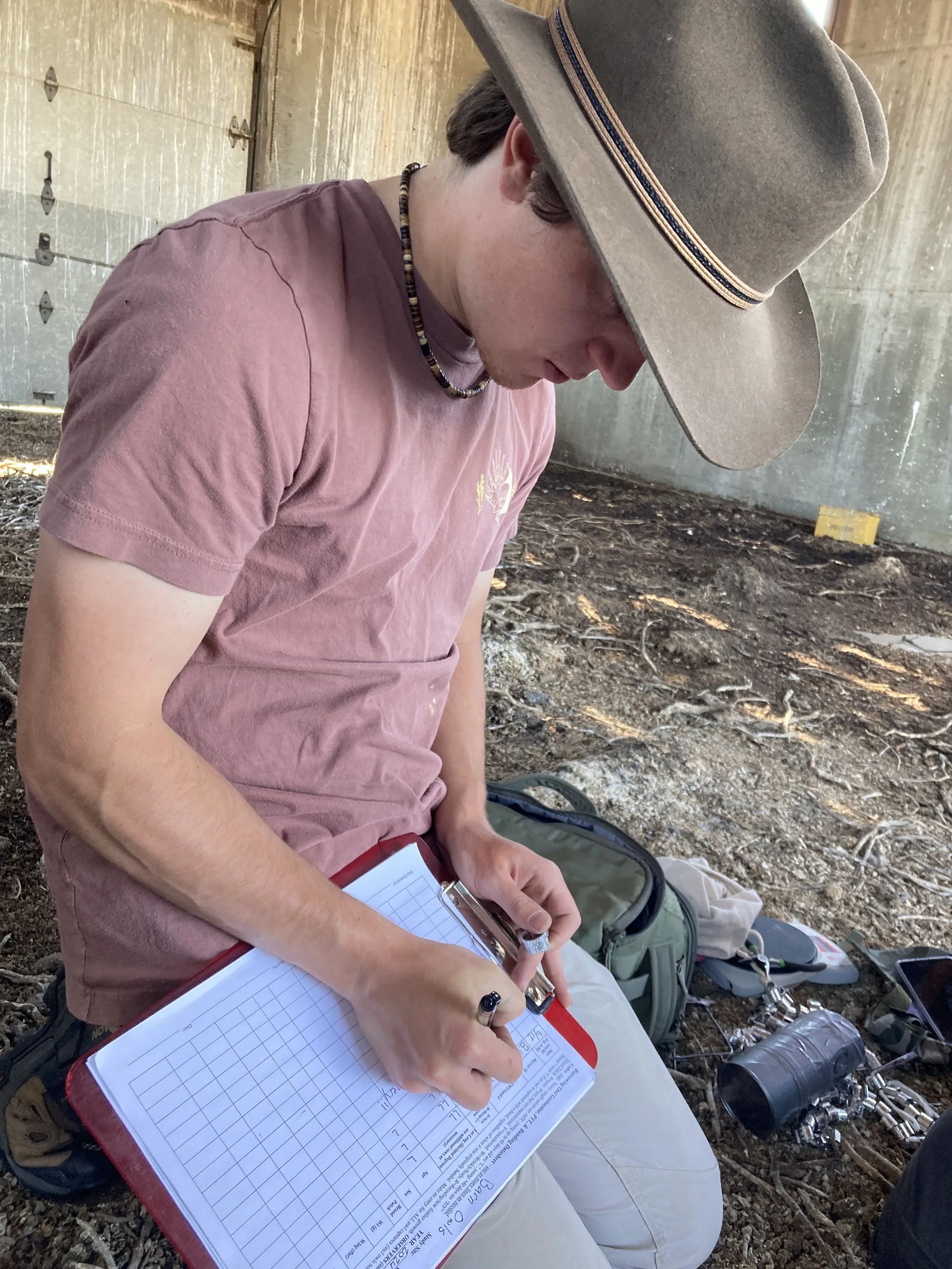
Myself recording banding data on Barn Owl chicks.
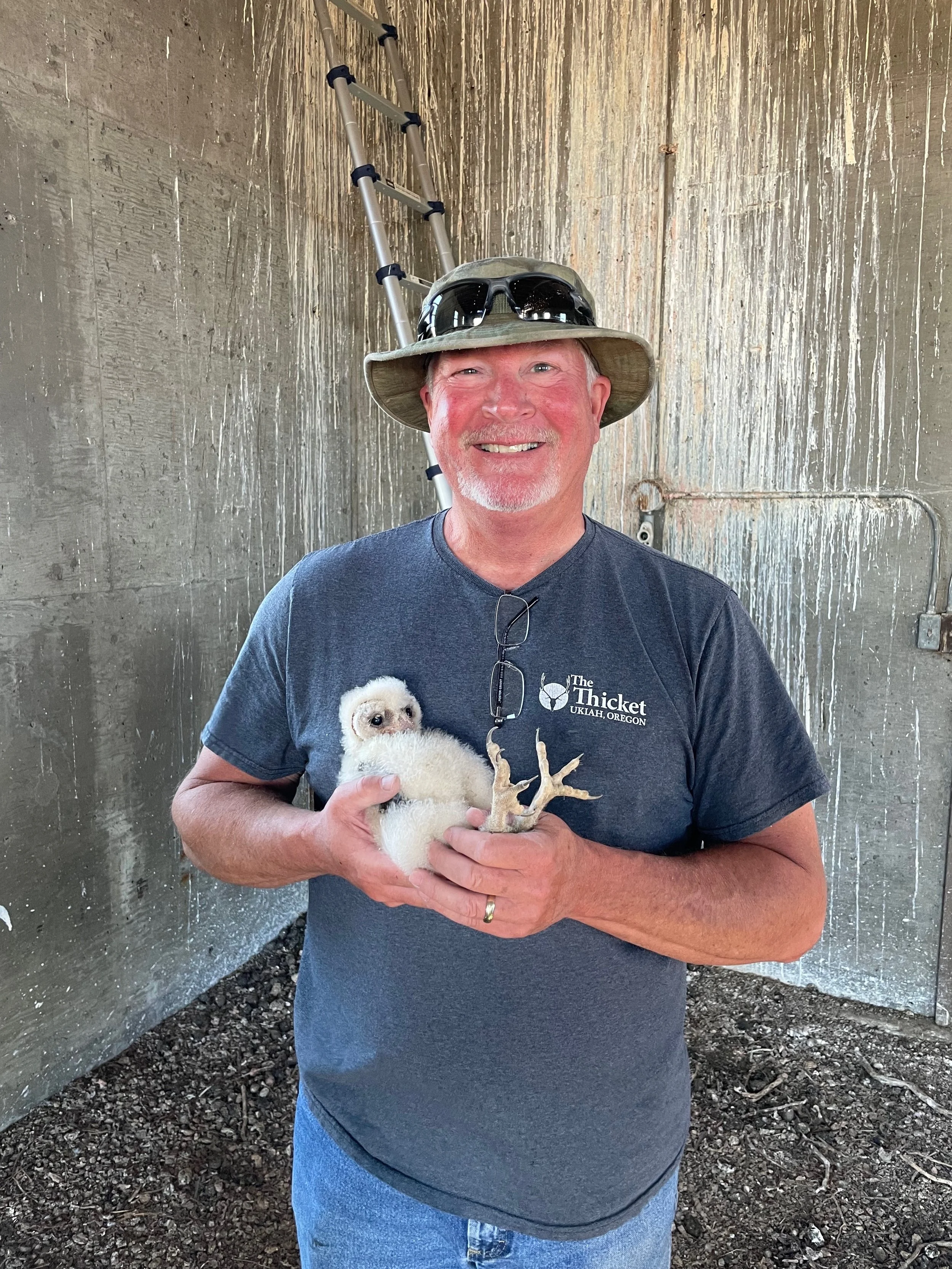
My dad, happy as can be, with a Barn Owl nestling.
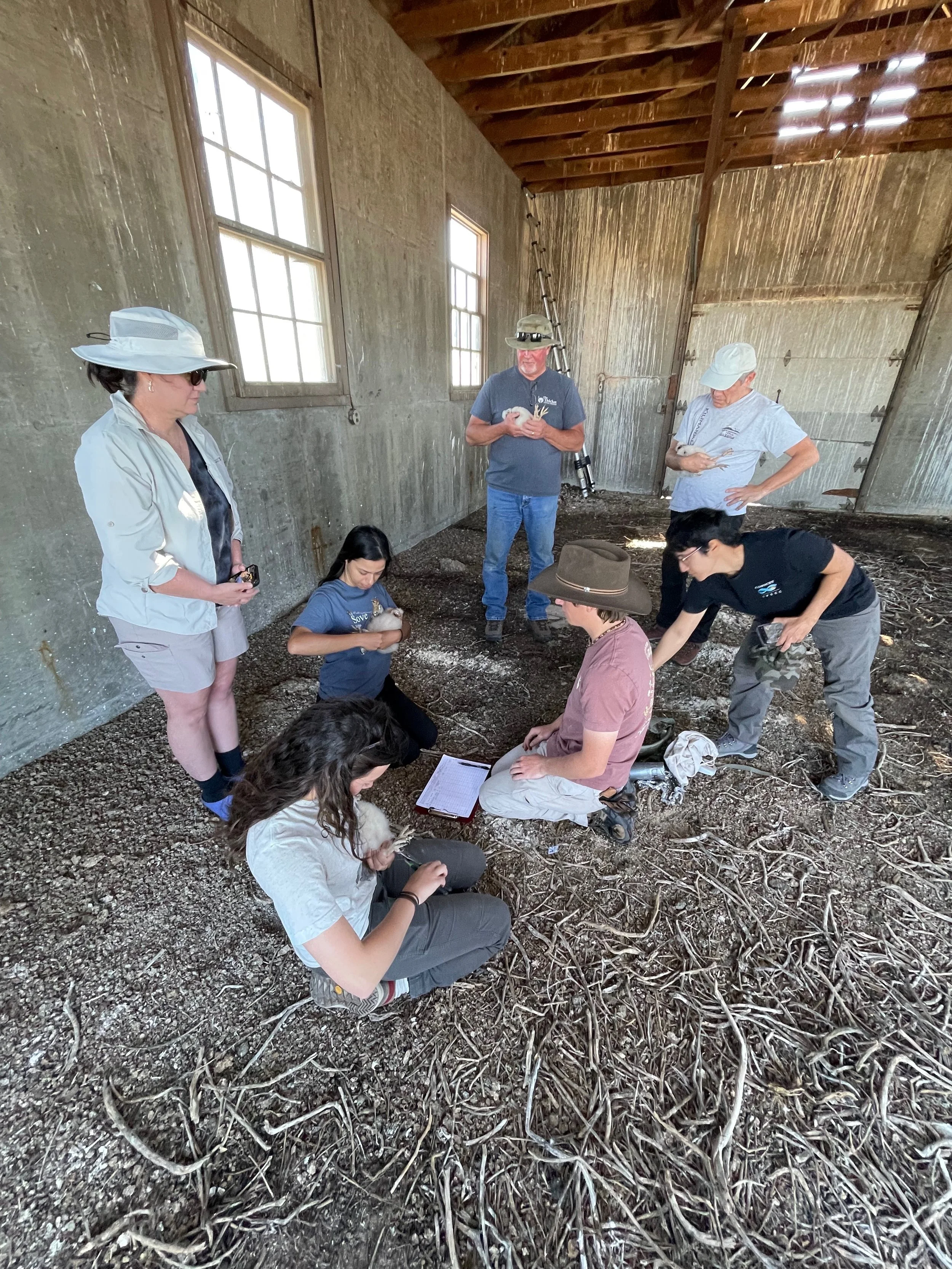
Banding ABOW nestlings.
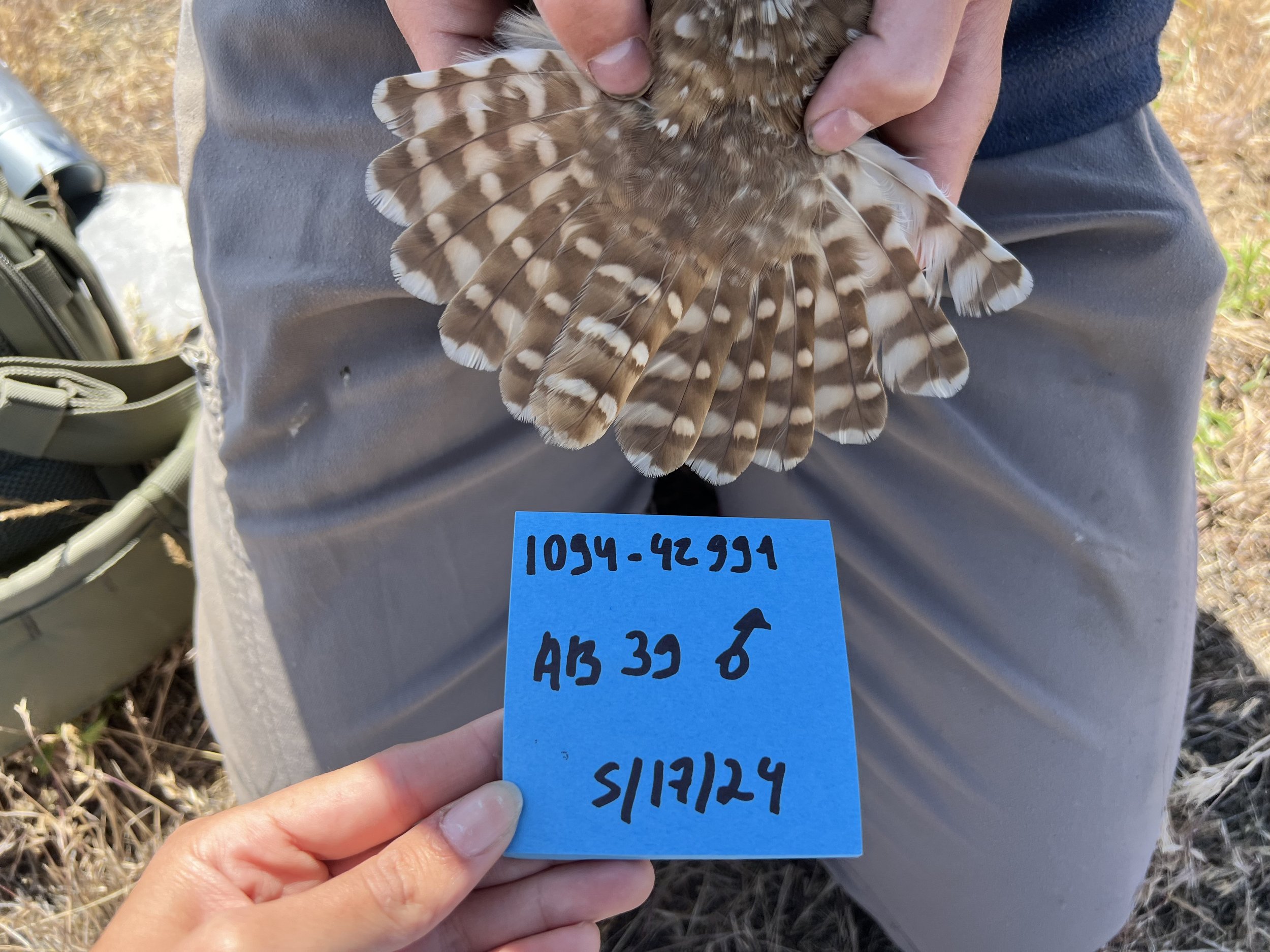
Tail barring of a male BUOW.
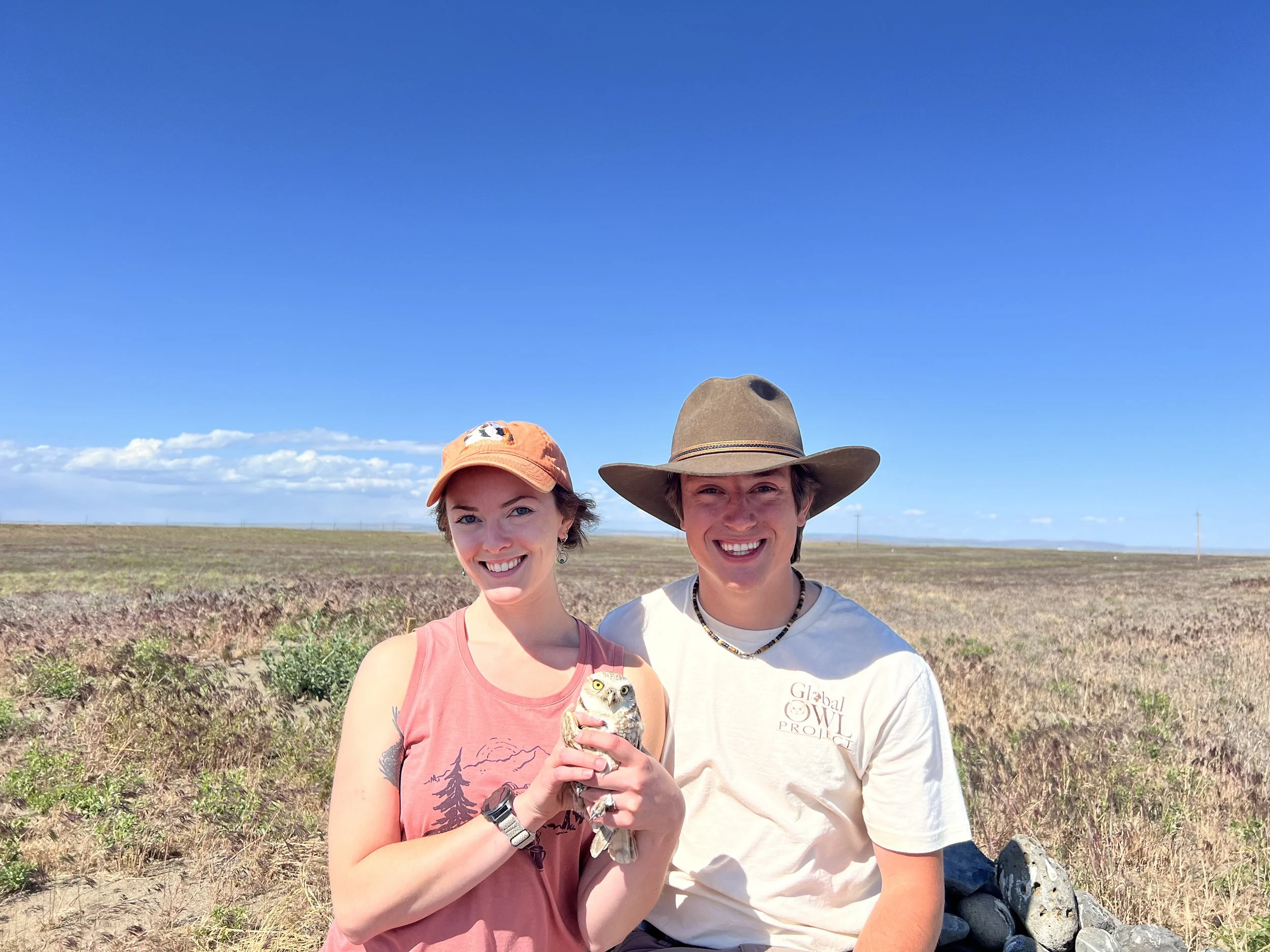
Julia Mello stopped by! We got straight to work just like old times.
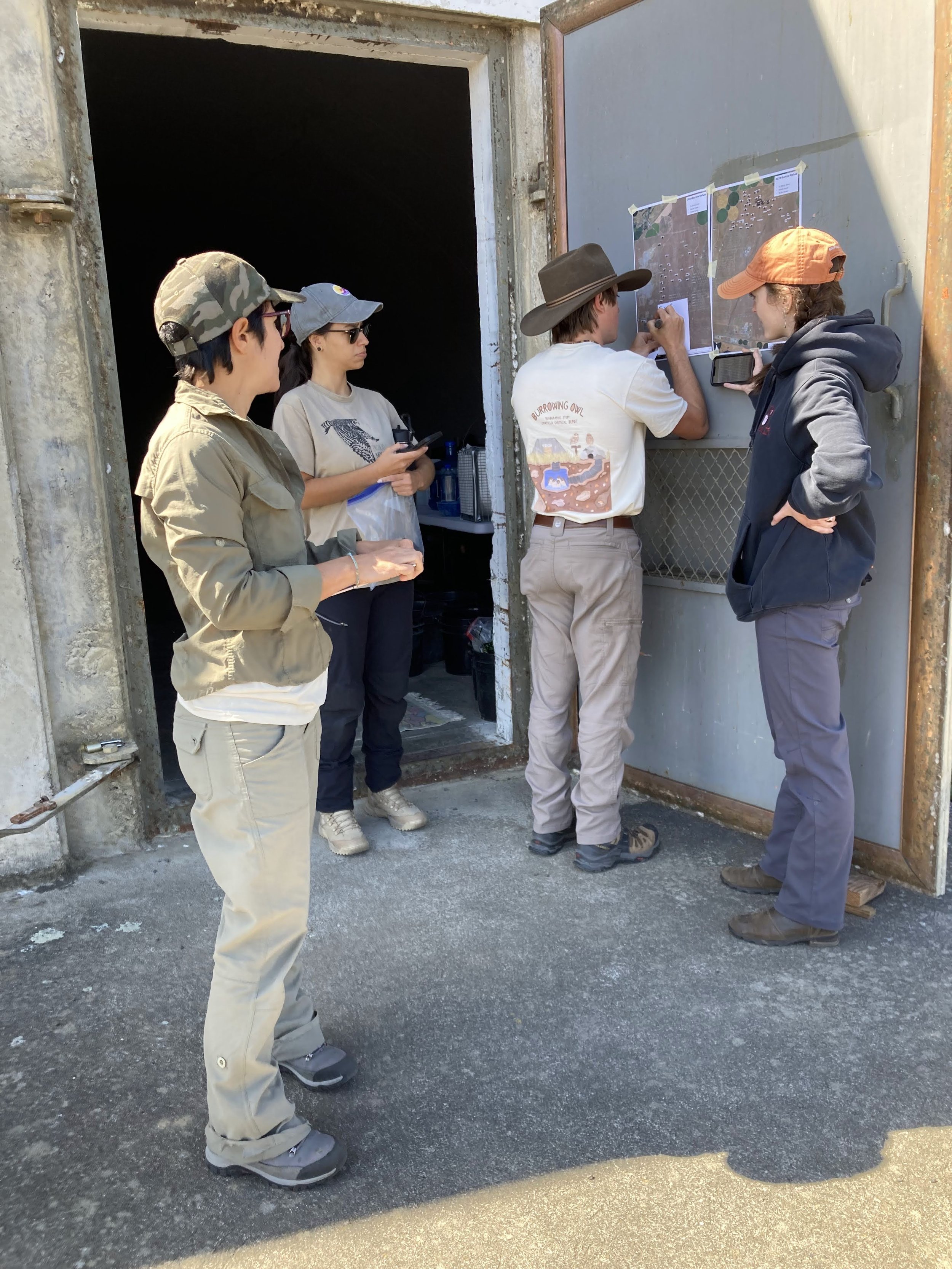
Planning site checkups for the afternoon.
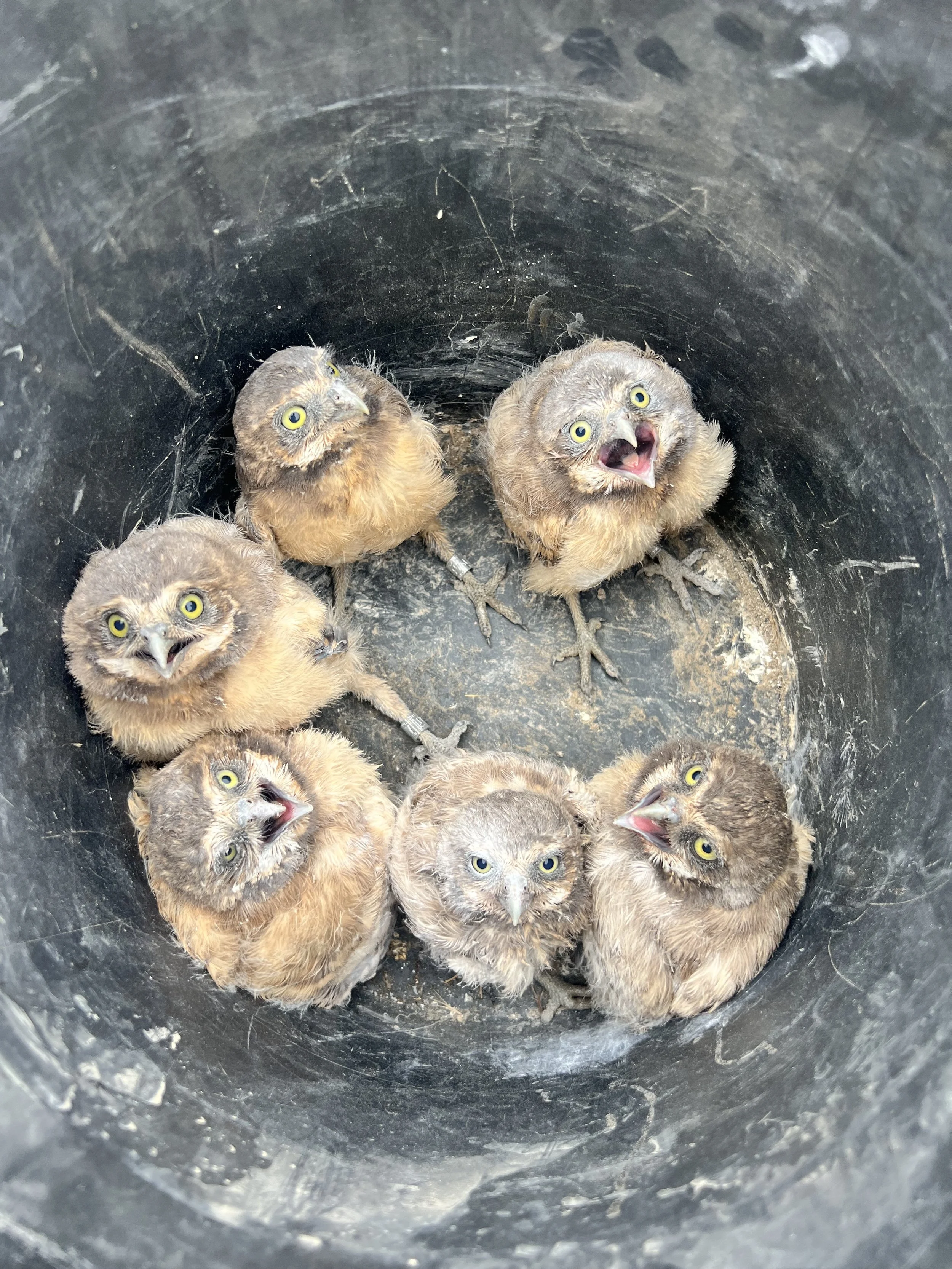
A batch of newly banded BUOW chicks ready to be released back into their burrow.
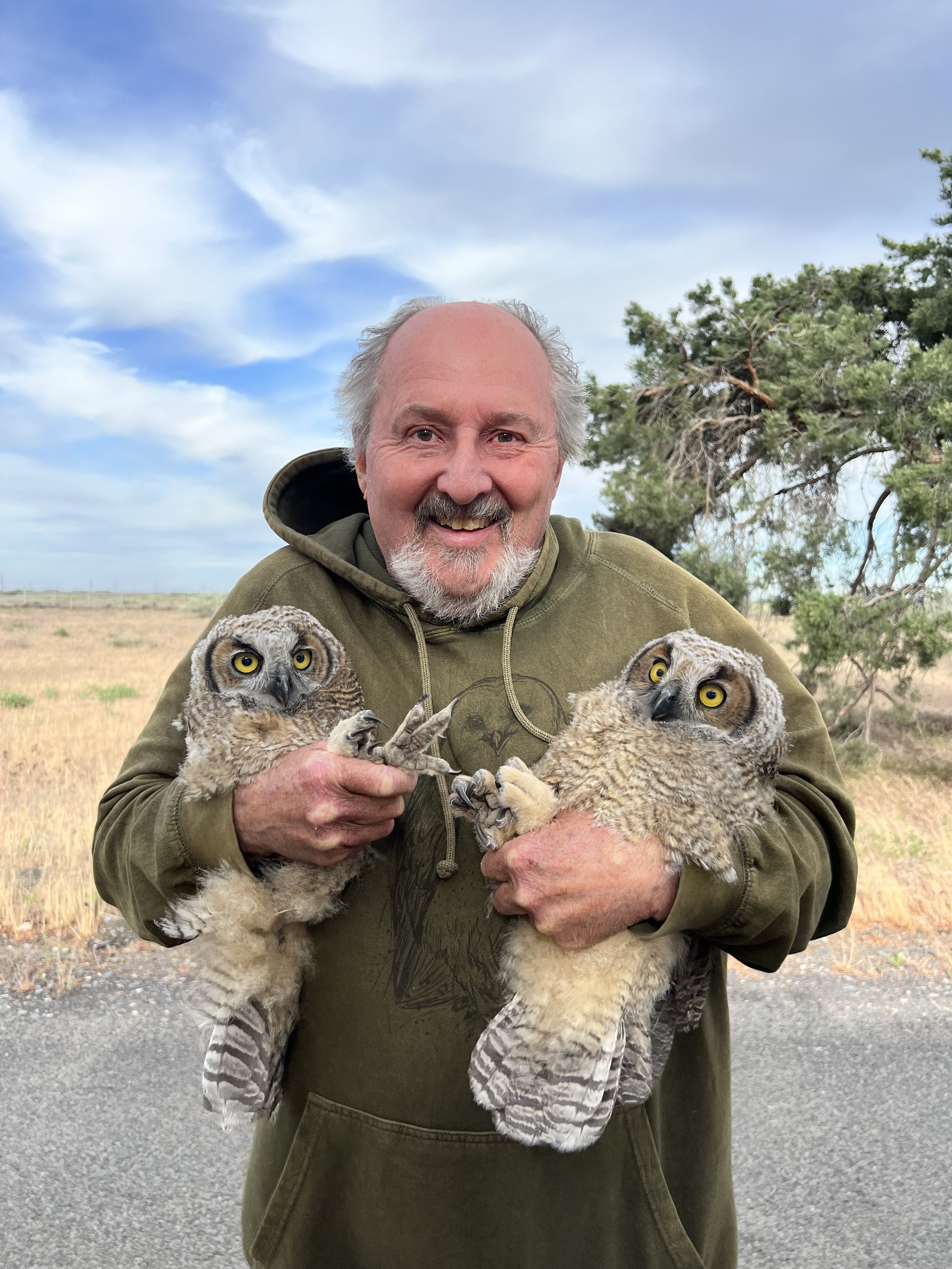
DJ with the local Great Horned Owl nestlings.
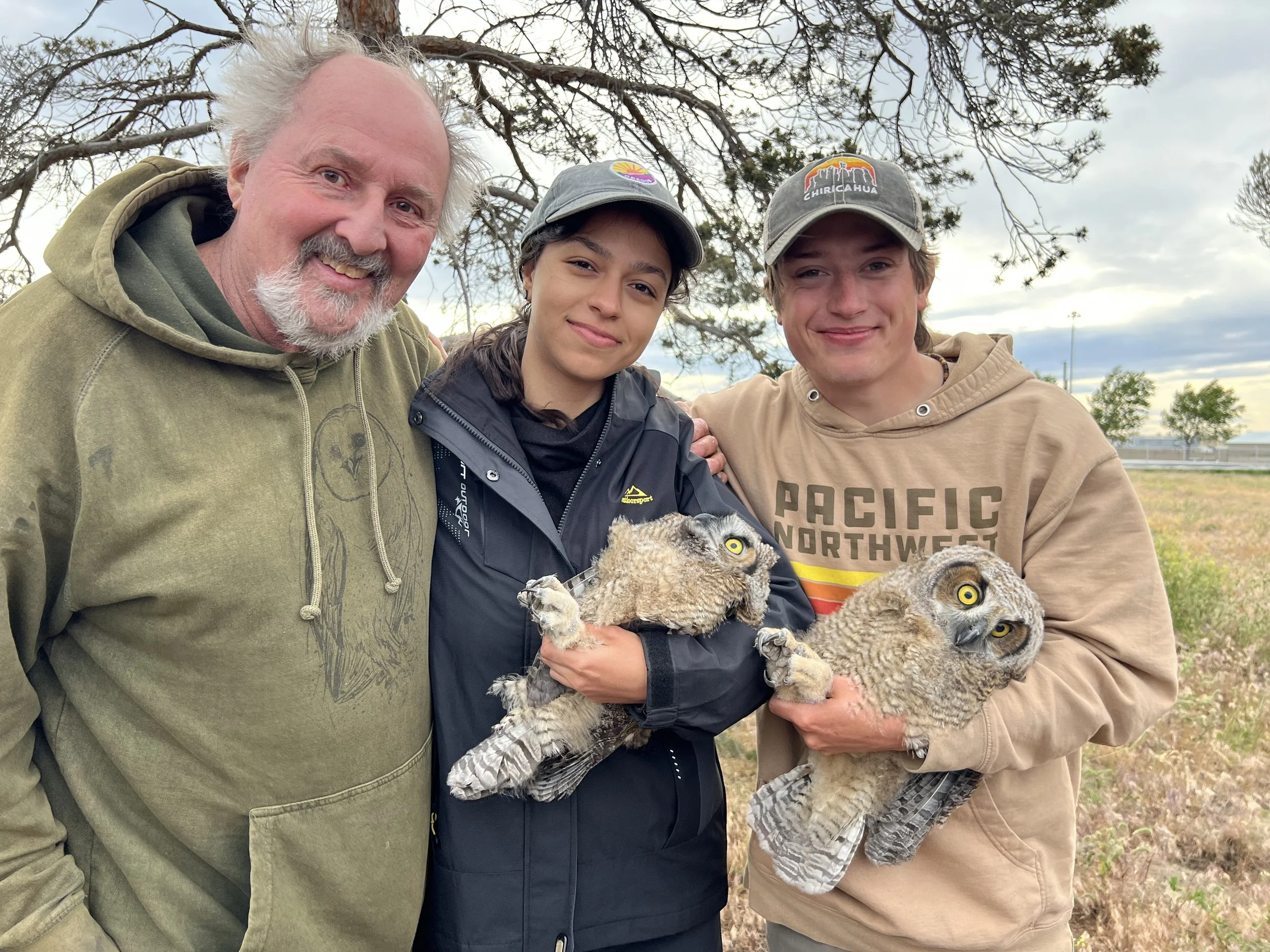
DJ, Gabriela, and I with two GHOW nestlings.
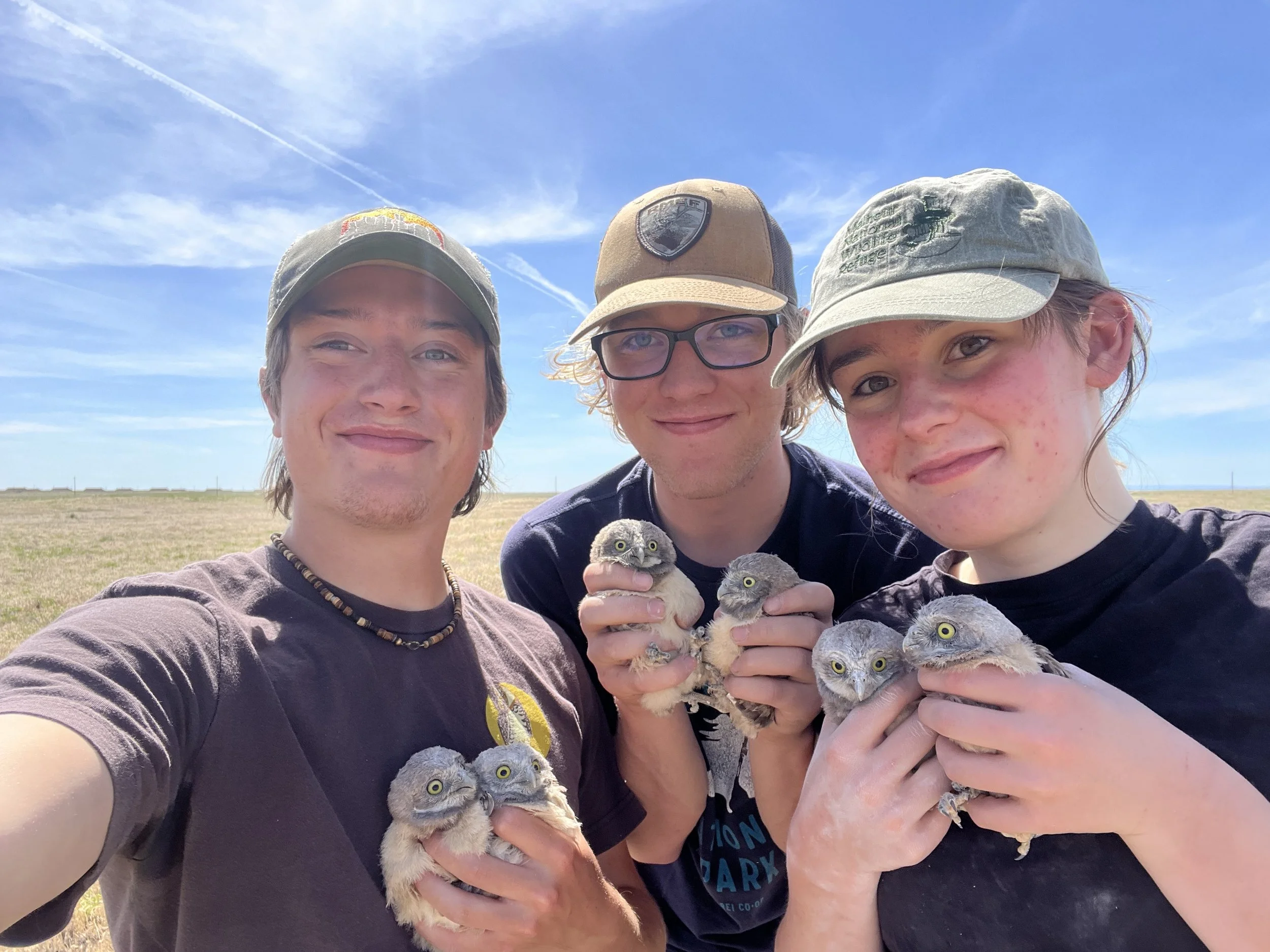
My two best friends, Elliott and Clara, stopped by to help out for a few days.
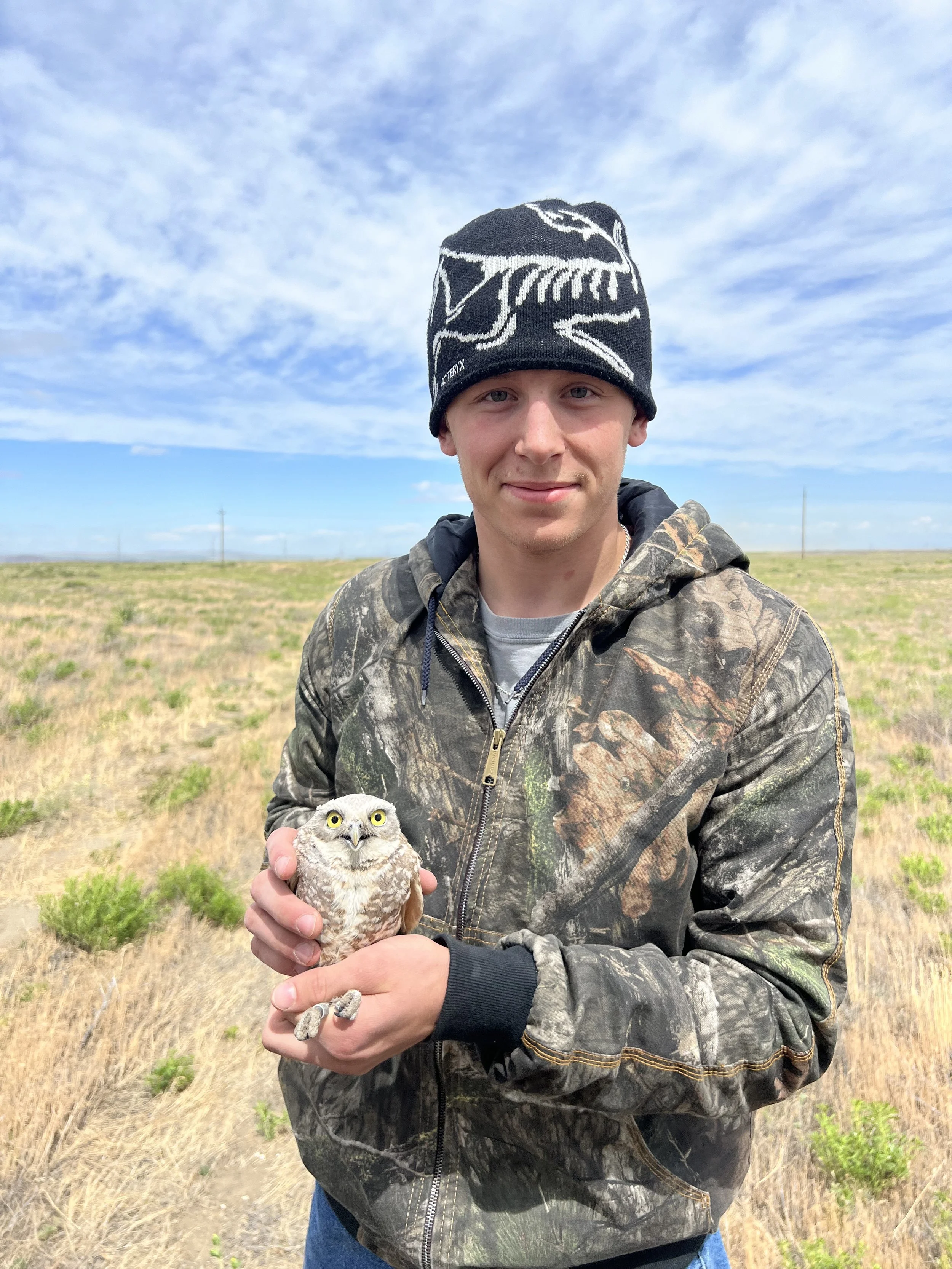
My great friend Riis made an appearance as well!
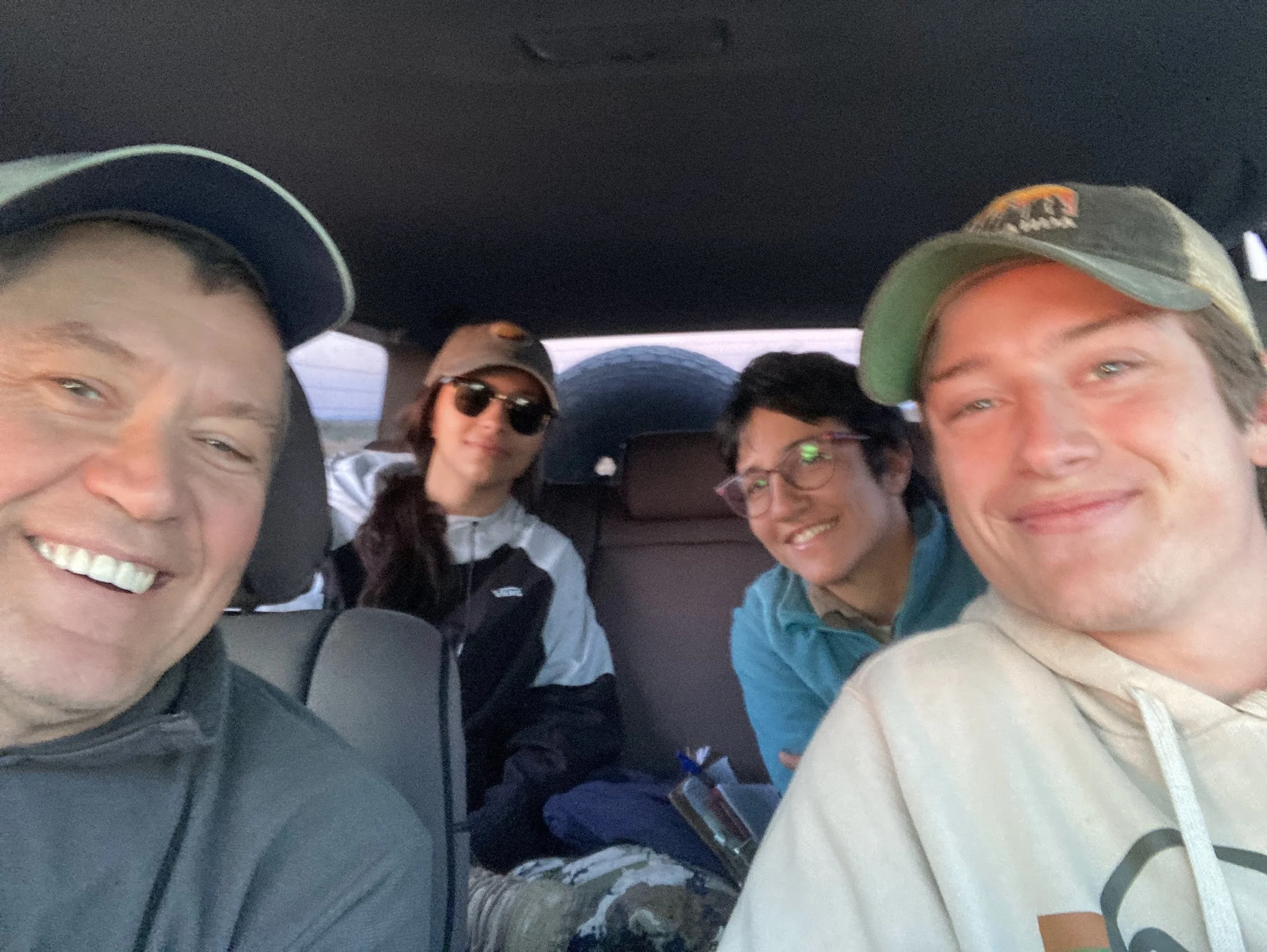
Dries, Gabriela, Anahi, and I enjoying the sunset.
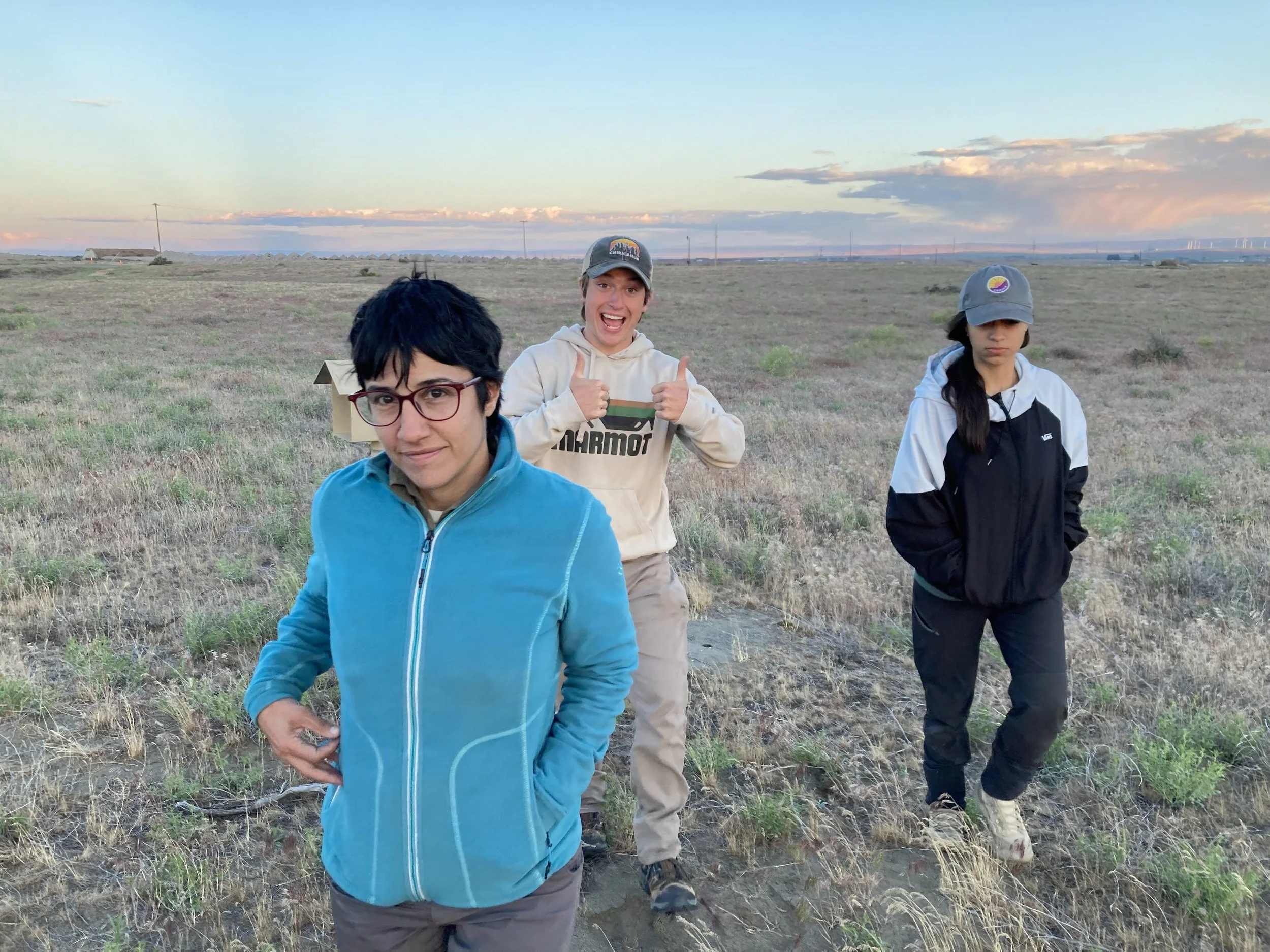
Anahi, Myself, and Gabriela walking back after setting up a trail camera.
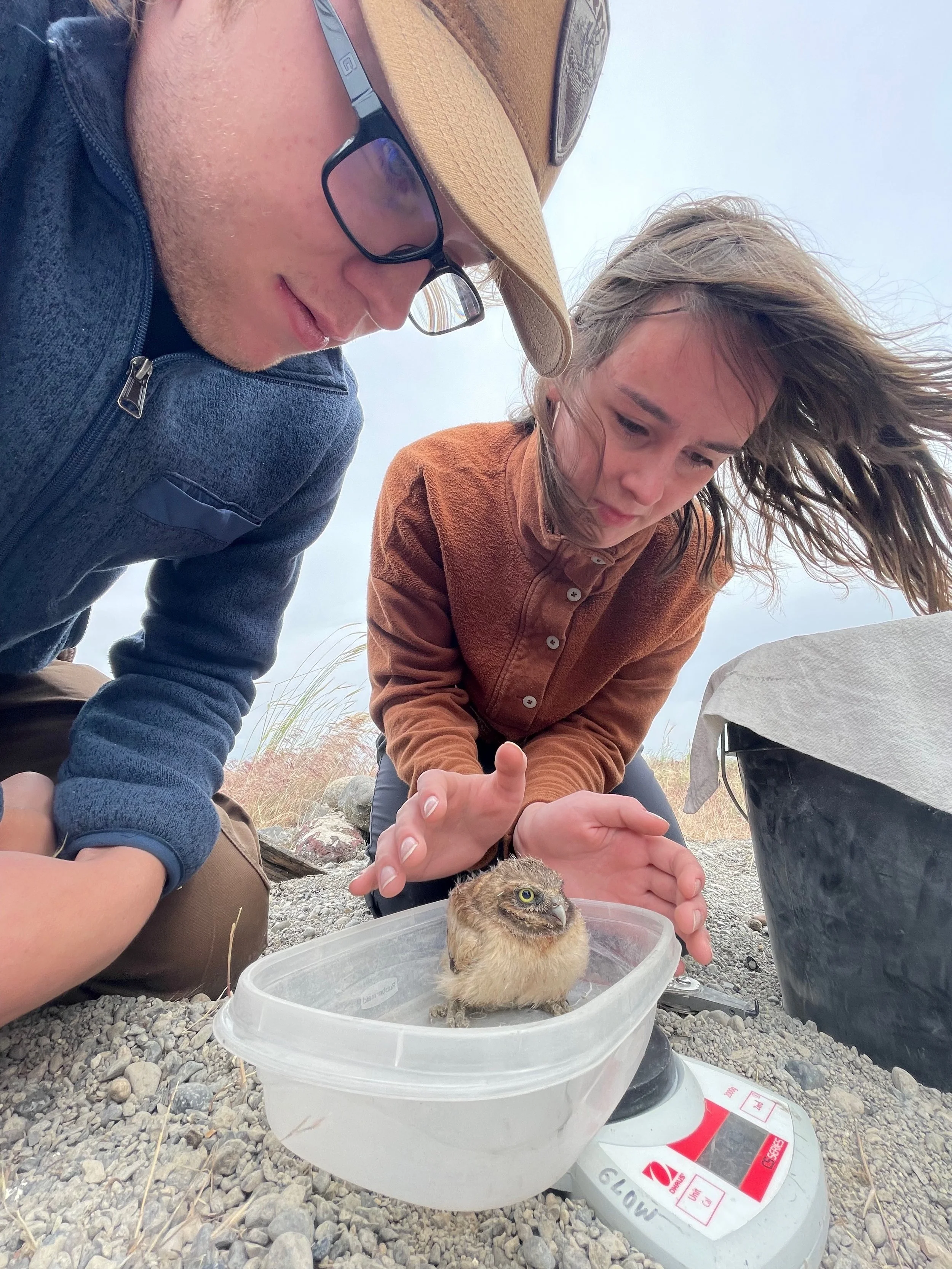
Elliott and Clara weighing a nestling.
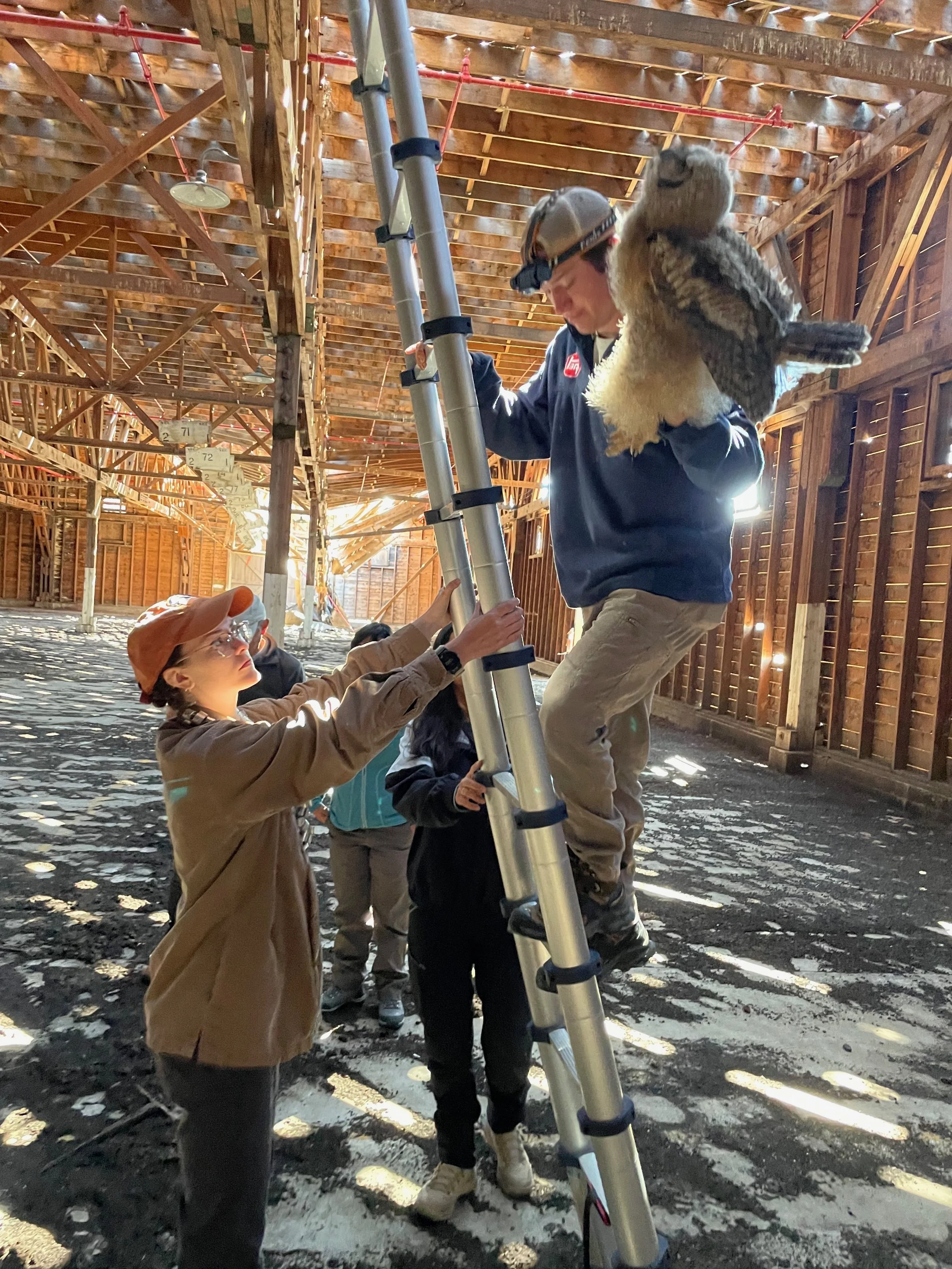
Me climbing down with a deceased GHOW fledging that was stuck in the rafters of an abandoned warehouse.
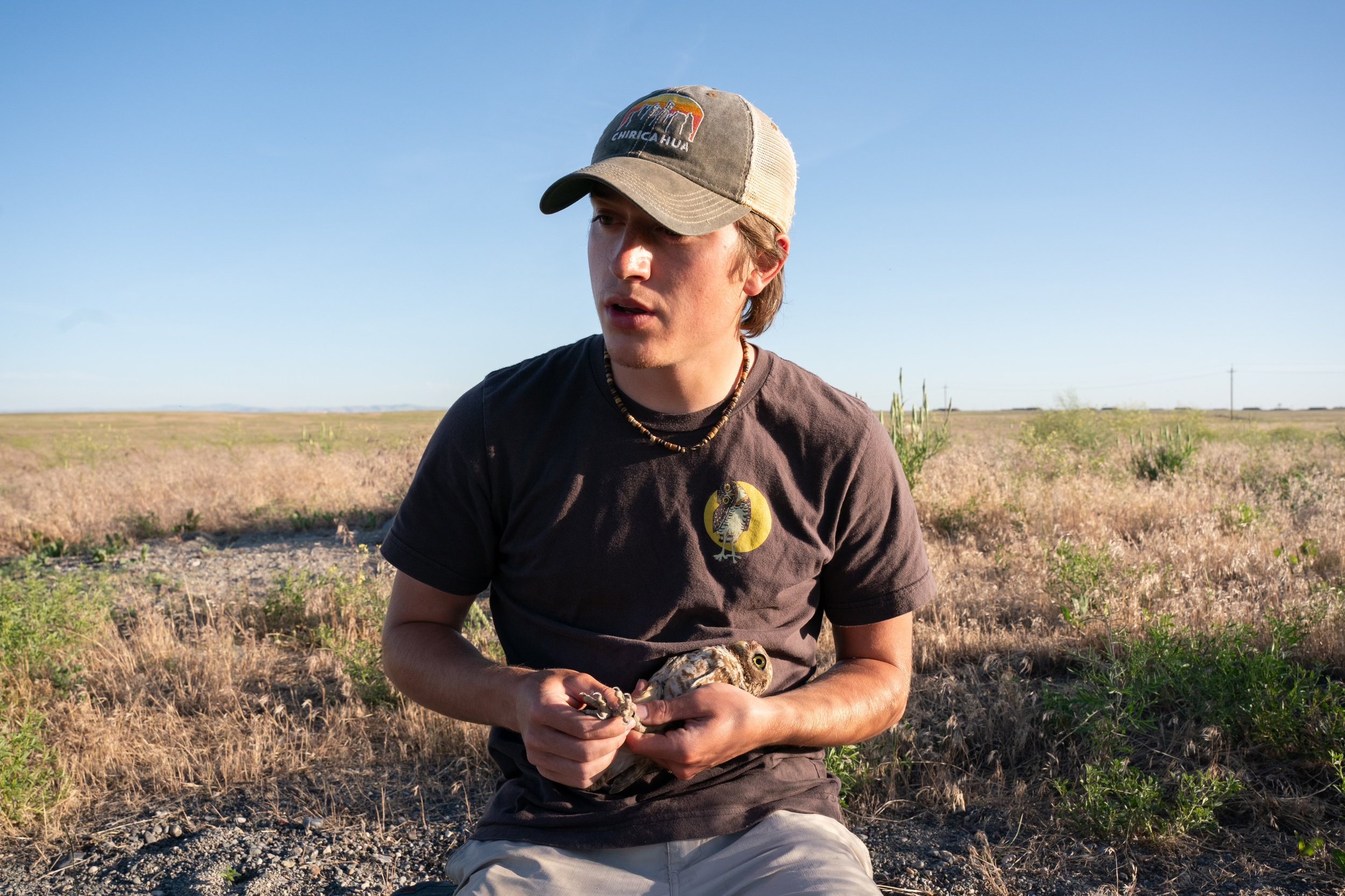
Myself processing a BUOW.
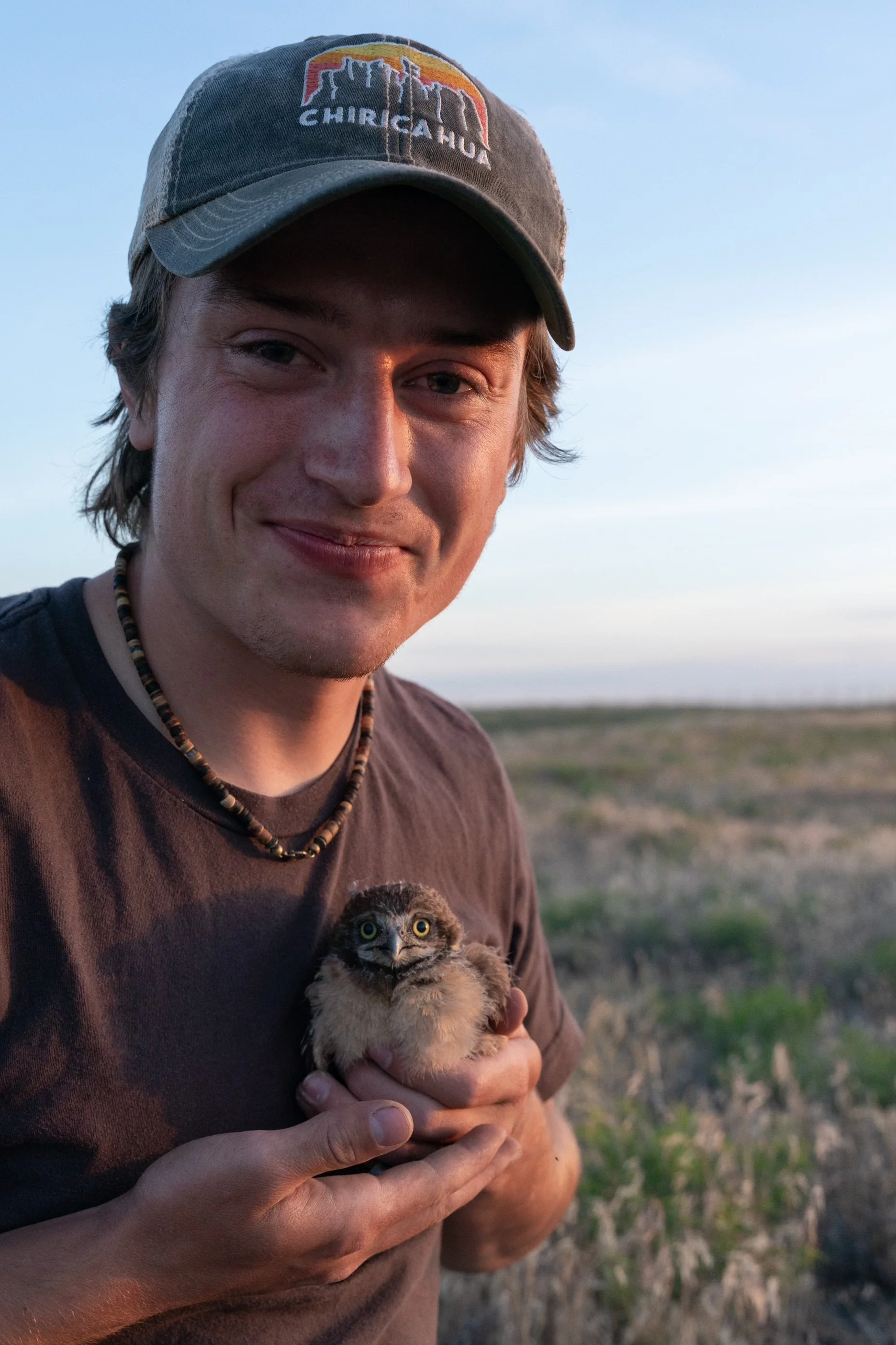
A lovely photo of a BUOW chick and I thanks to Clara!

Clara banding at the natural nest she found.
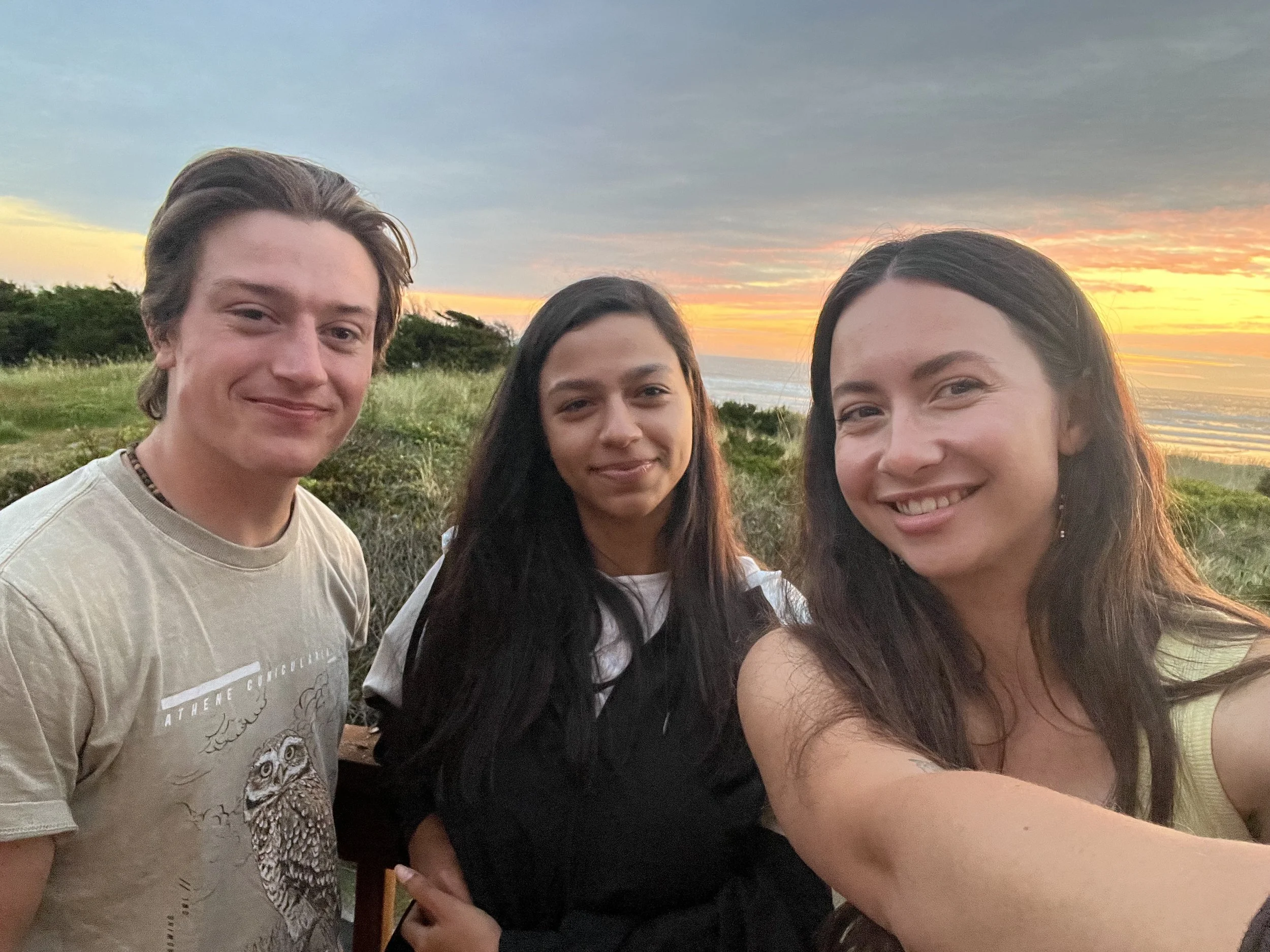
Gabriela, Solai, and I taking a quick relaxation on the Oregon coast for the weekend.
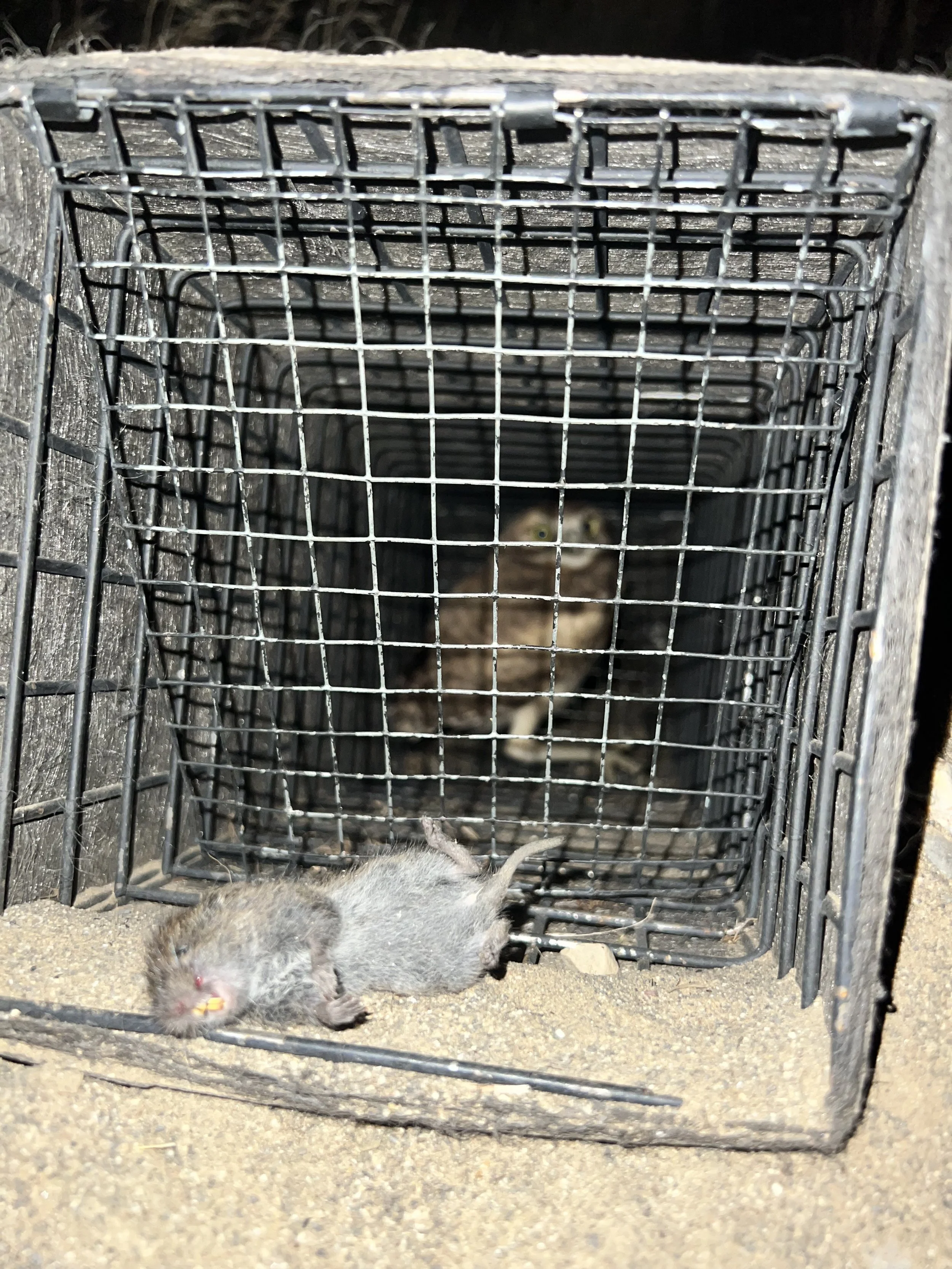
Prey delivery made to a nest where a trap was set.
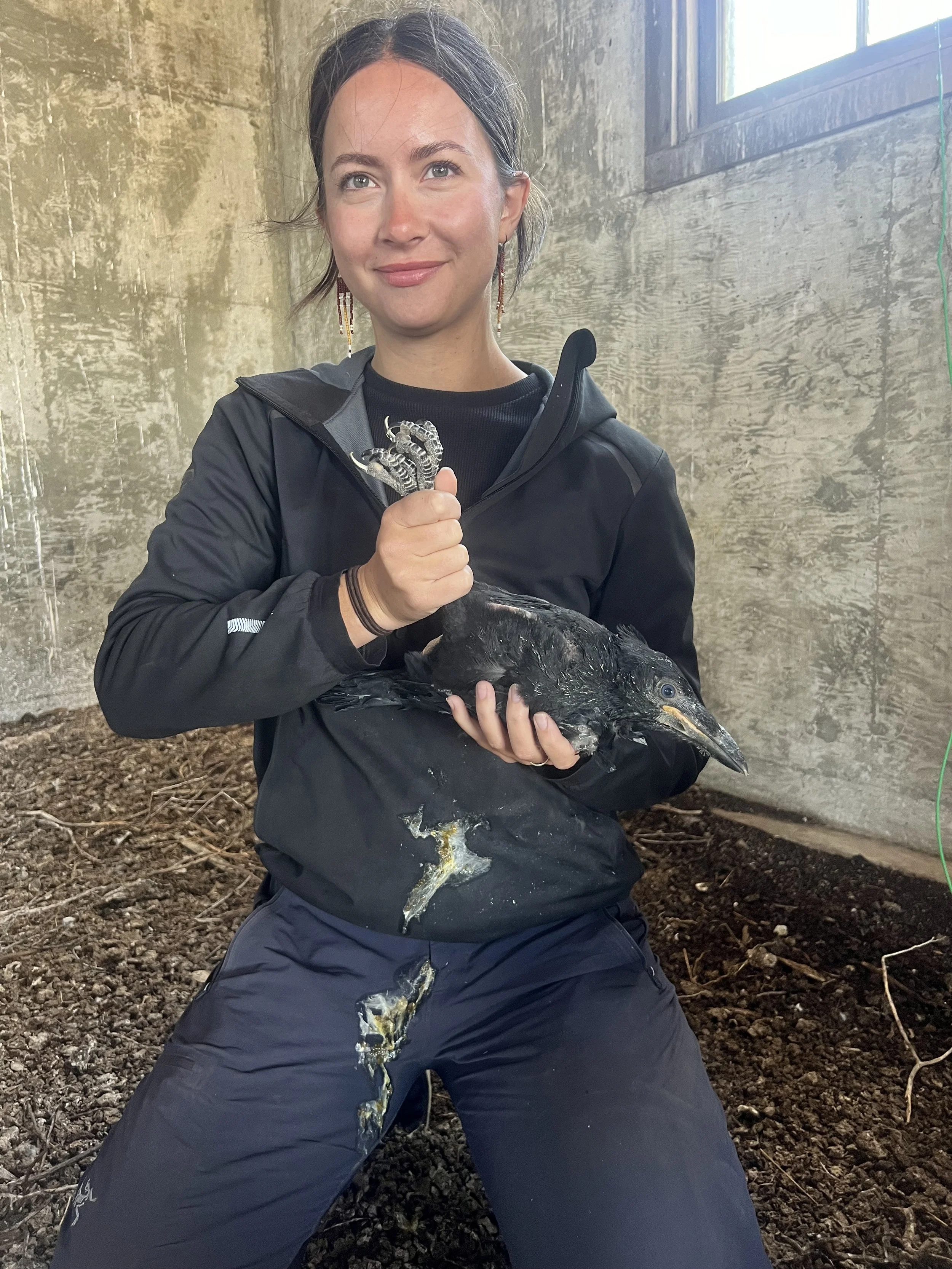
Solai, after receiving an unwelcomed gift from a Raven chick.
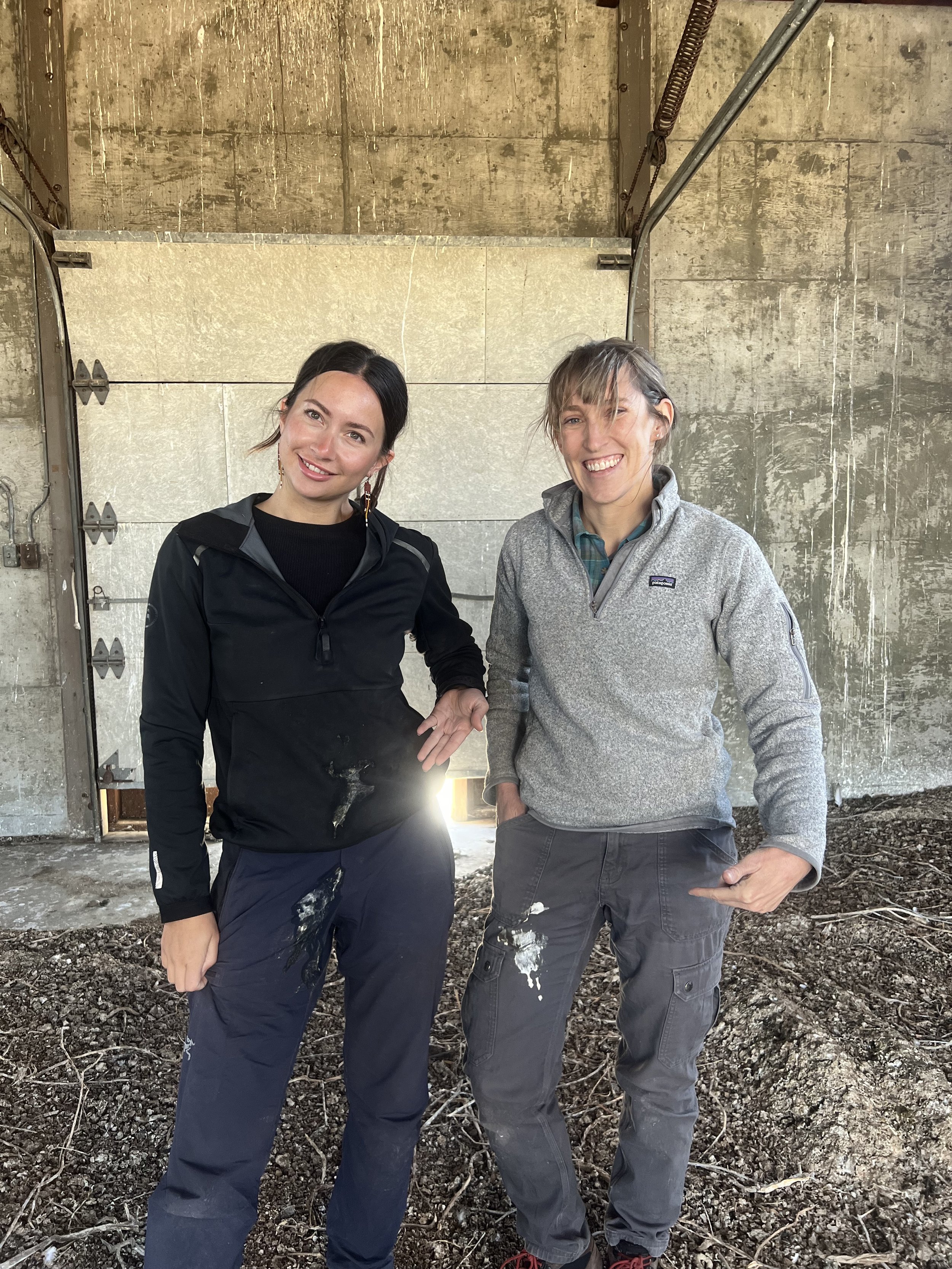
Solai and Lindsay showing off some stinky Raven goo.
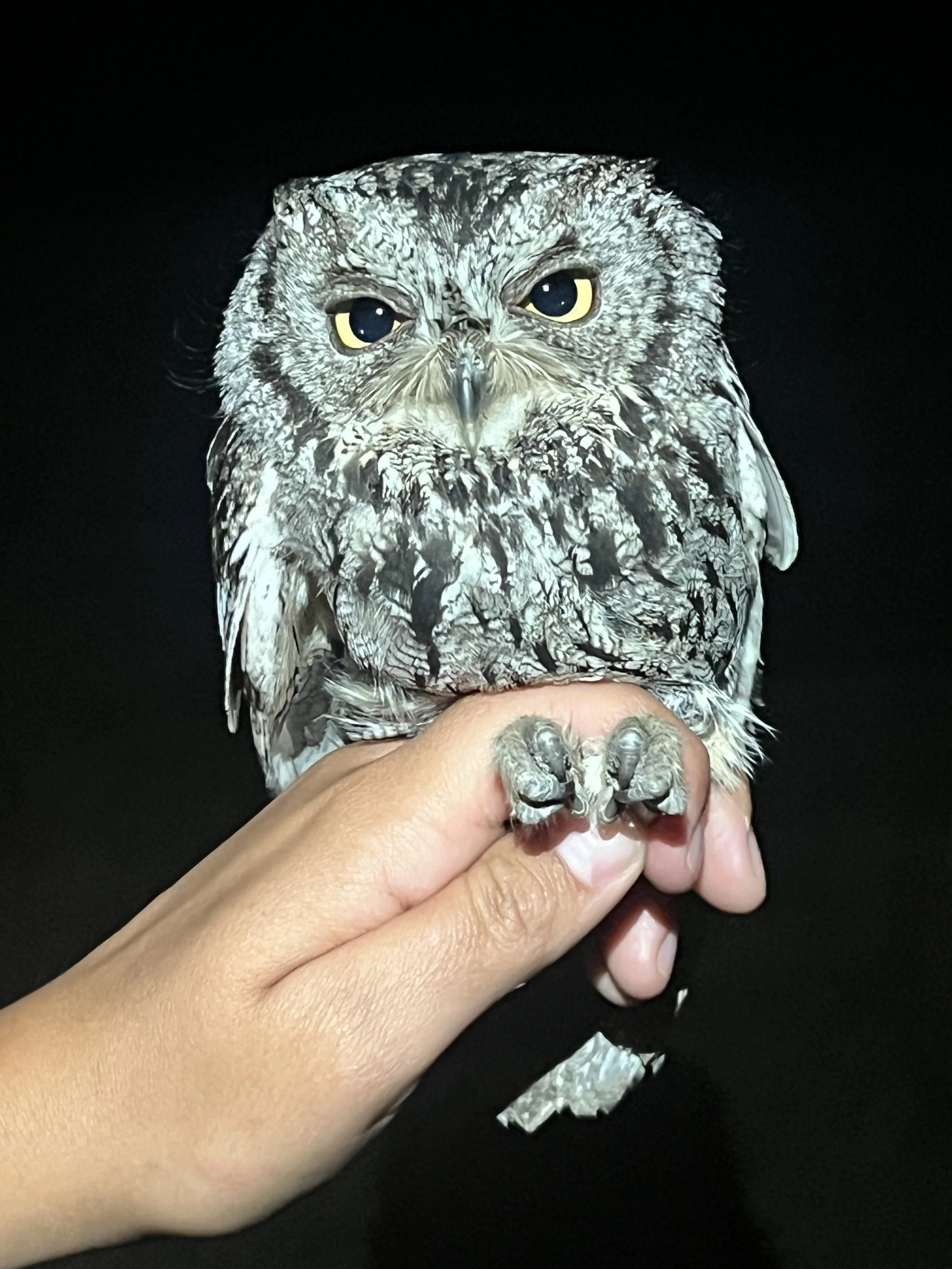
Western Screech-Owl.
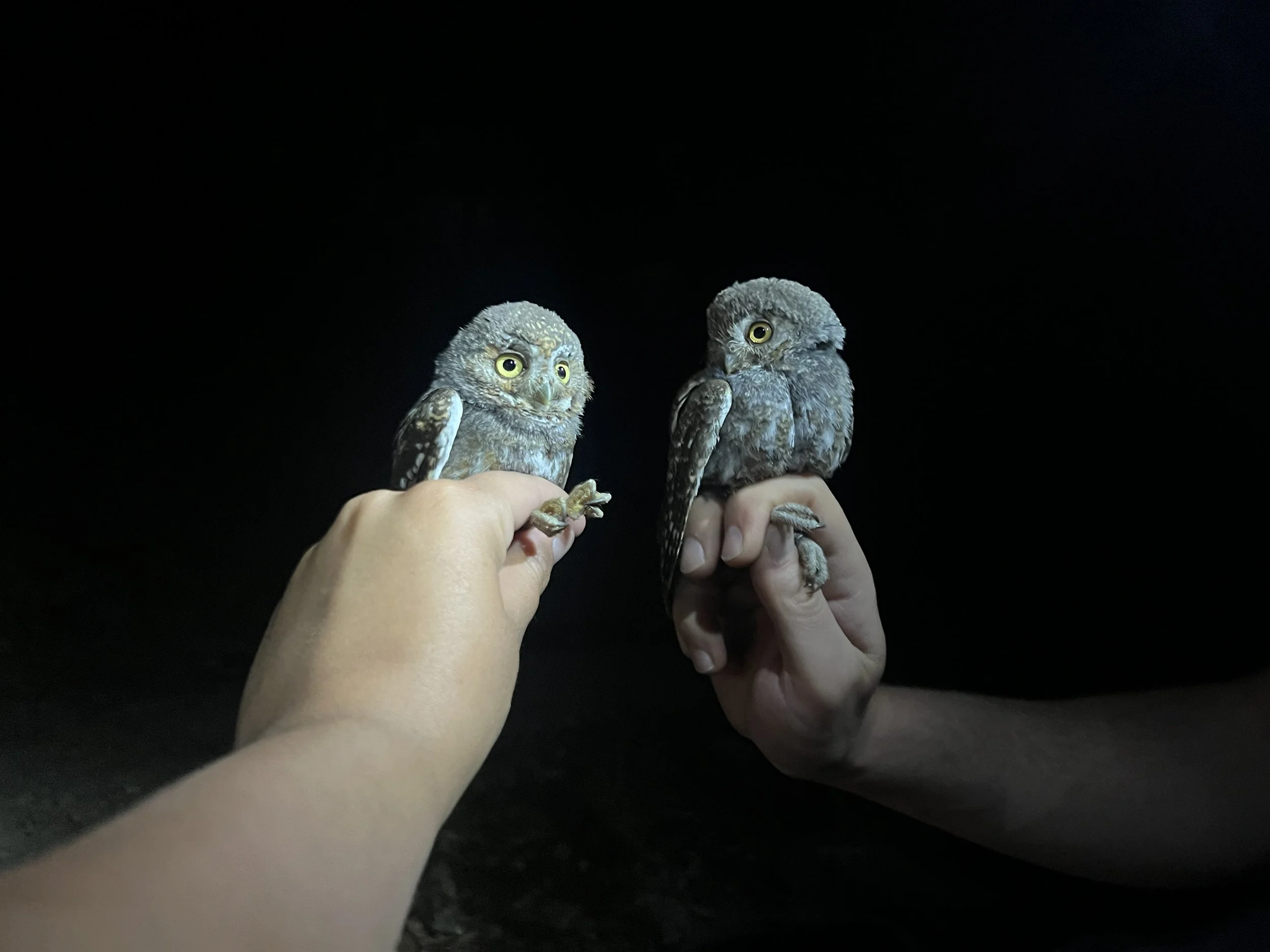
A pair of Elf Owls.
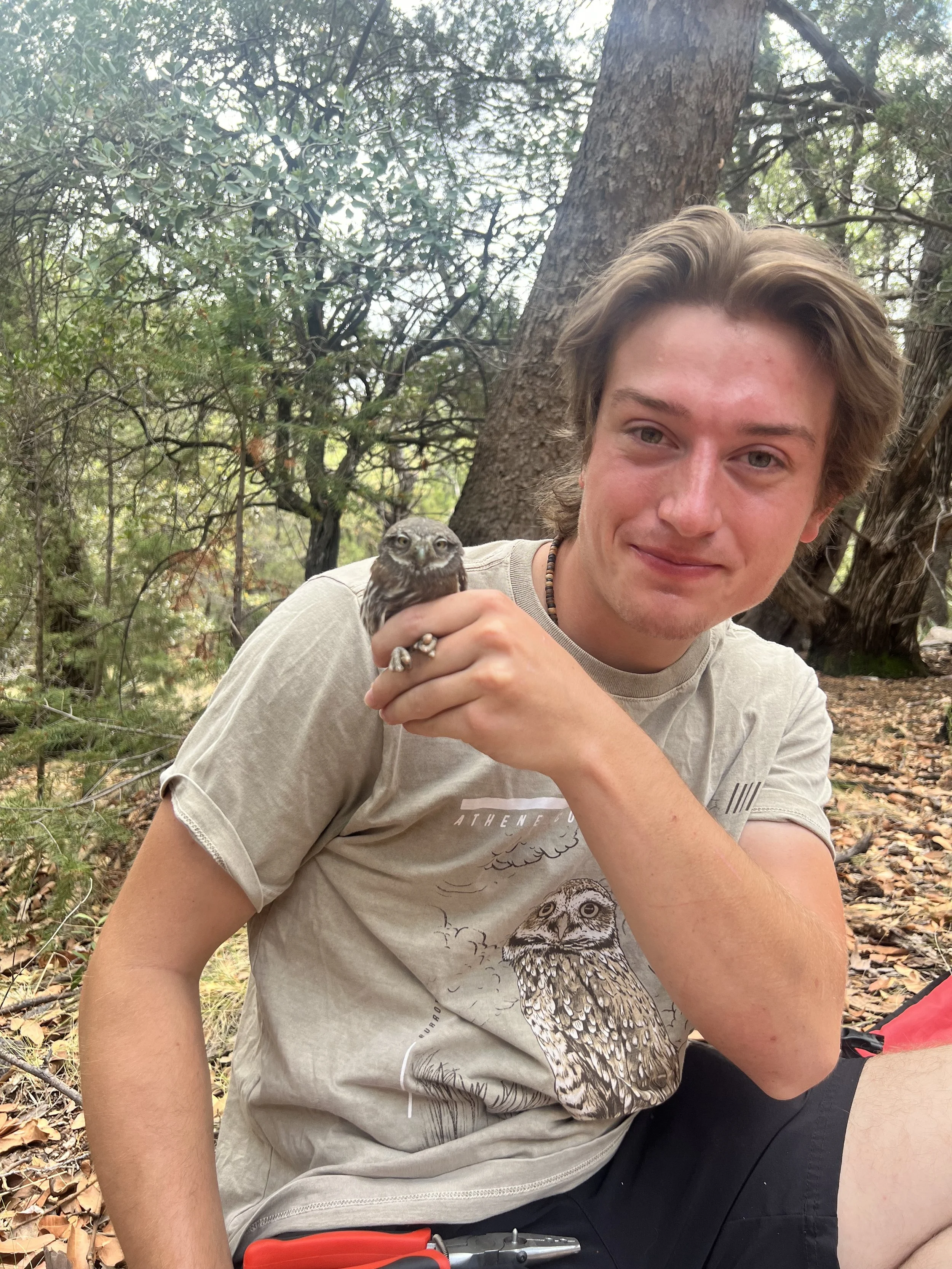
Quick photo of me and a Mountain Pygmy-Owl fledgling.
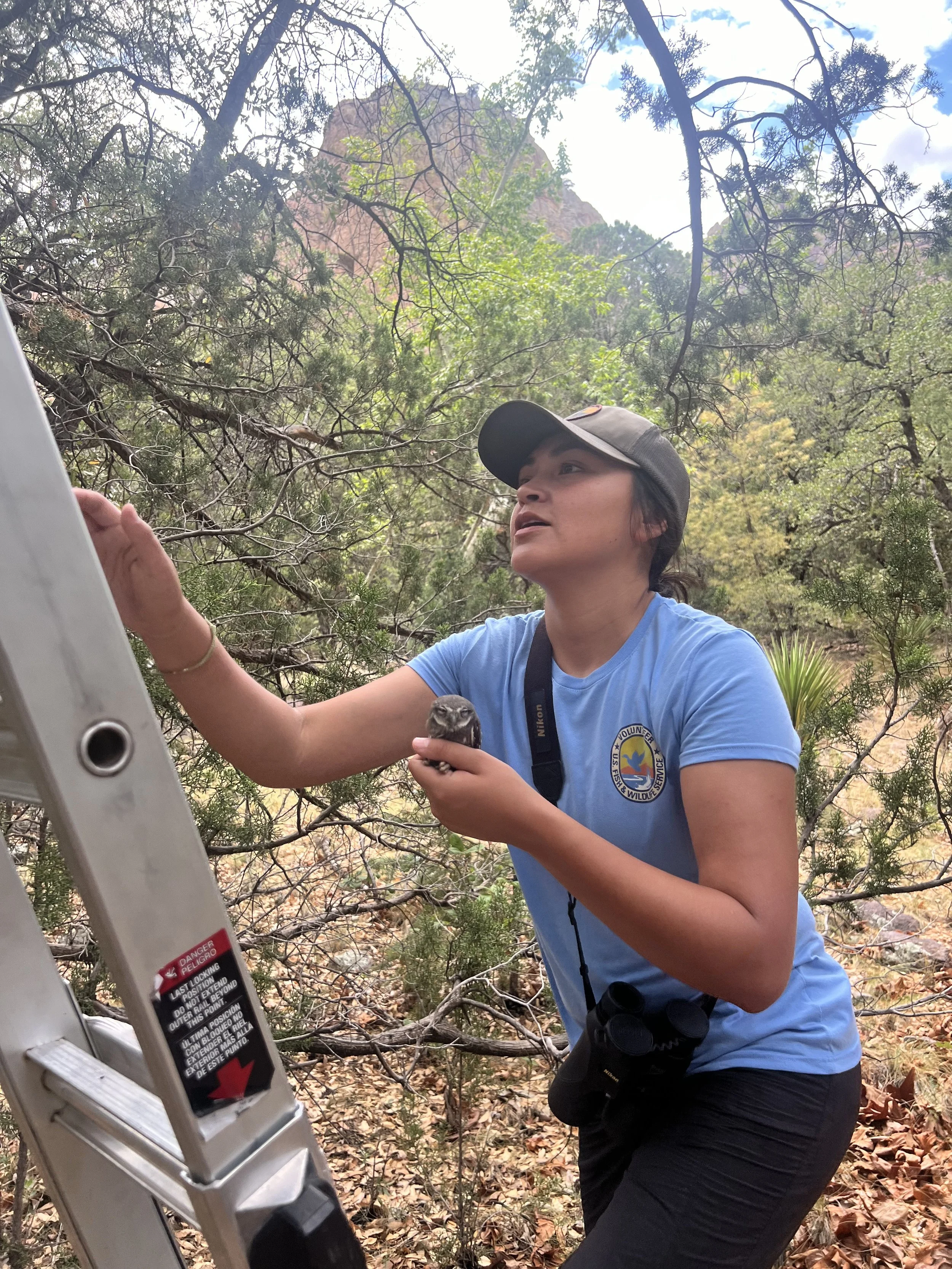
Kassandra putting the pygmy owl chick back up into the tree.
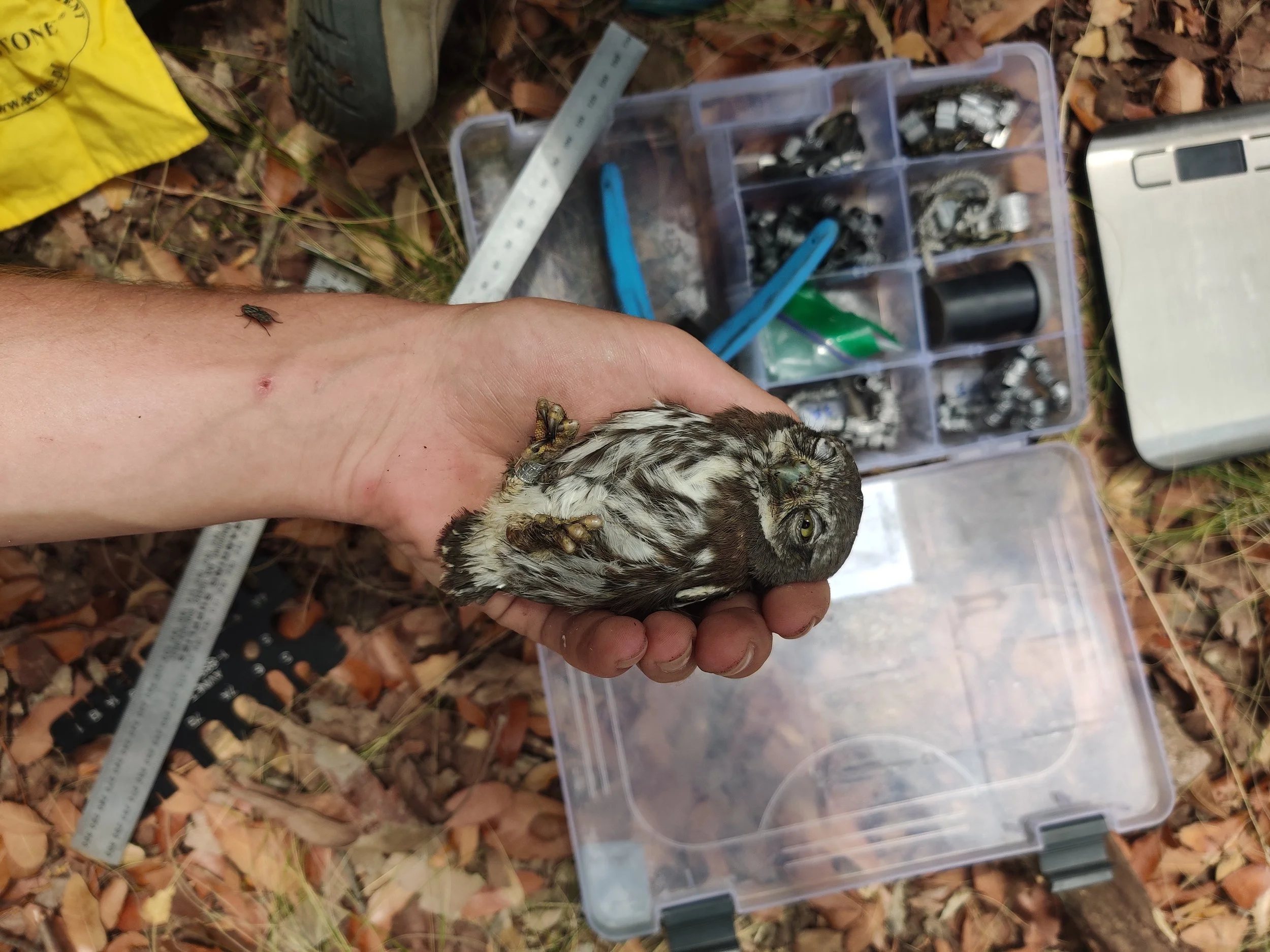
A banded and processed NOPO chick.
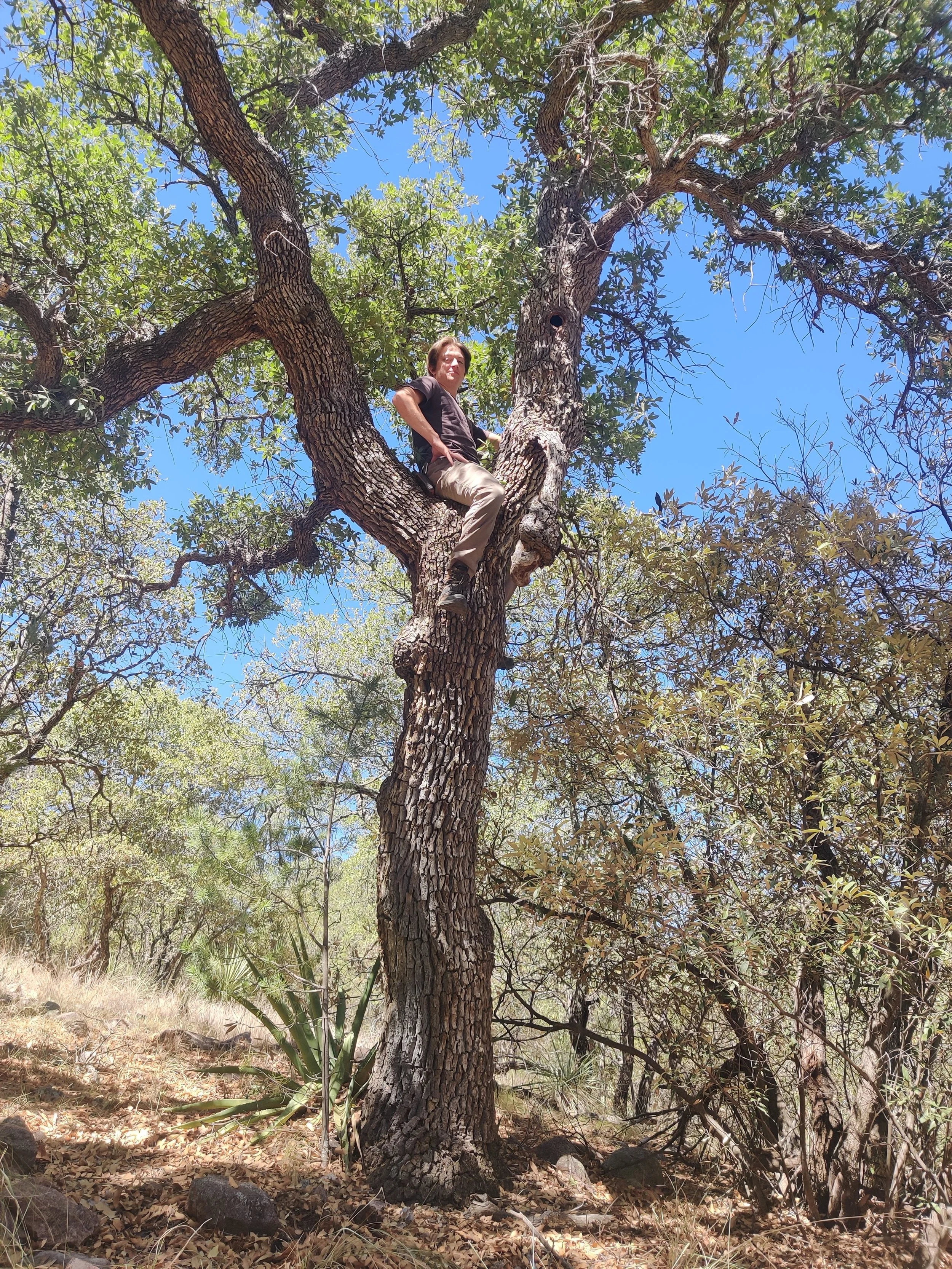
This tree and I go way back.
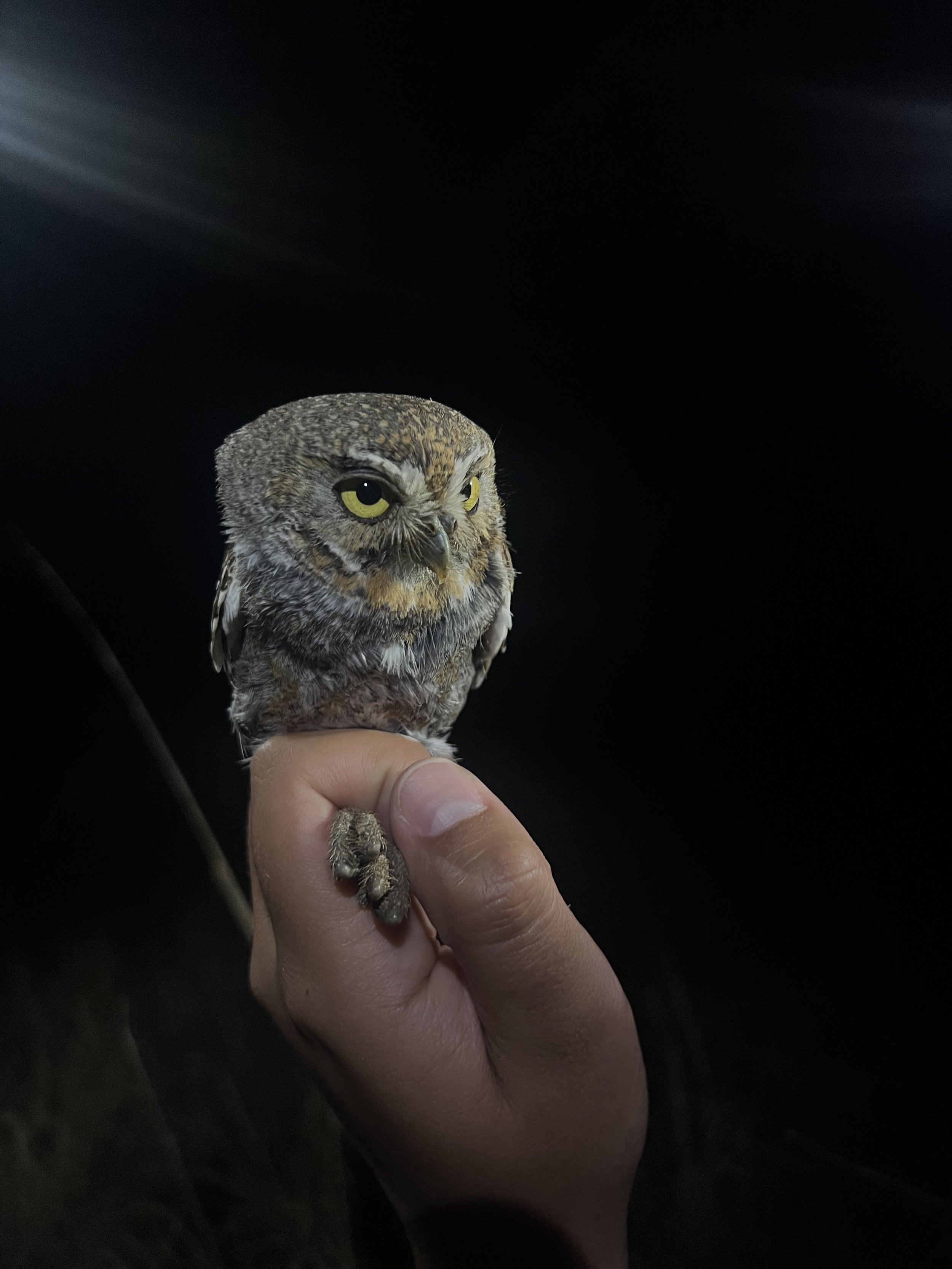
Elf Owl.
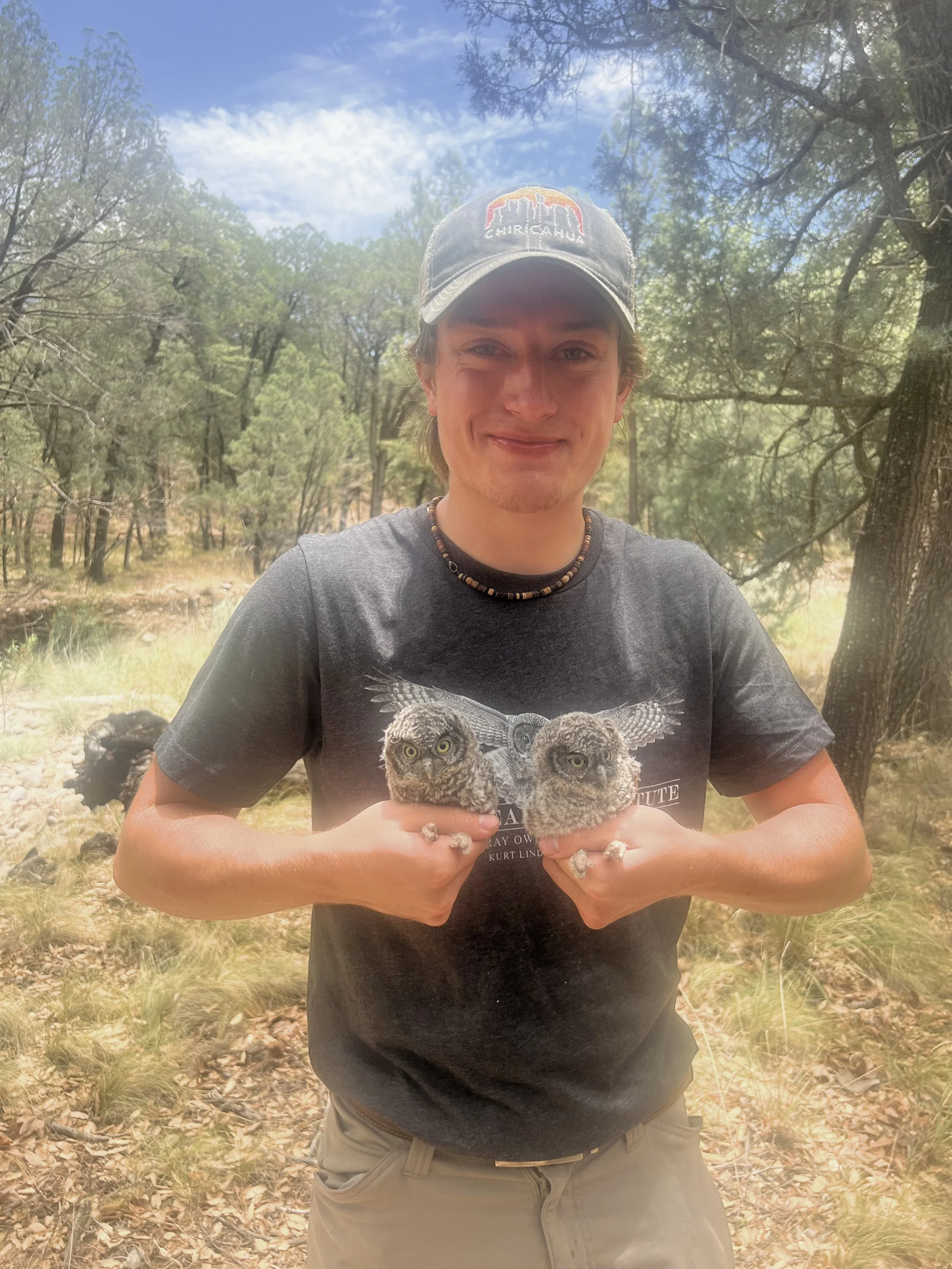
Me with two Whiskered Screech-Owl Fledglings.
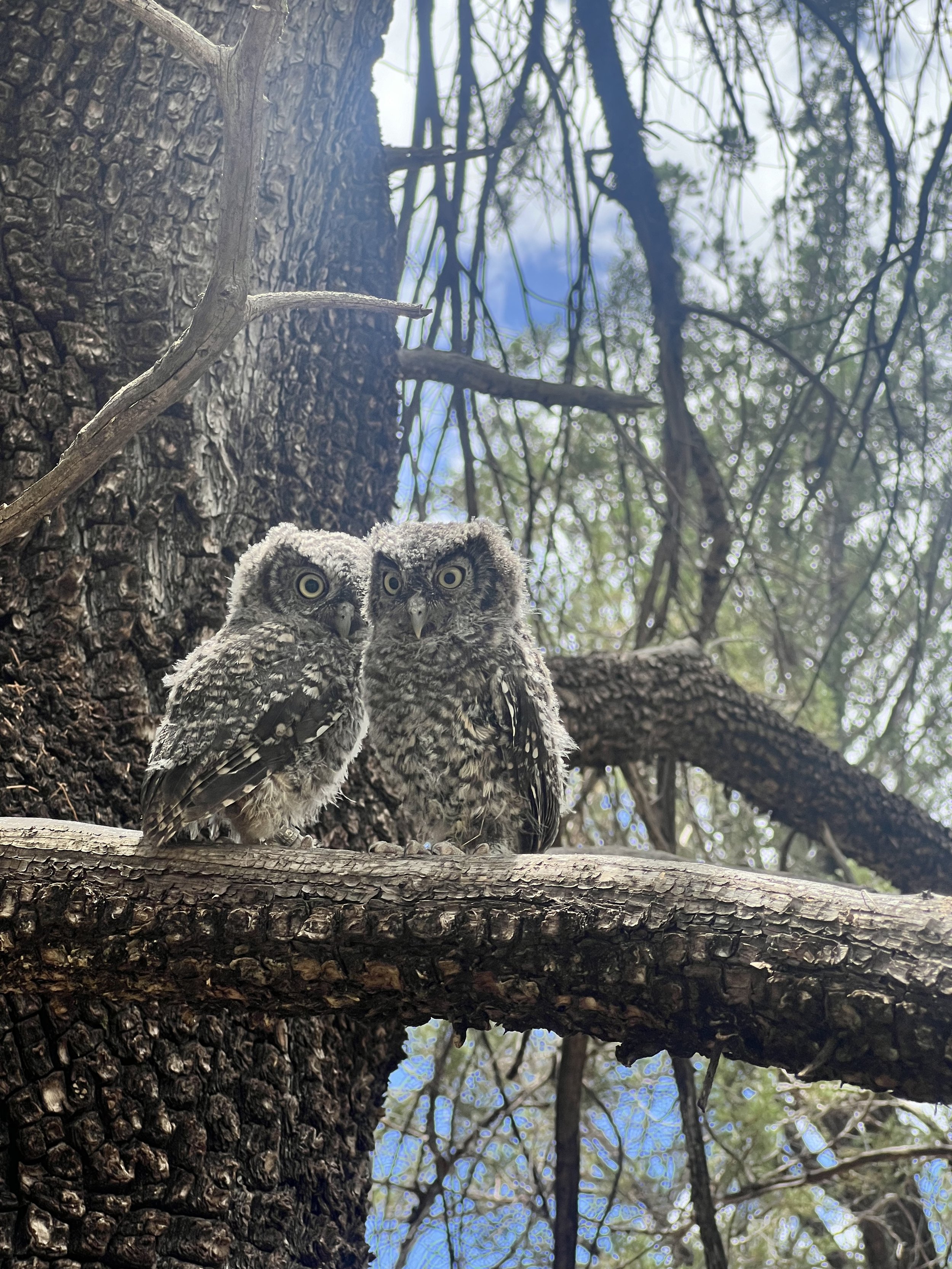
The released WHSO fledgling back into the tree.
Kassandra's phone decided it was its time.
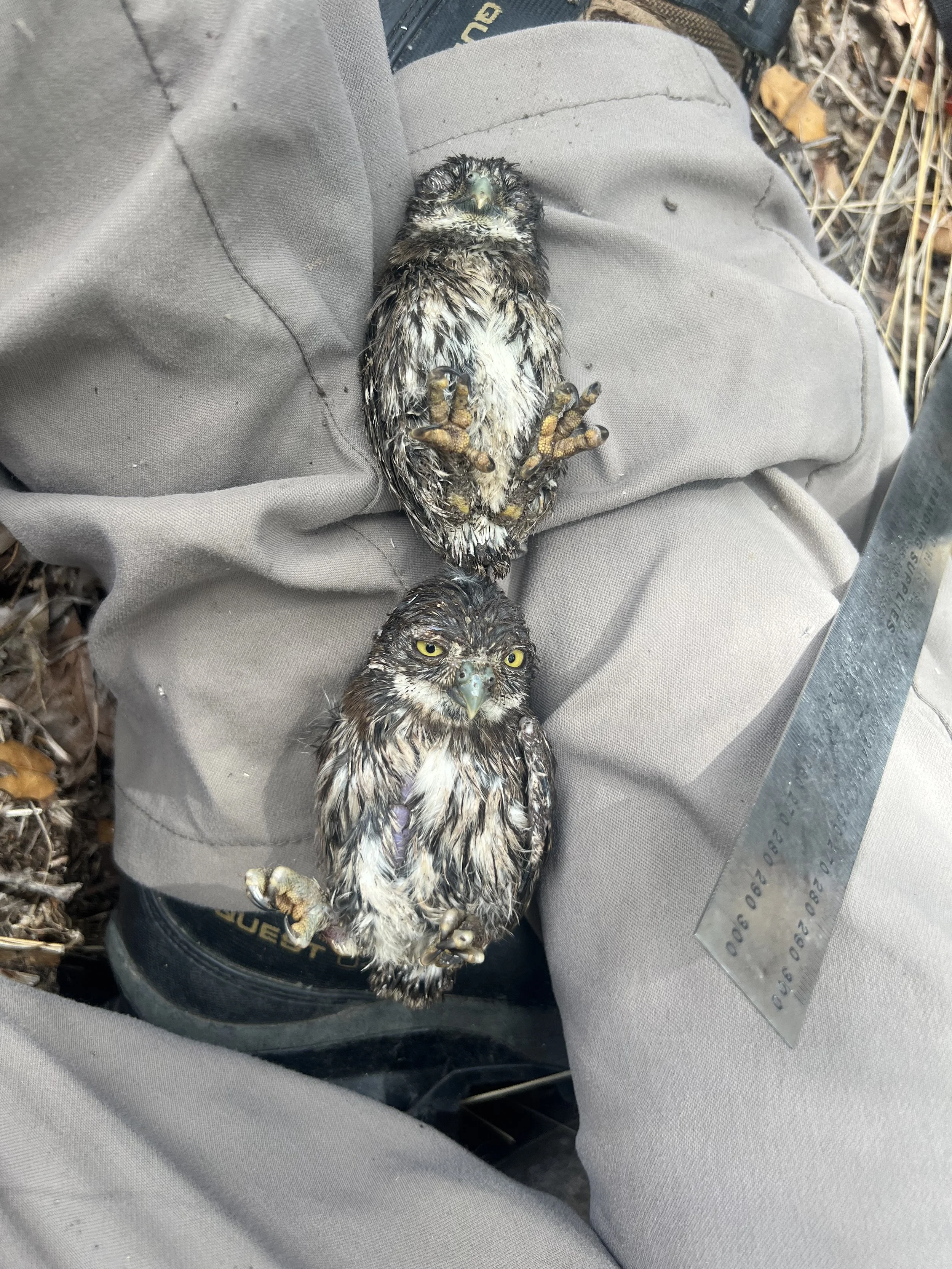
Two NOPO chicks, ready to be banded.
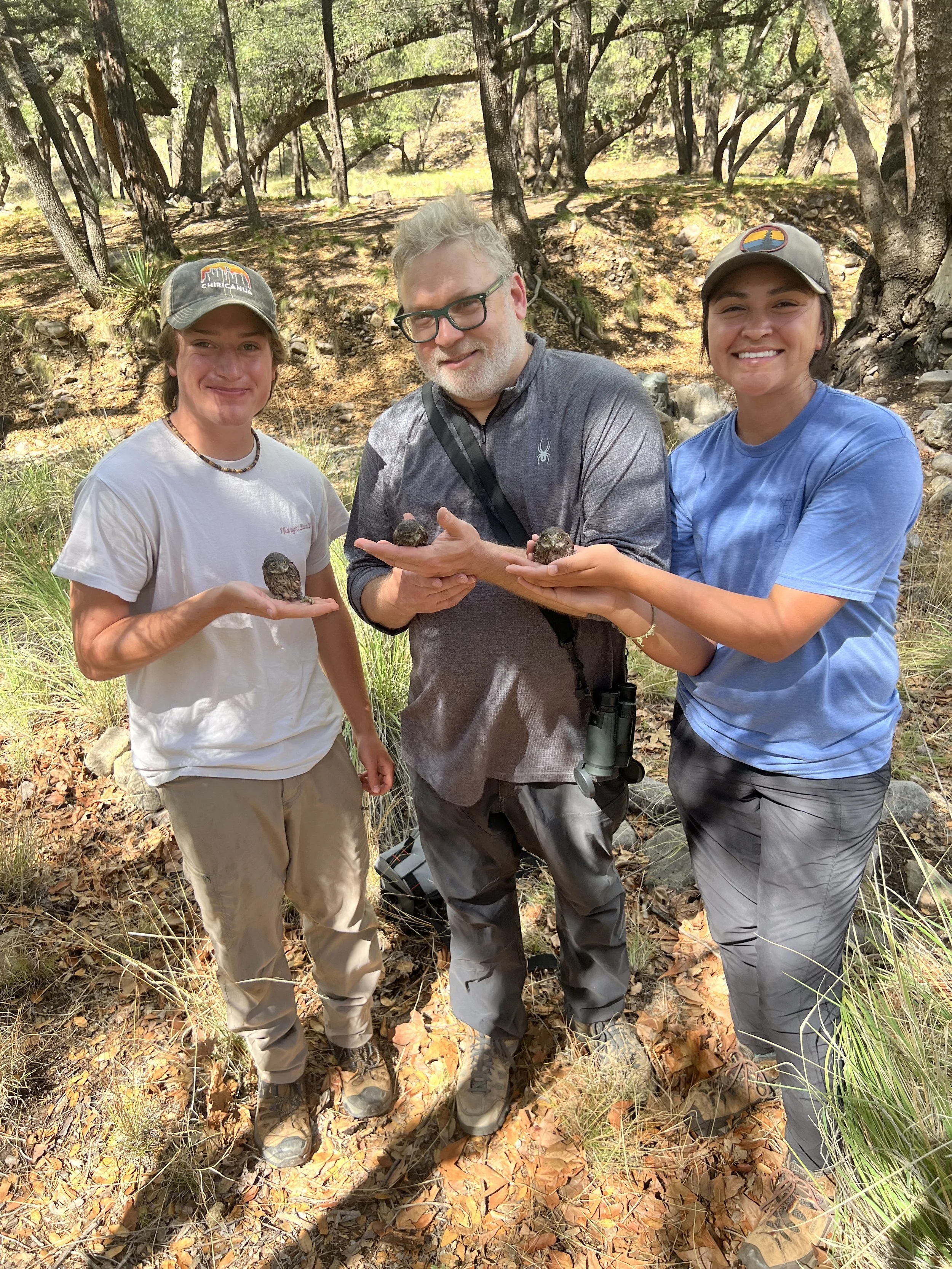
Dave, Kassandra, and I, each with a NOPO fledgling.
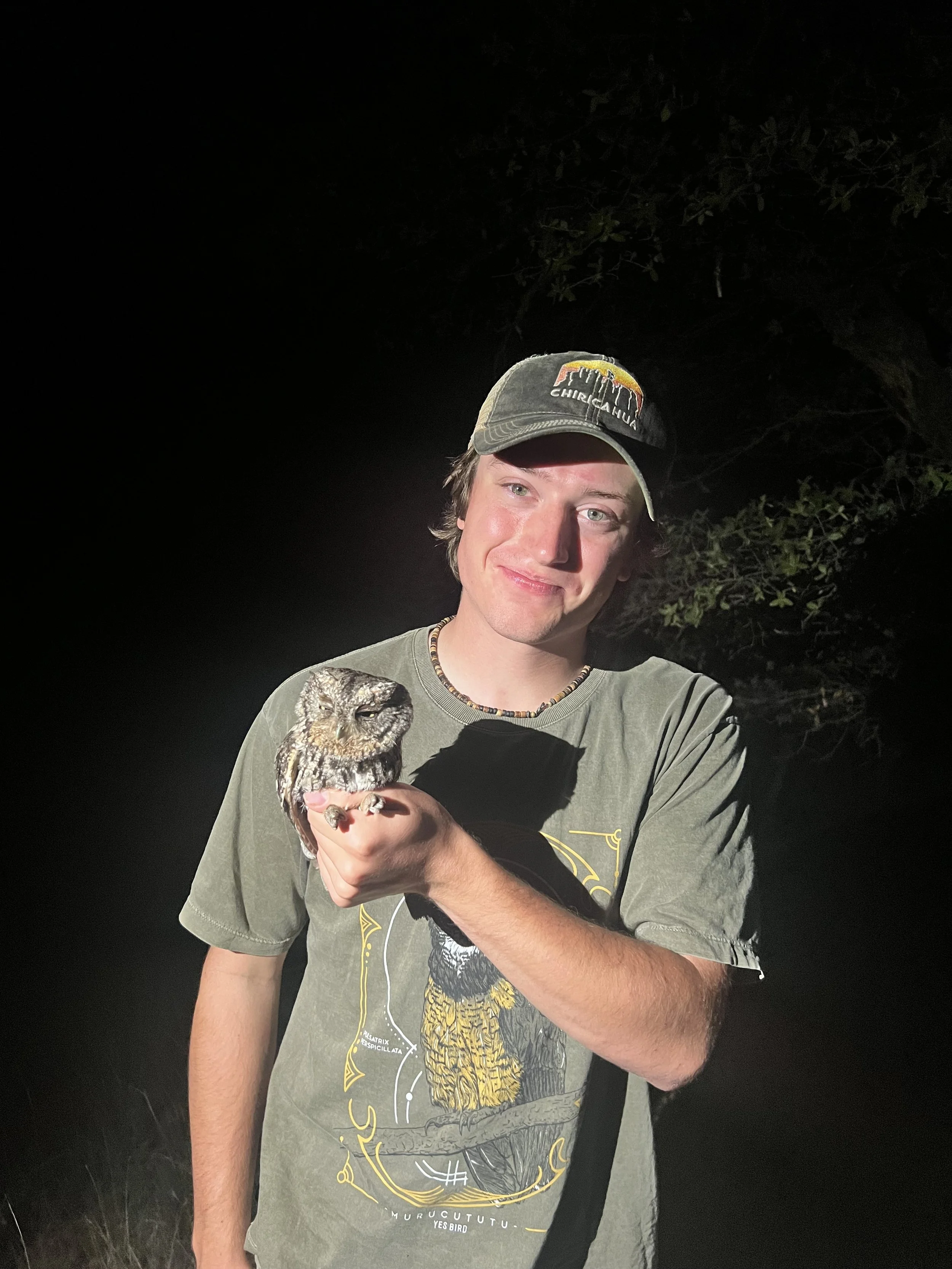
A happy me with a WHSO.
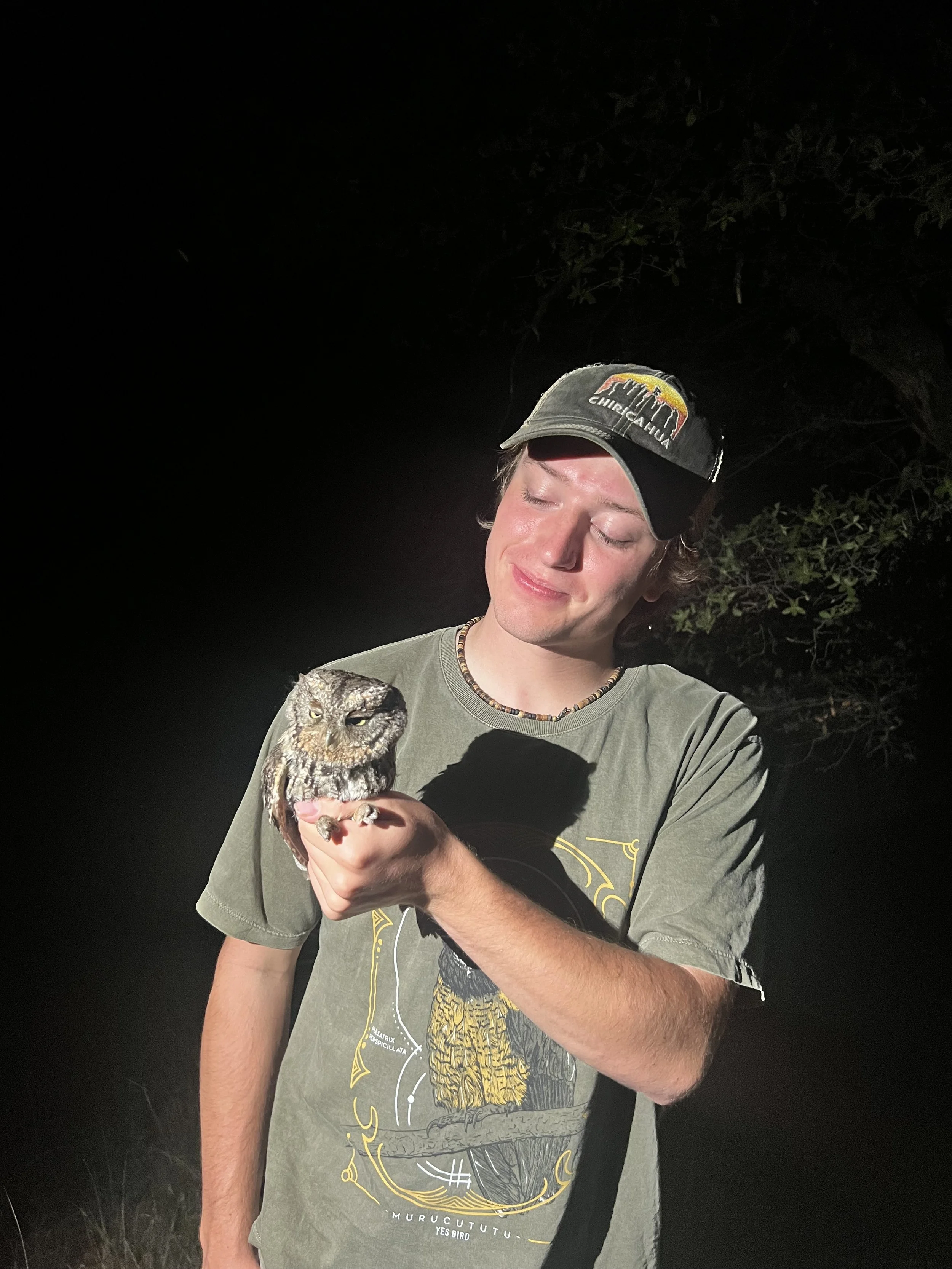
A happy me with a WHSO.
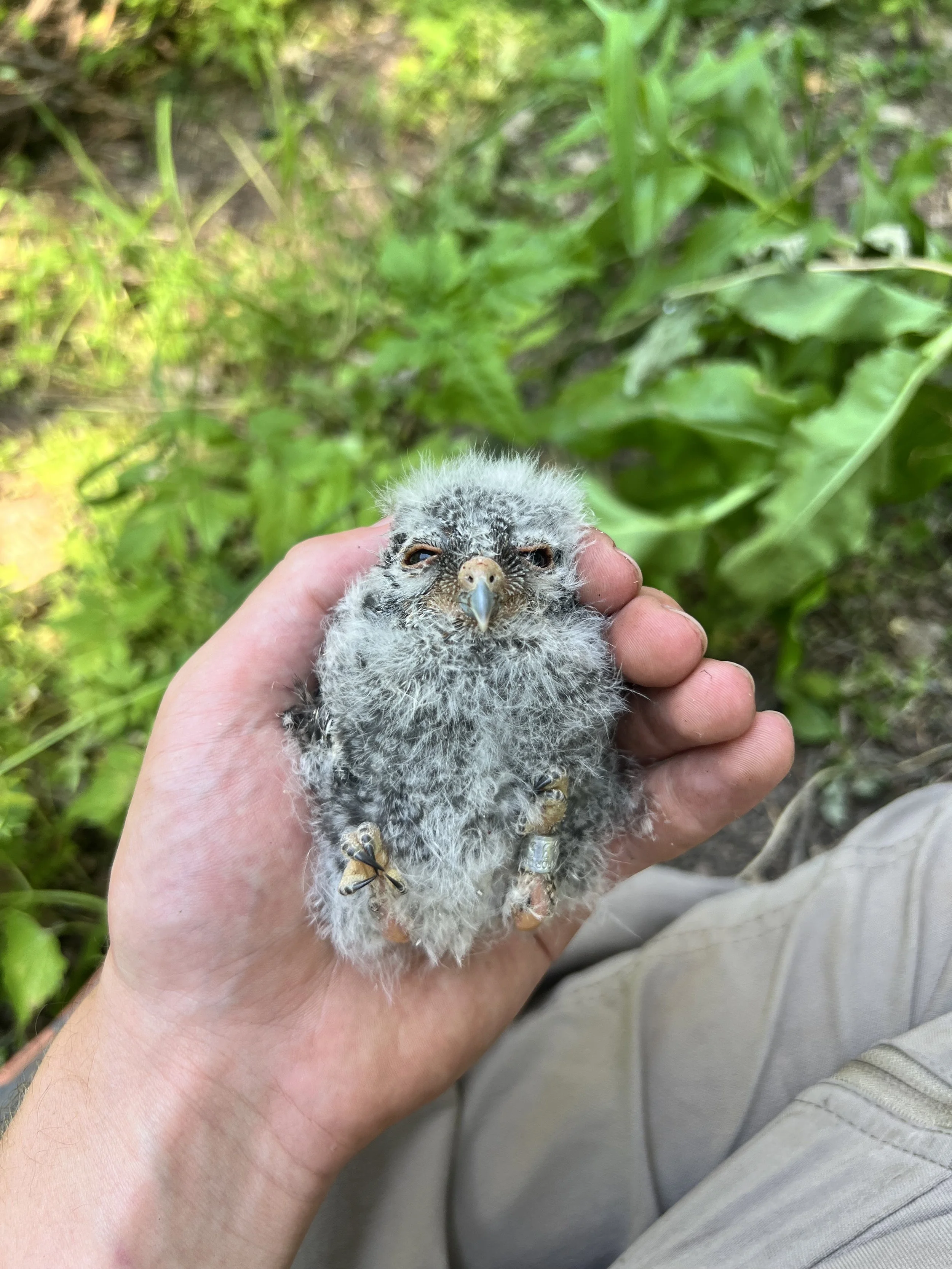
A banded Flammulated Owl nestling.
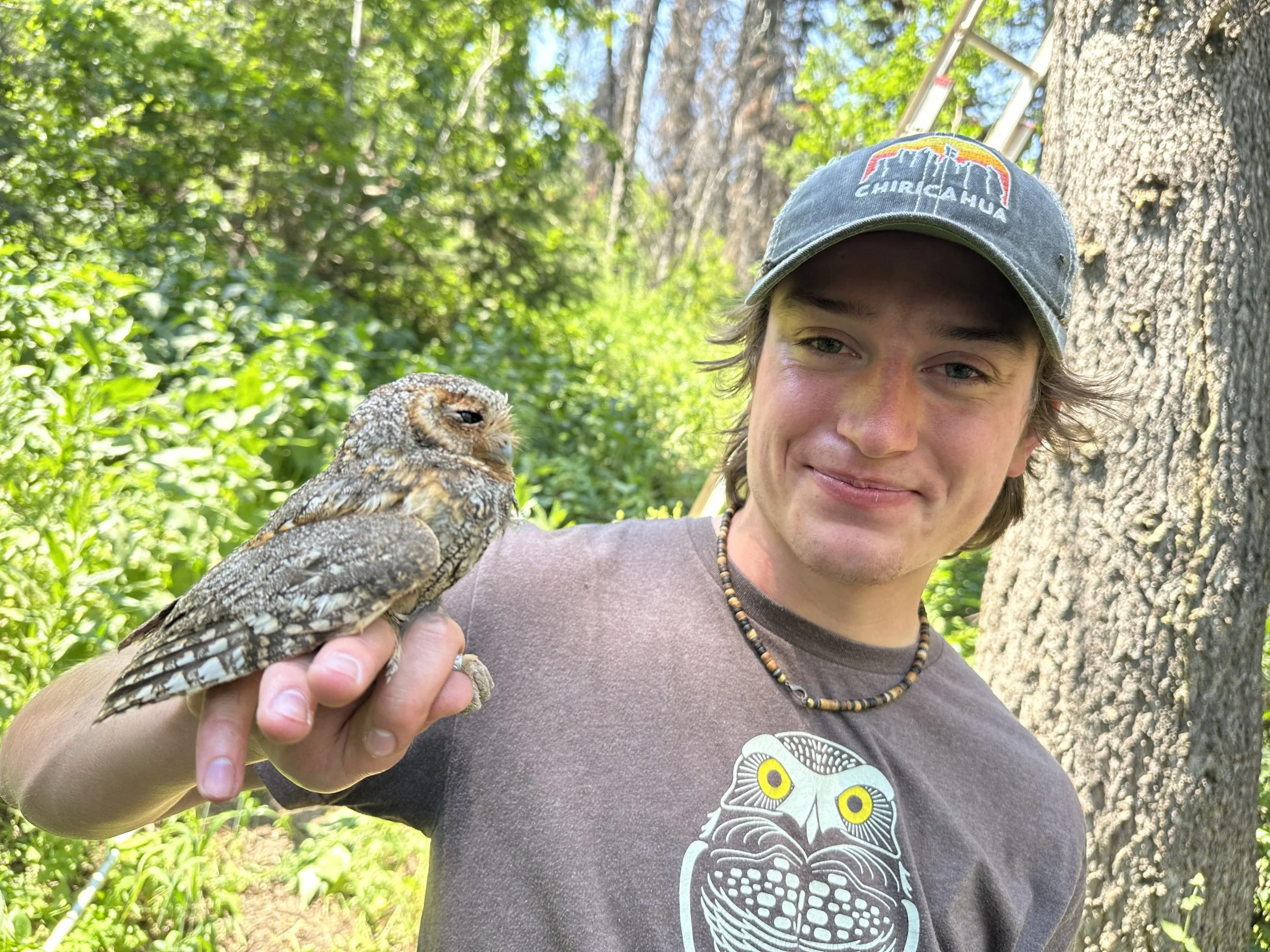
My first adult FLOW. They are beautiful!
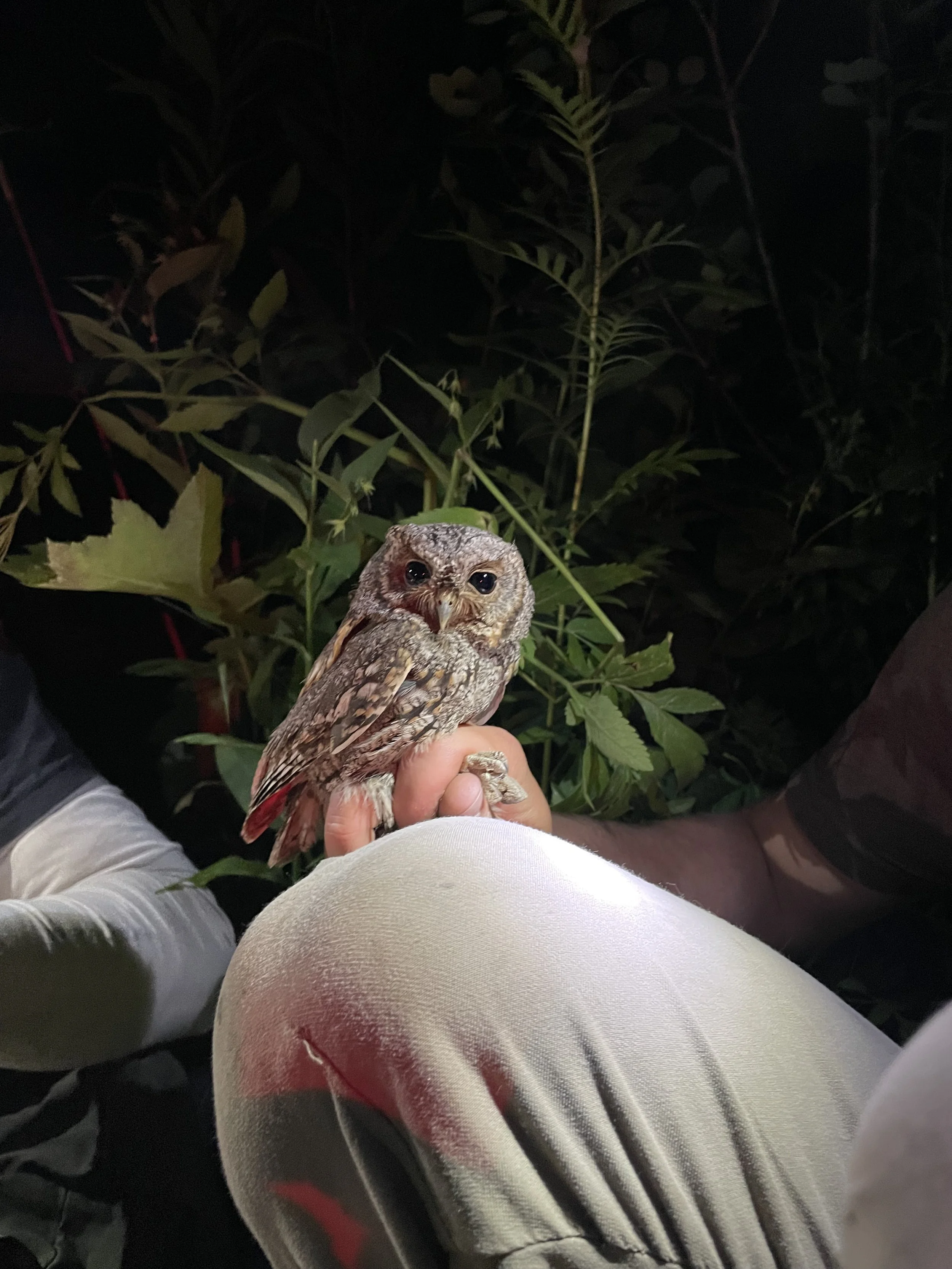
Flammulated Owl.
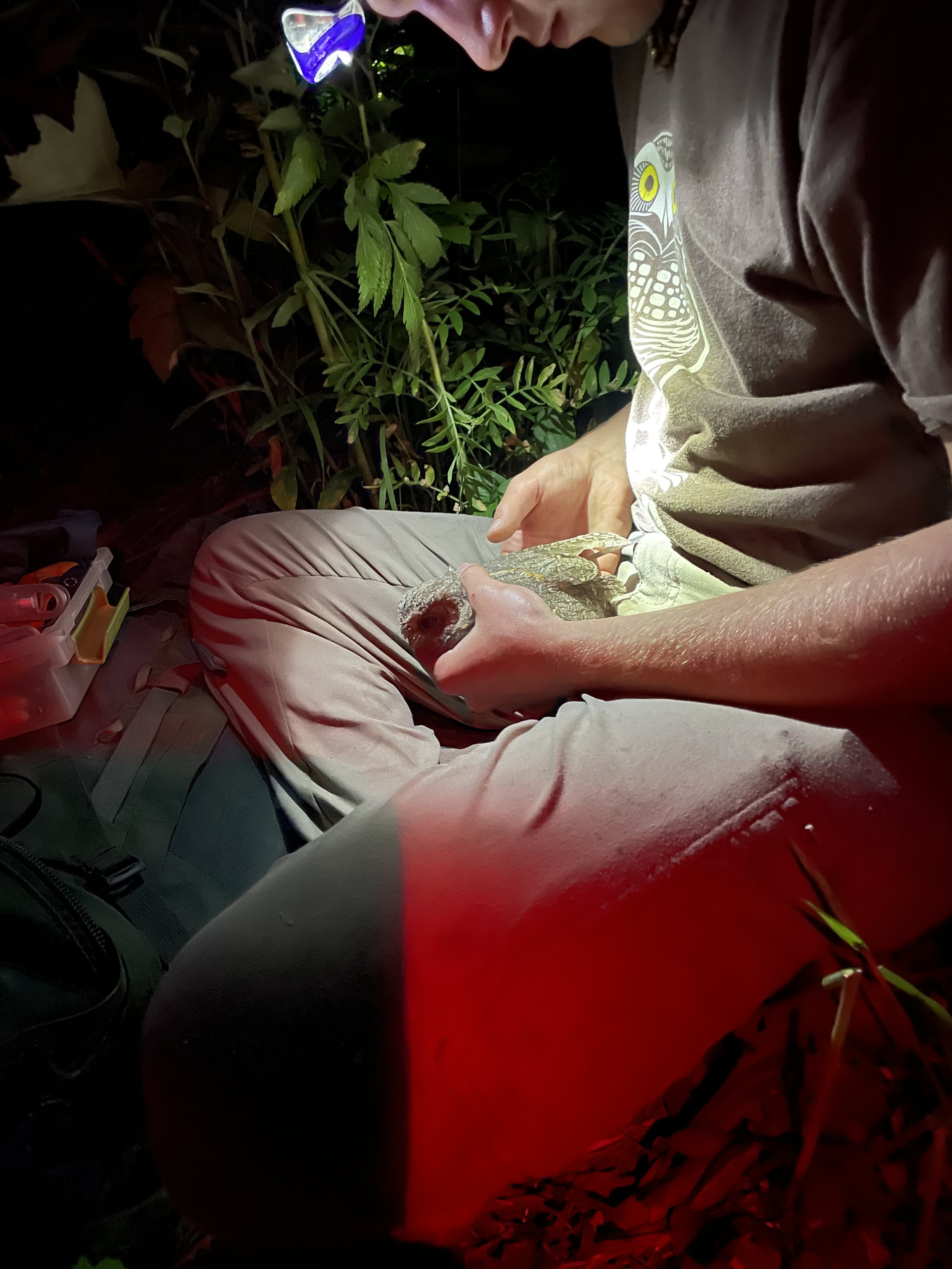
Processing a FLOW.
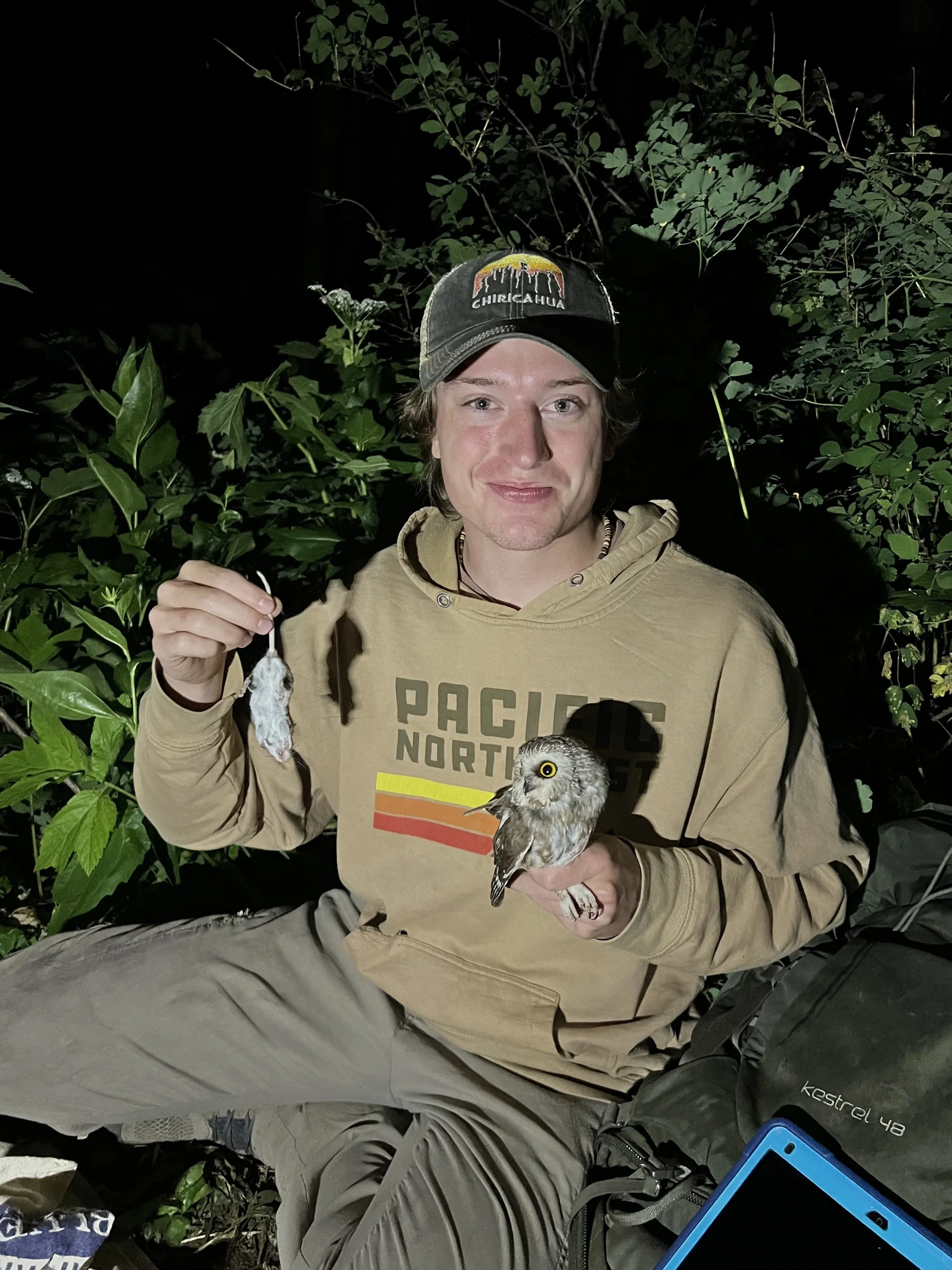
Captured a male Northern Saw-whet Owl with prey.
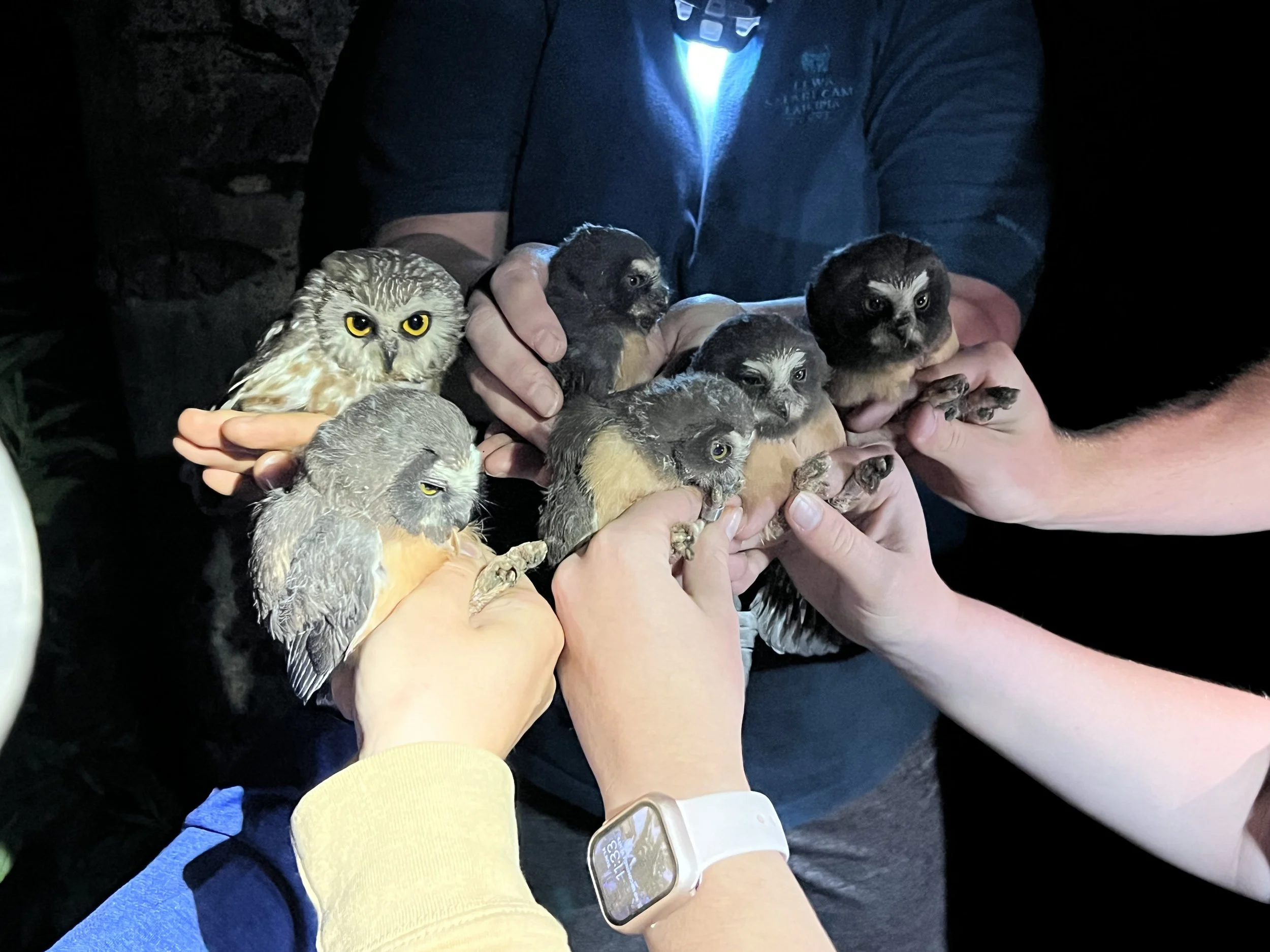
Family of NSWO's after being banded.
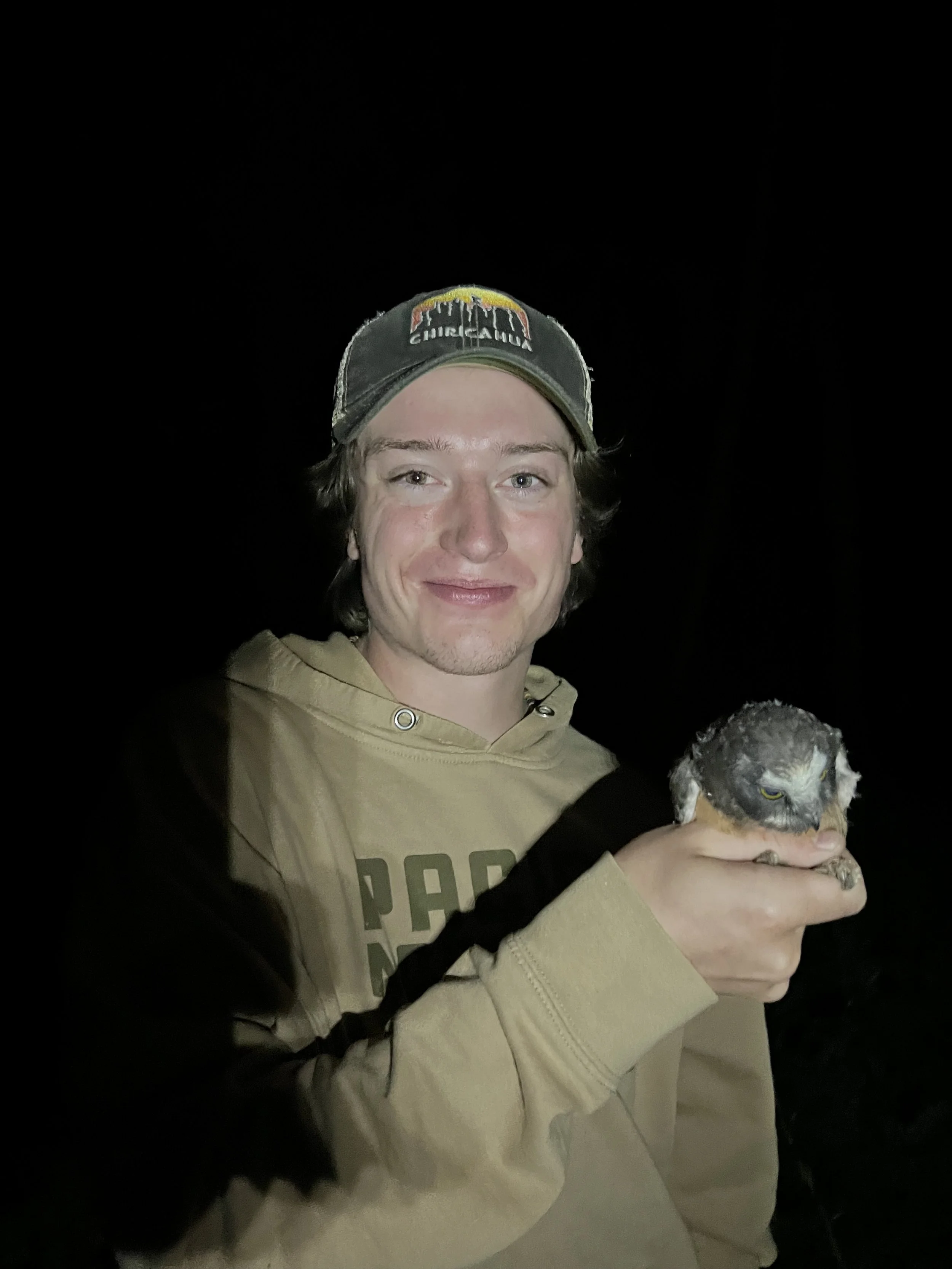
Myself and a NSWO chick.
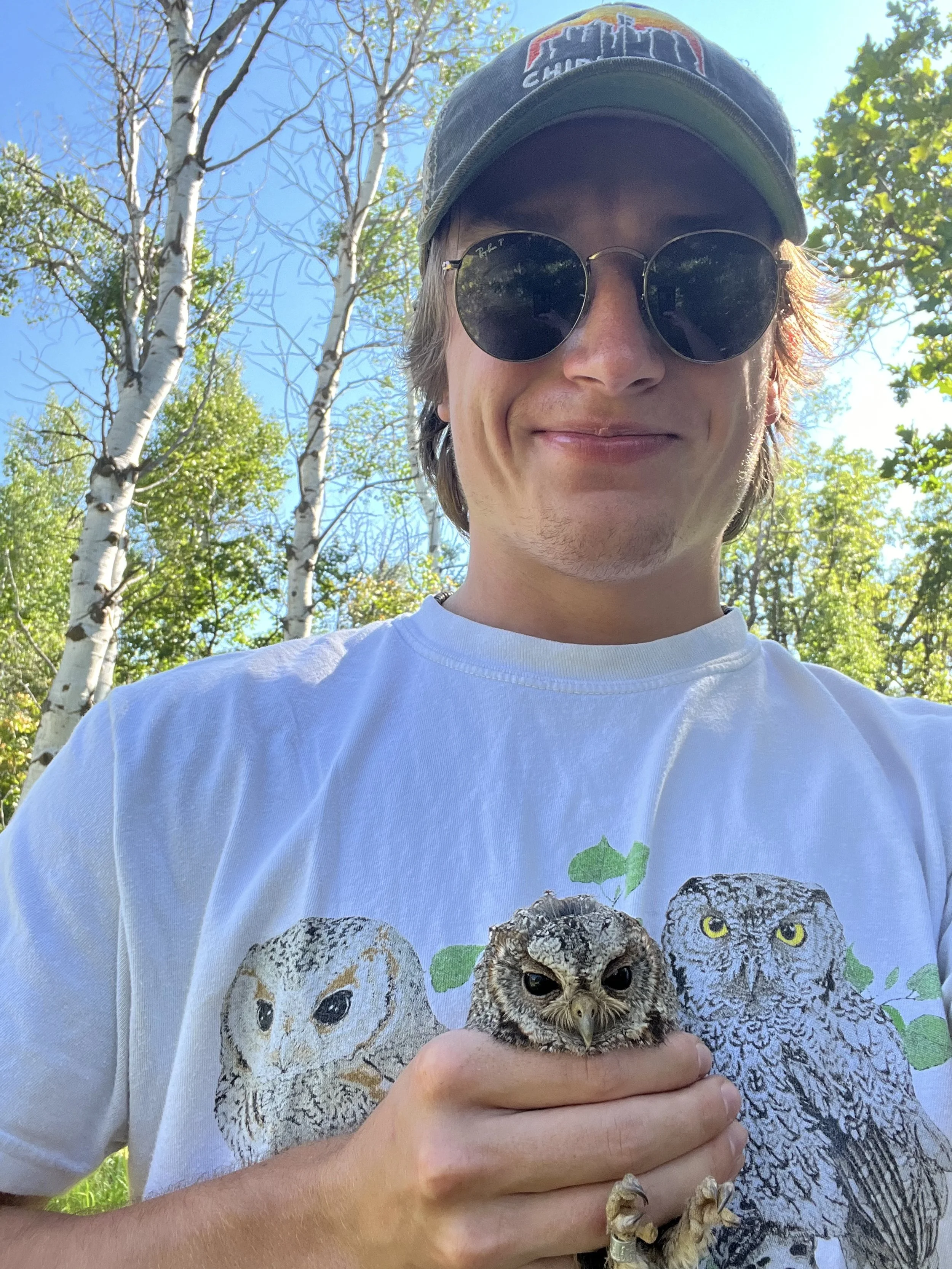
A FLOW next to his picture on my shirt.
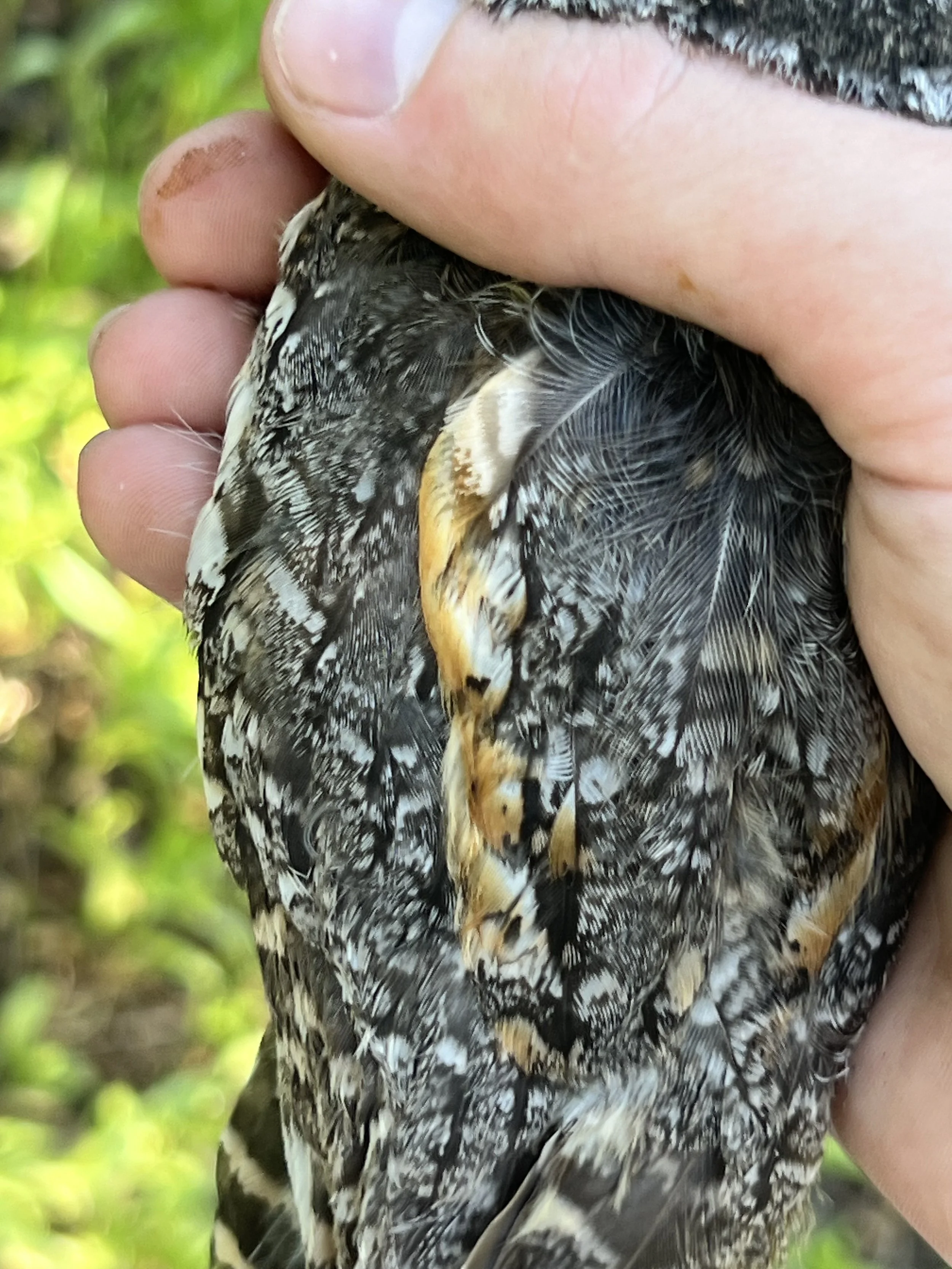
The flame-colored streaks of a Flammulated owl - where they get their name.
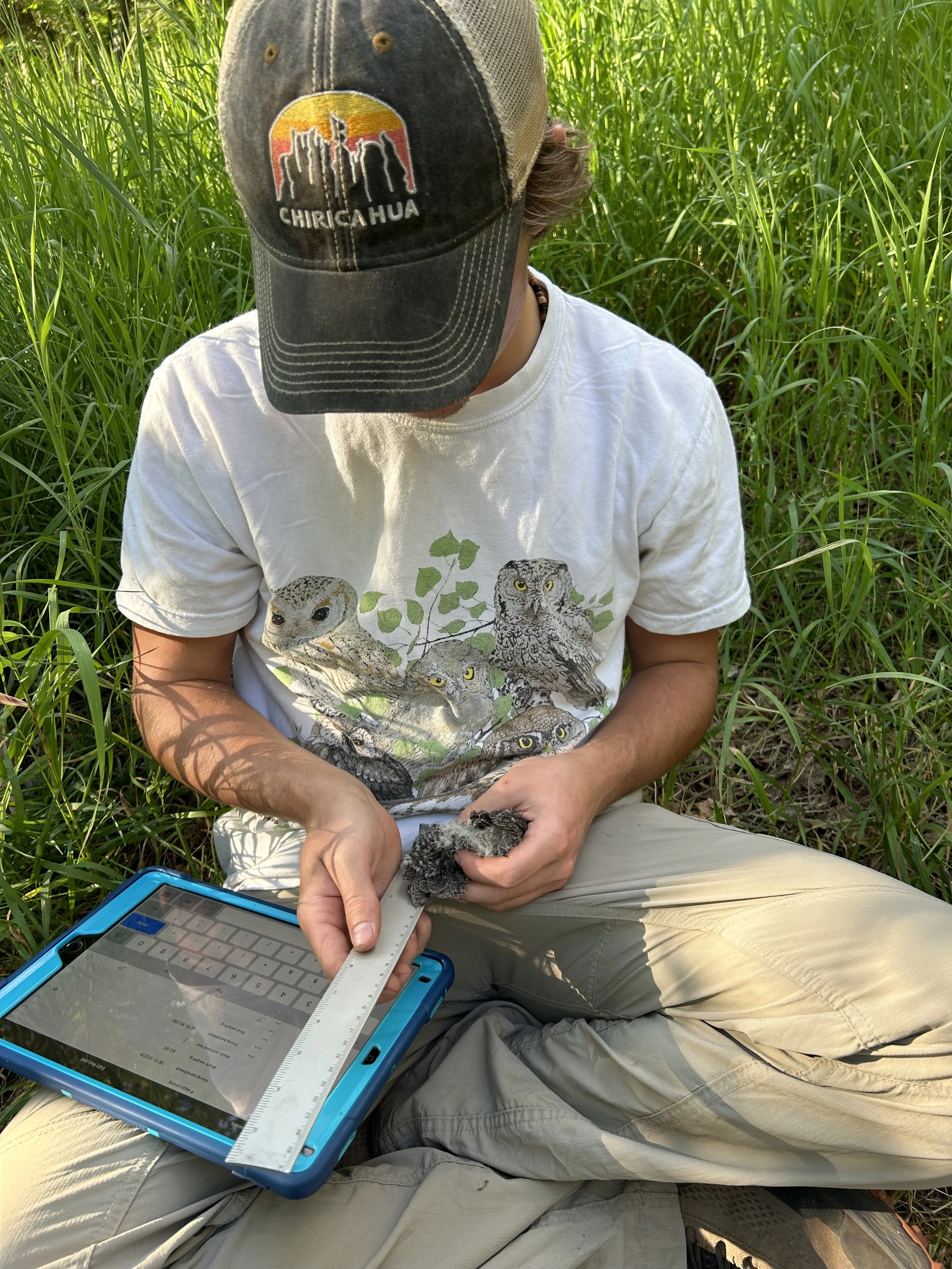
Taking measurements of a FLOW nestling.
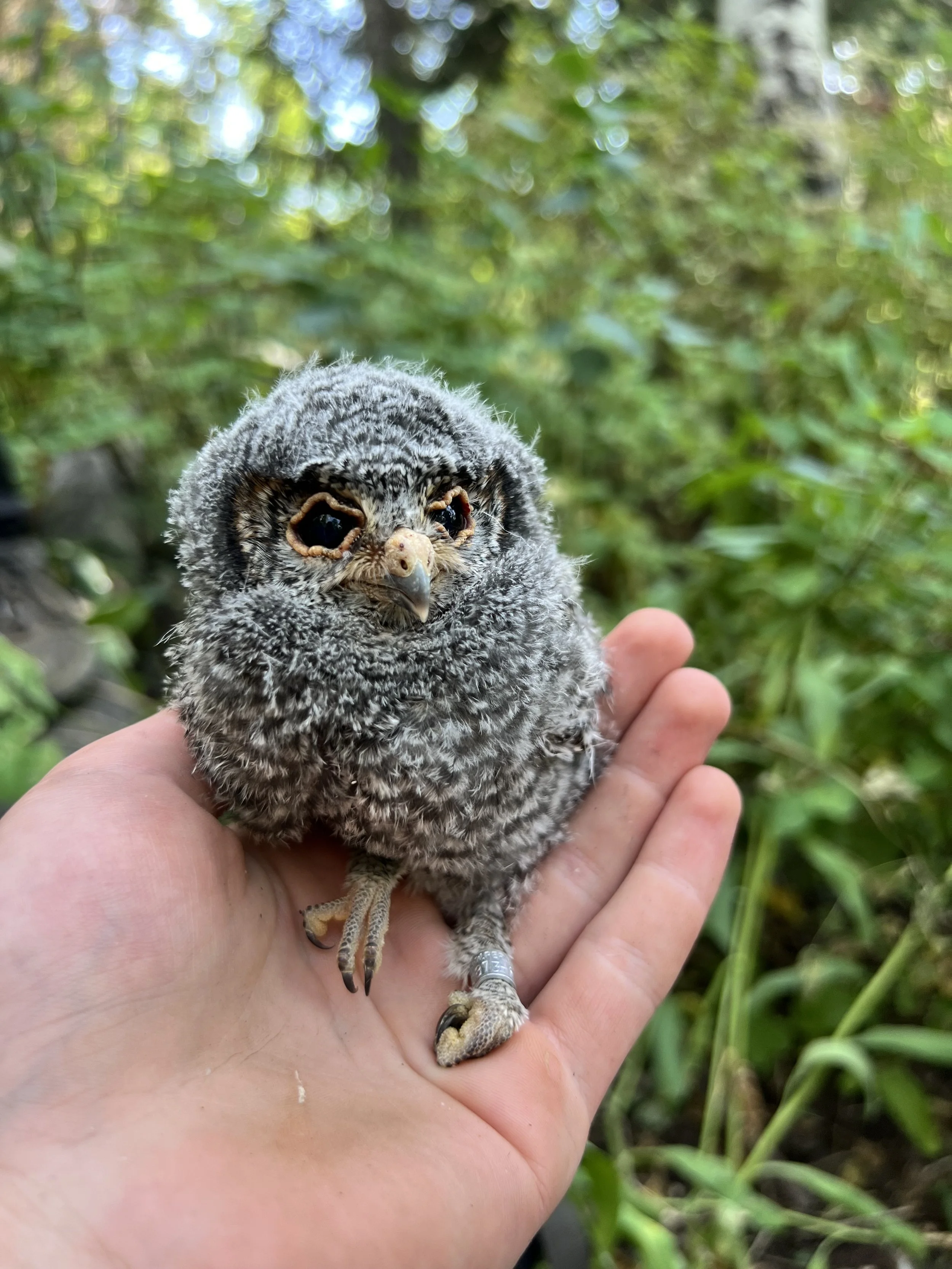
Flam nestling looking like a stuffed sock.
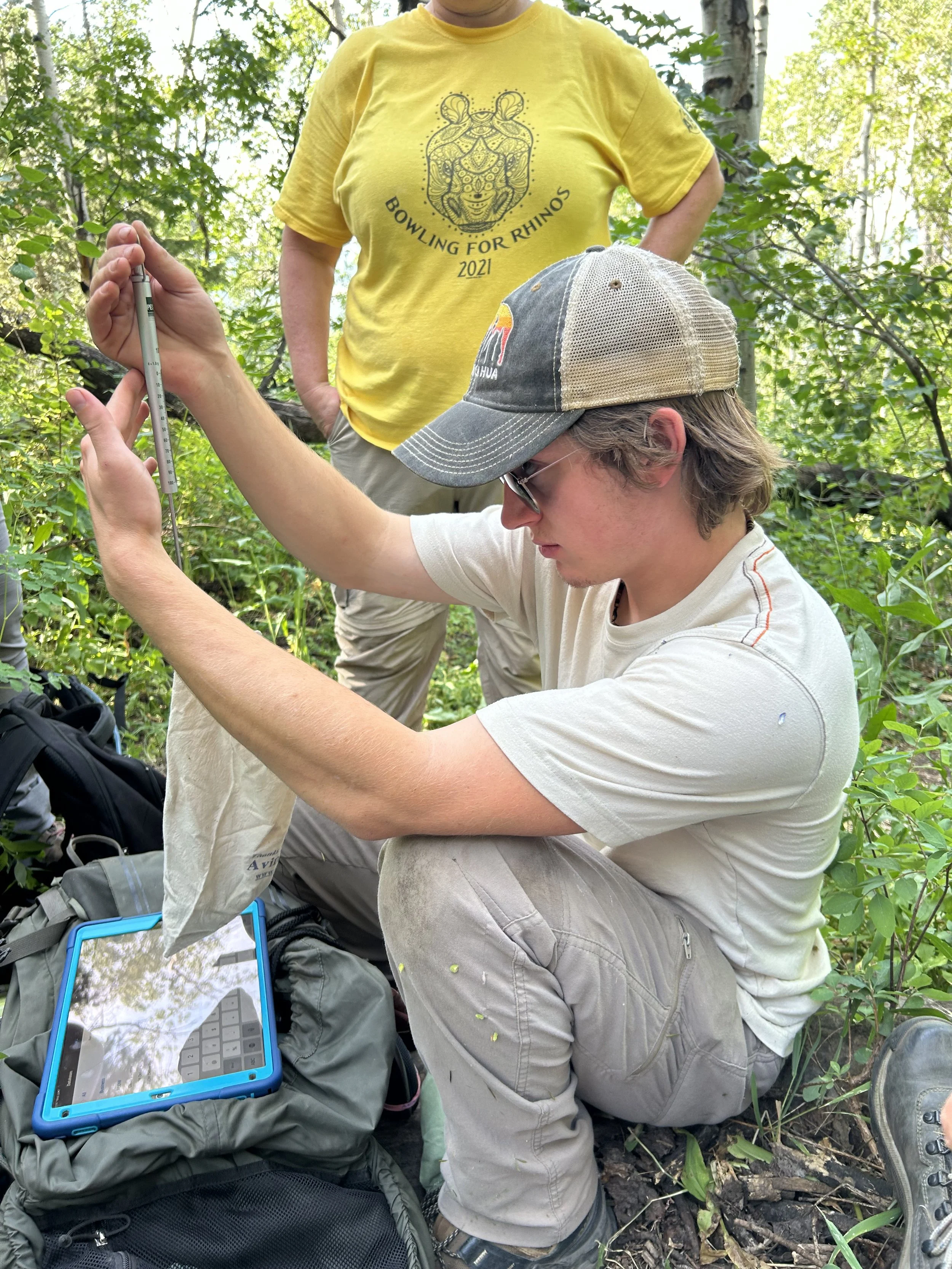
Recording the weight of a FLOW nestling.
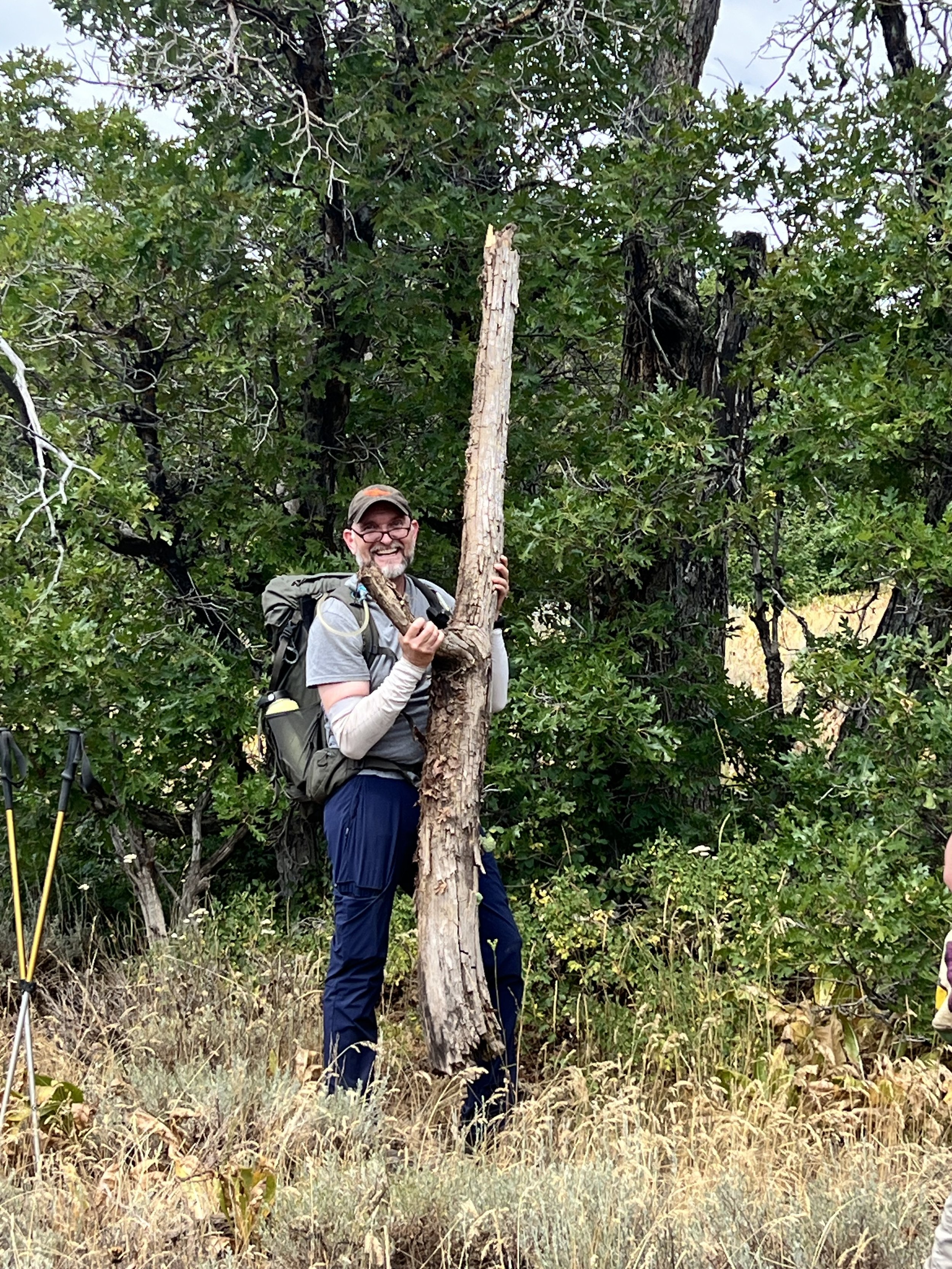
Markus with a branch of a tree that he has a history with.
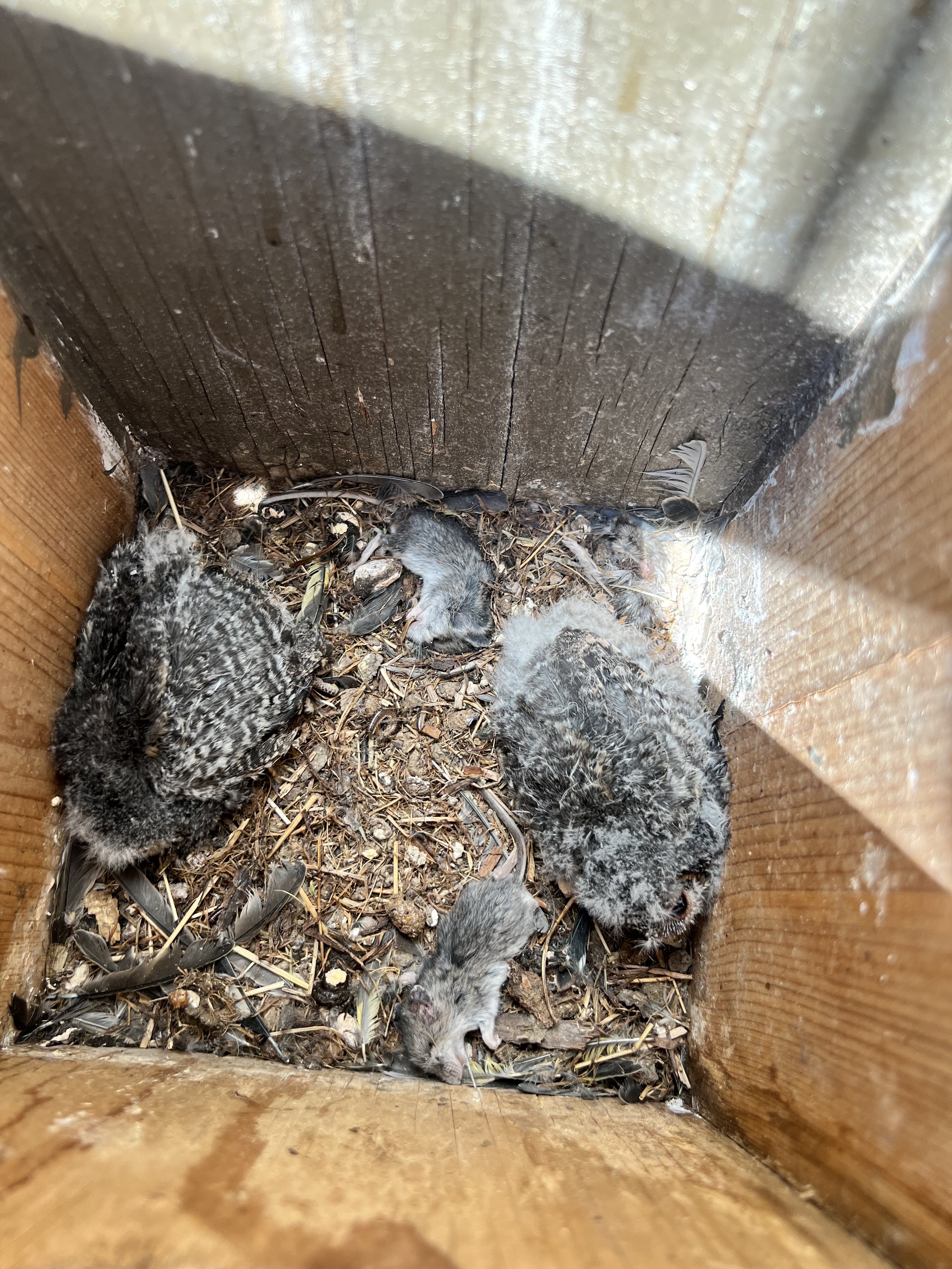
Two nestling FLOW's sleeping away in their nest box.
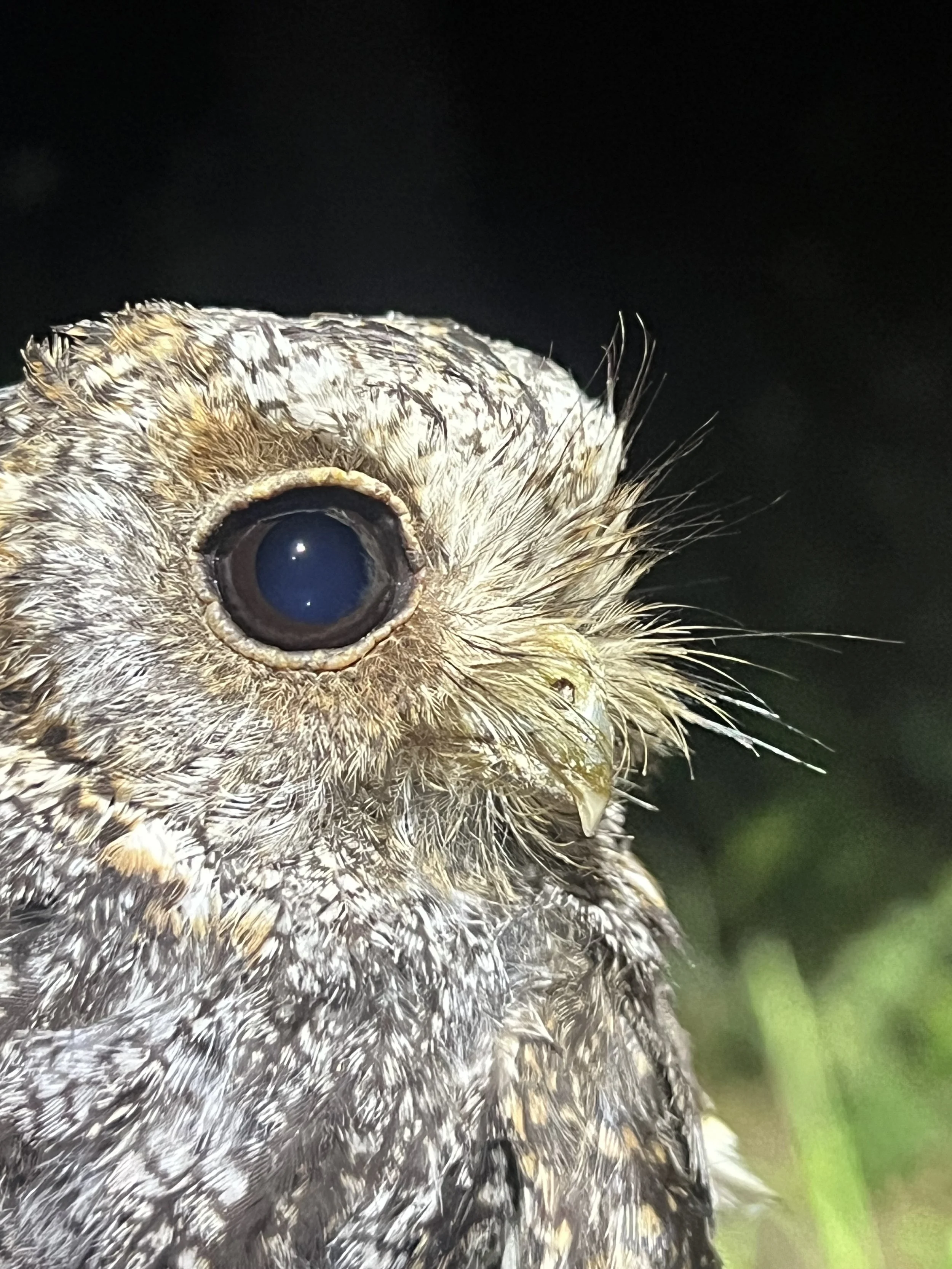
Close-up of an adult FLOW. Noticed their eyes are actually dark brown.
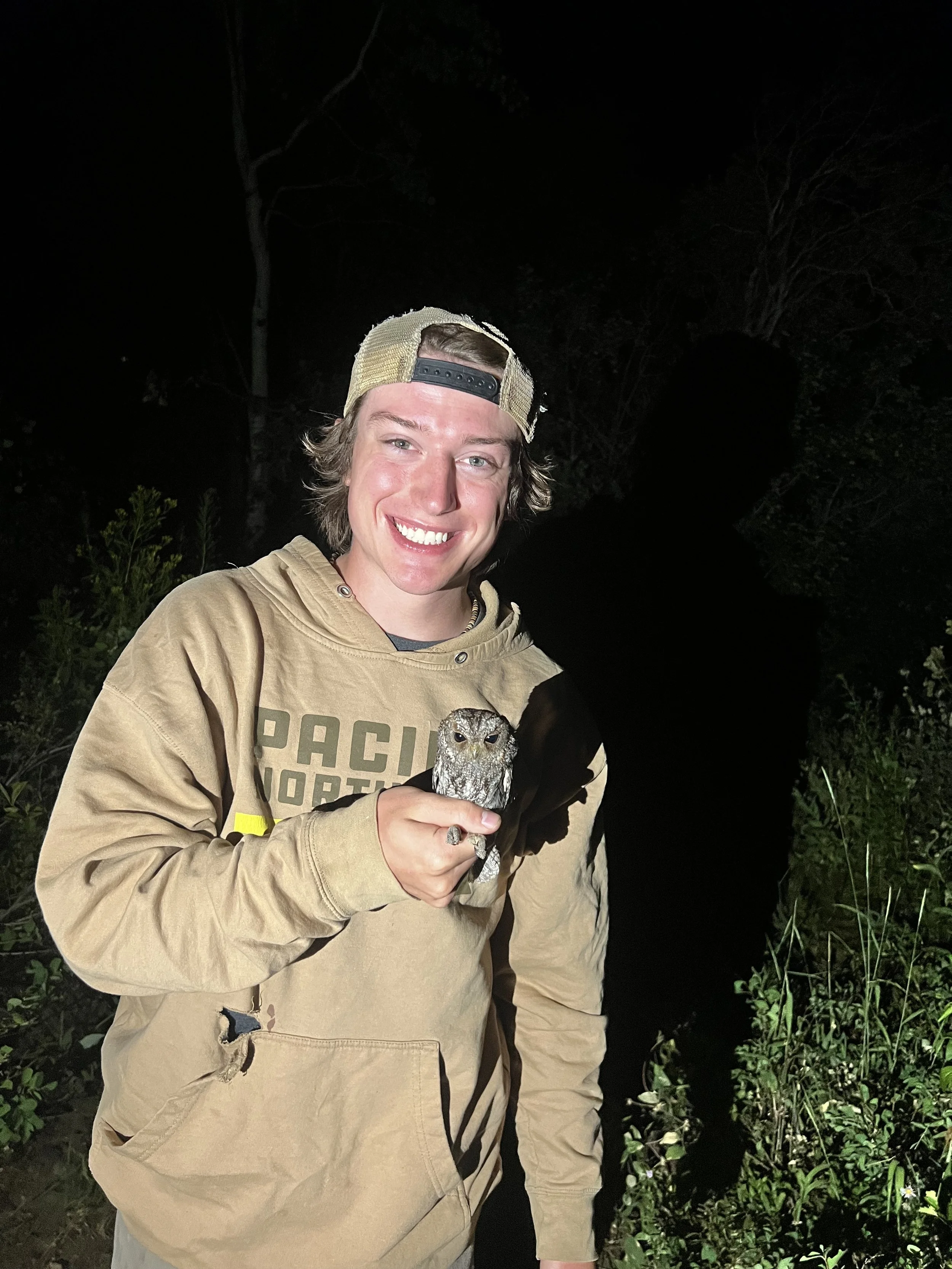
Quick photo with a Flam.
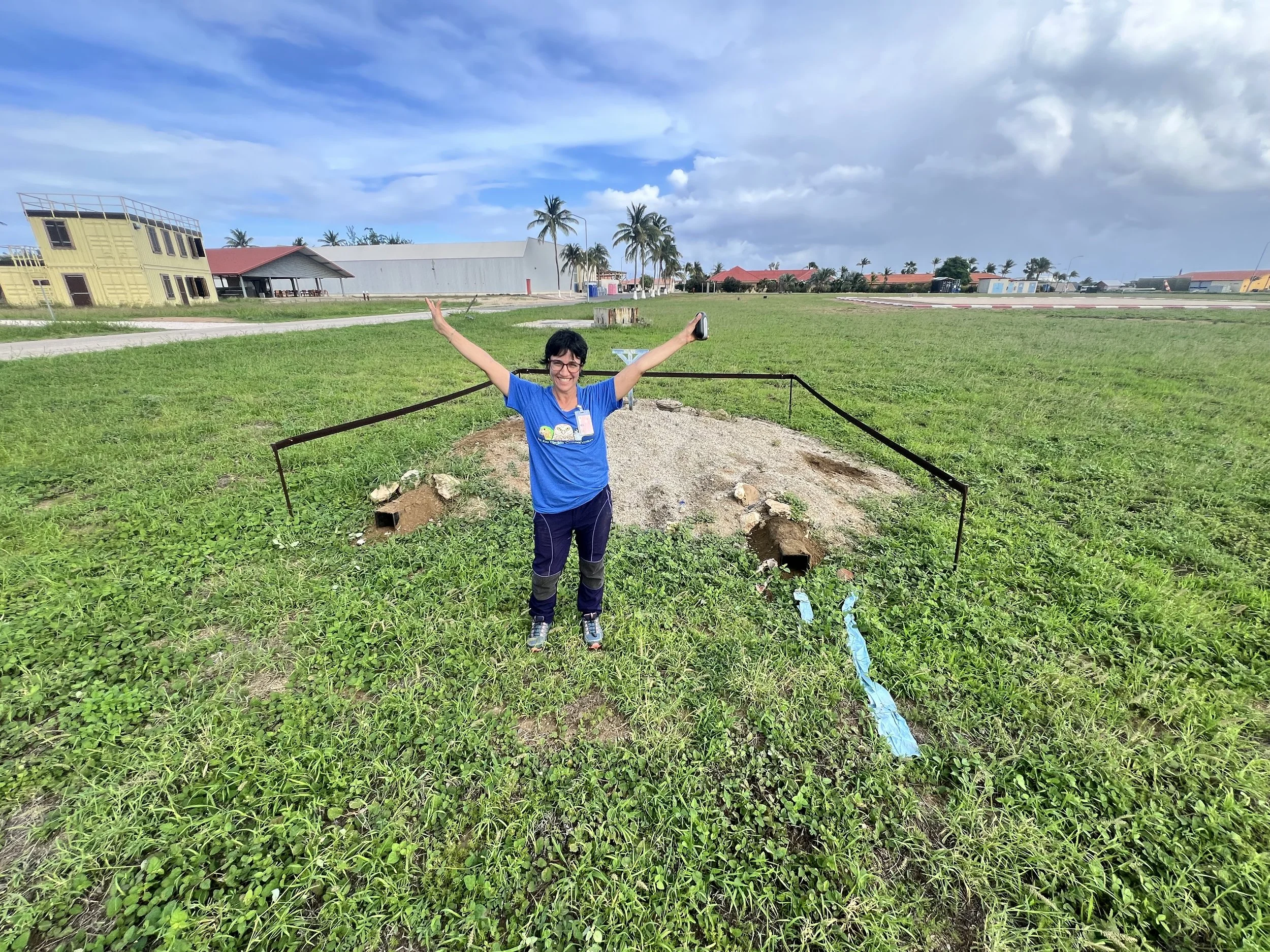
Anahi standing proud next to an artificial BUOW site in Aruba.
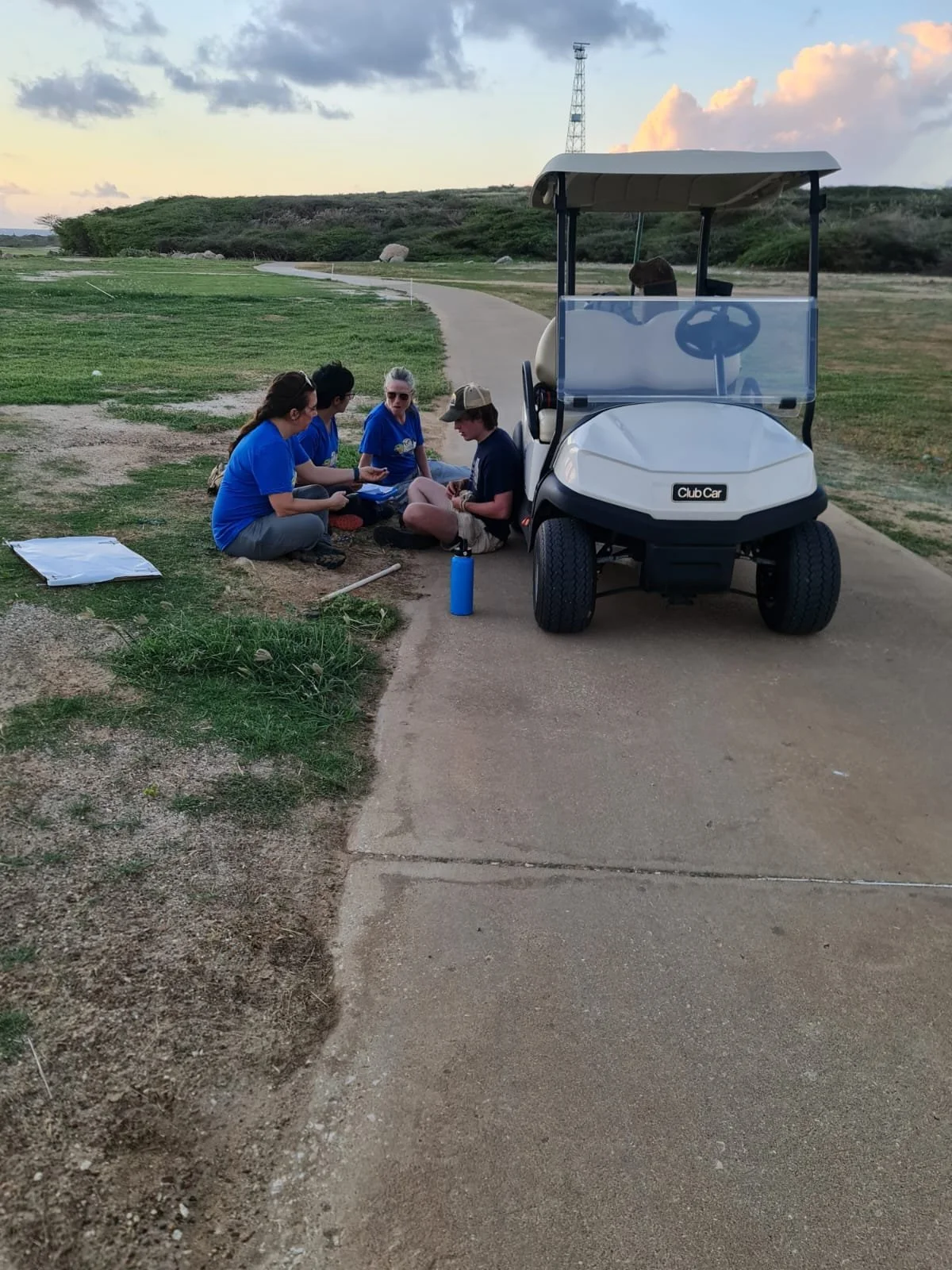
Lia, Anahi, Cynthia, and I collecting measurements of a Shoco.
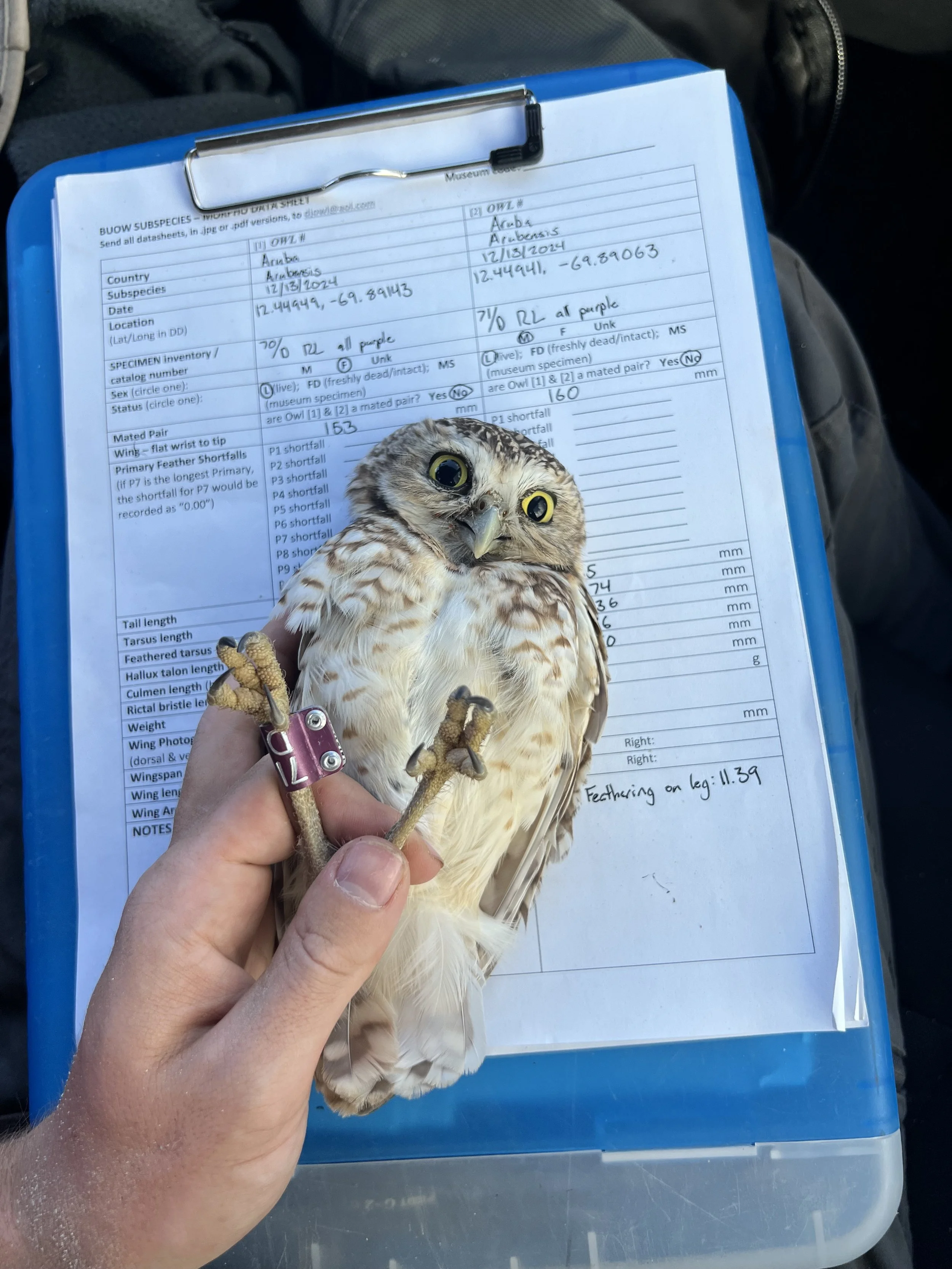
A Shoco, the Aruban name for Burrowing Owl, gives us some morphological measurements.
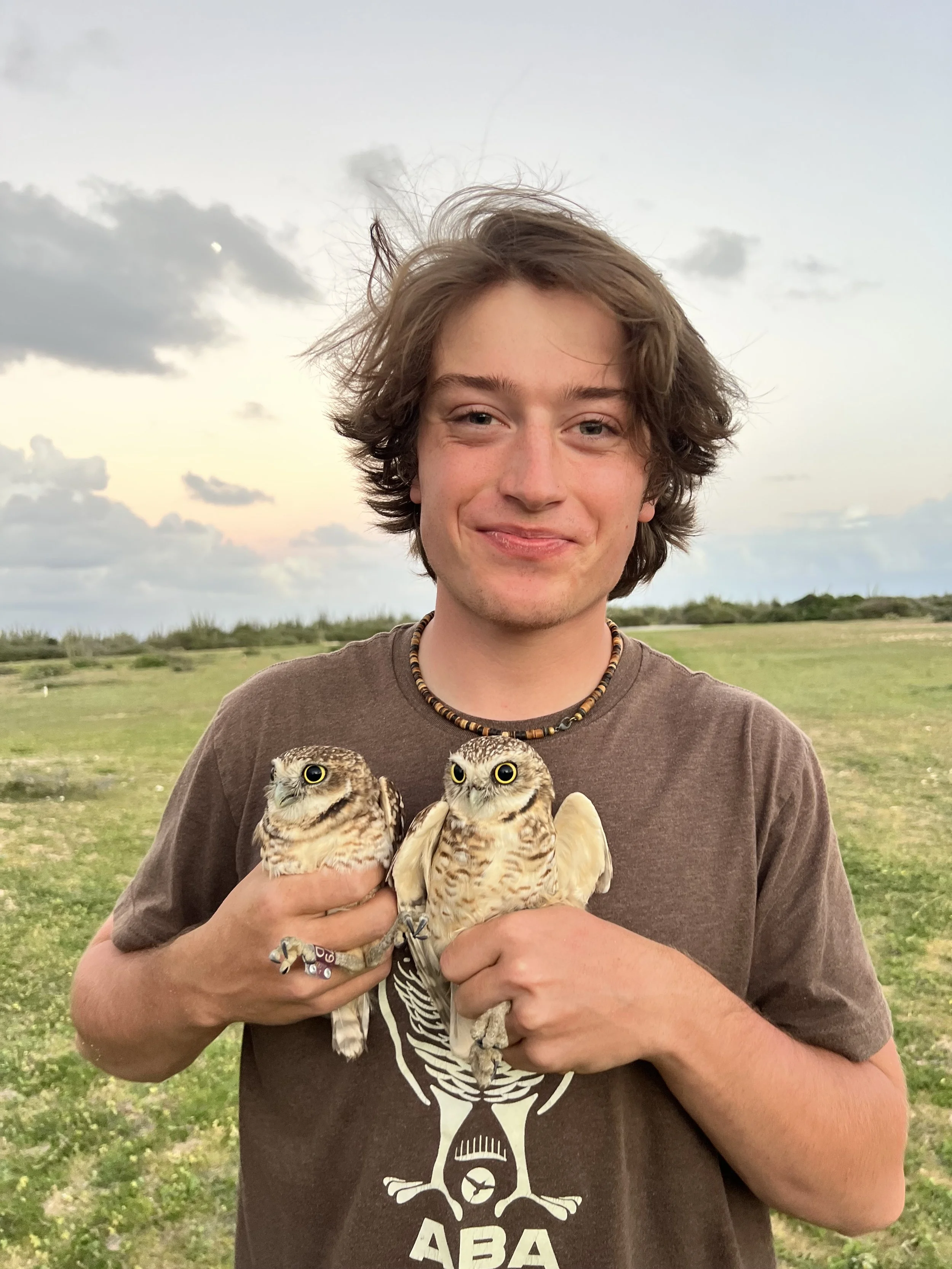
Me with a pair of Shocos.
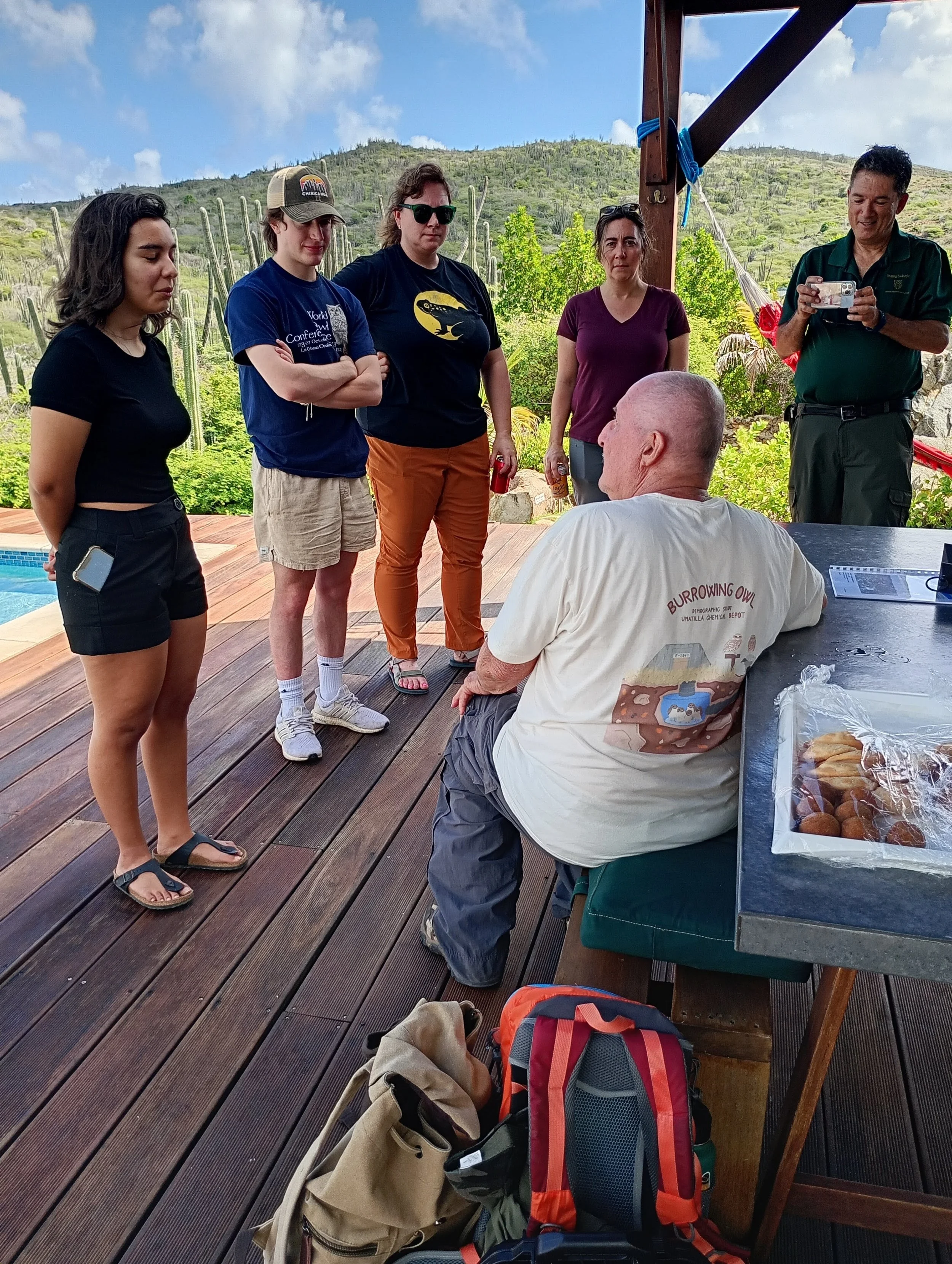
DJ talking to the group.
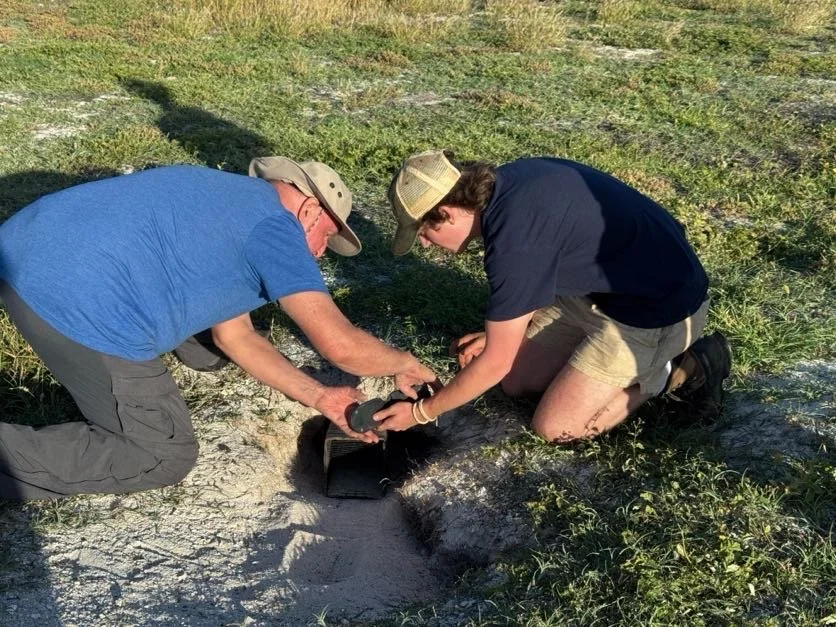
DJ and I setting up a trap.
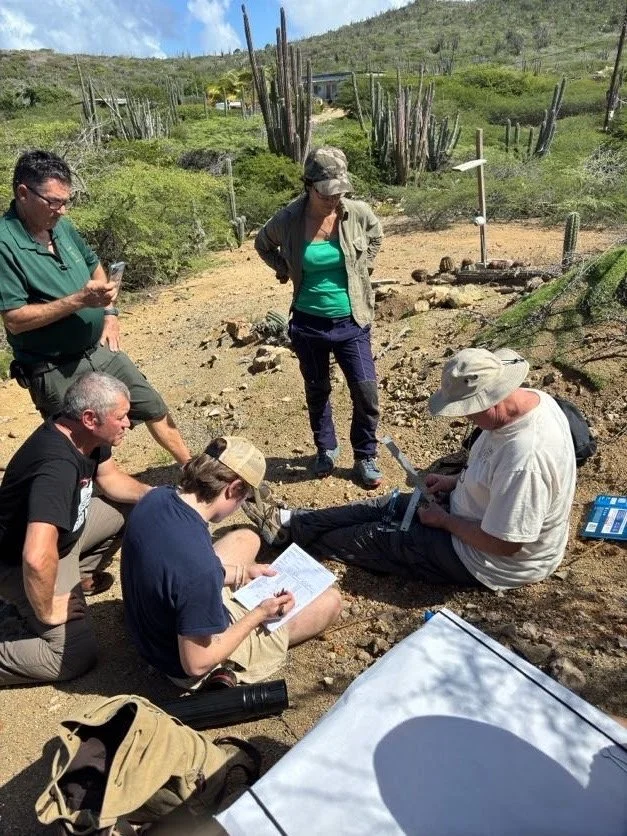
The team working.
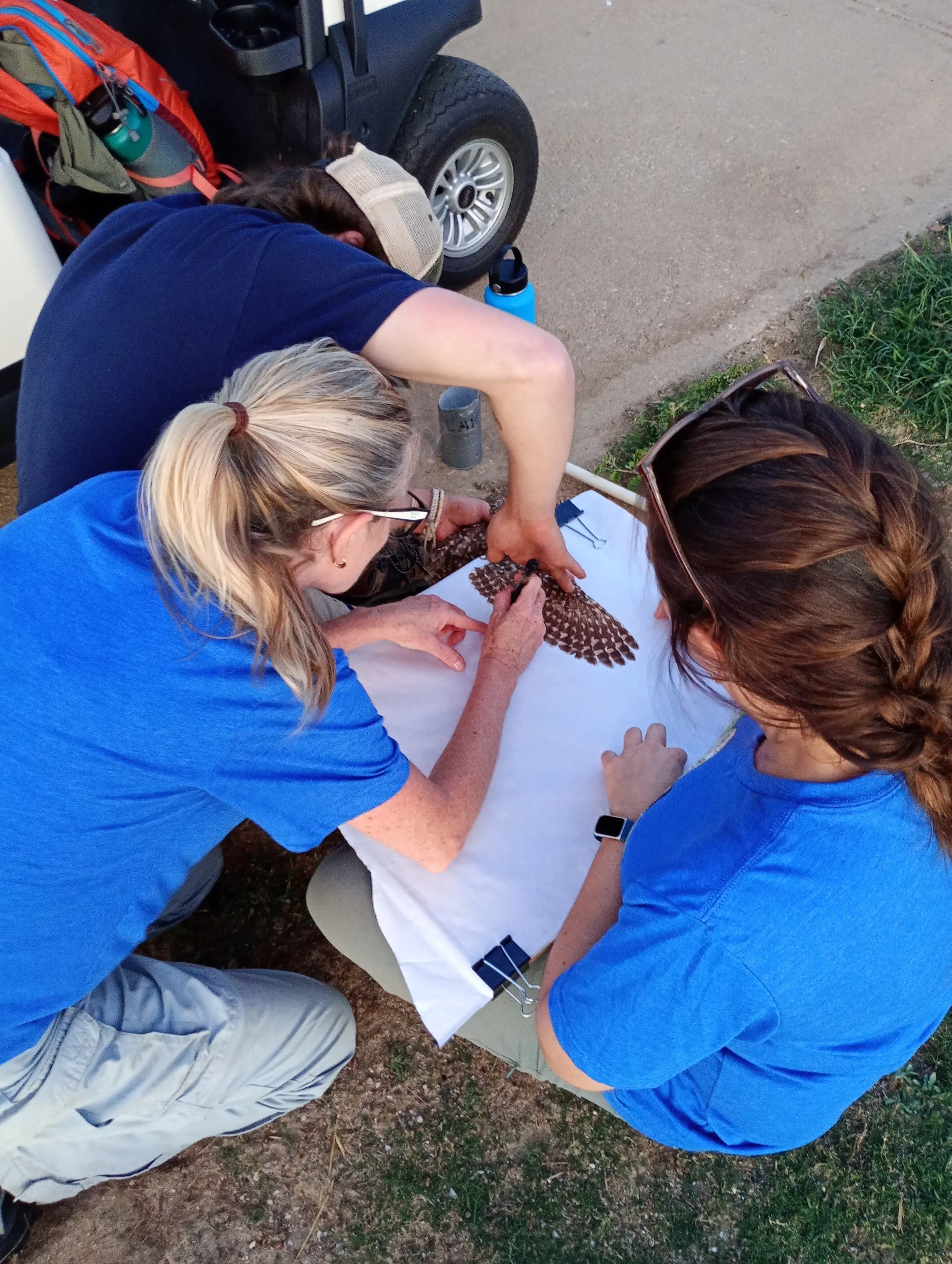
Recording the wing surface area of a Shoco.
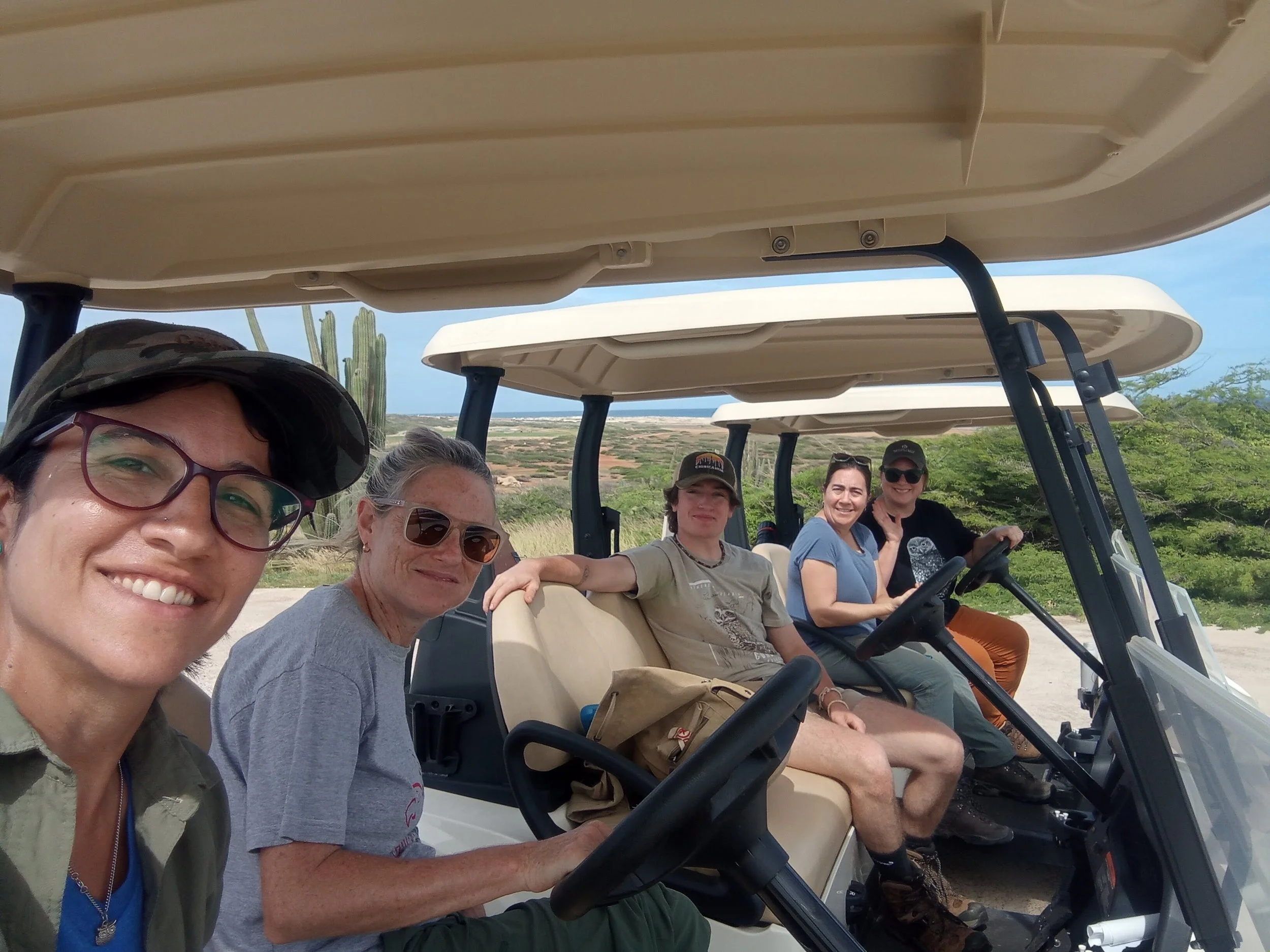
Anahi, Cynthia, myself, Lia, and Lauren all posed for a picture in our golf carts.
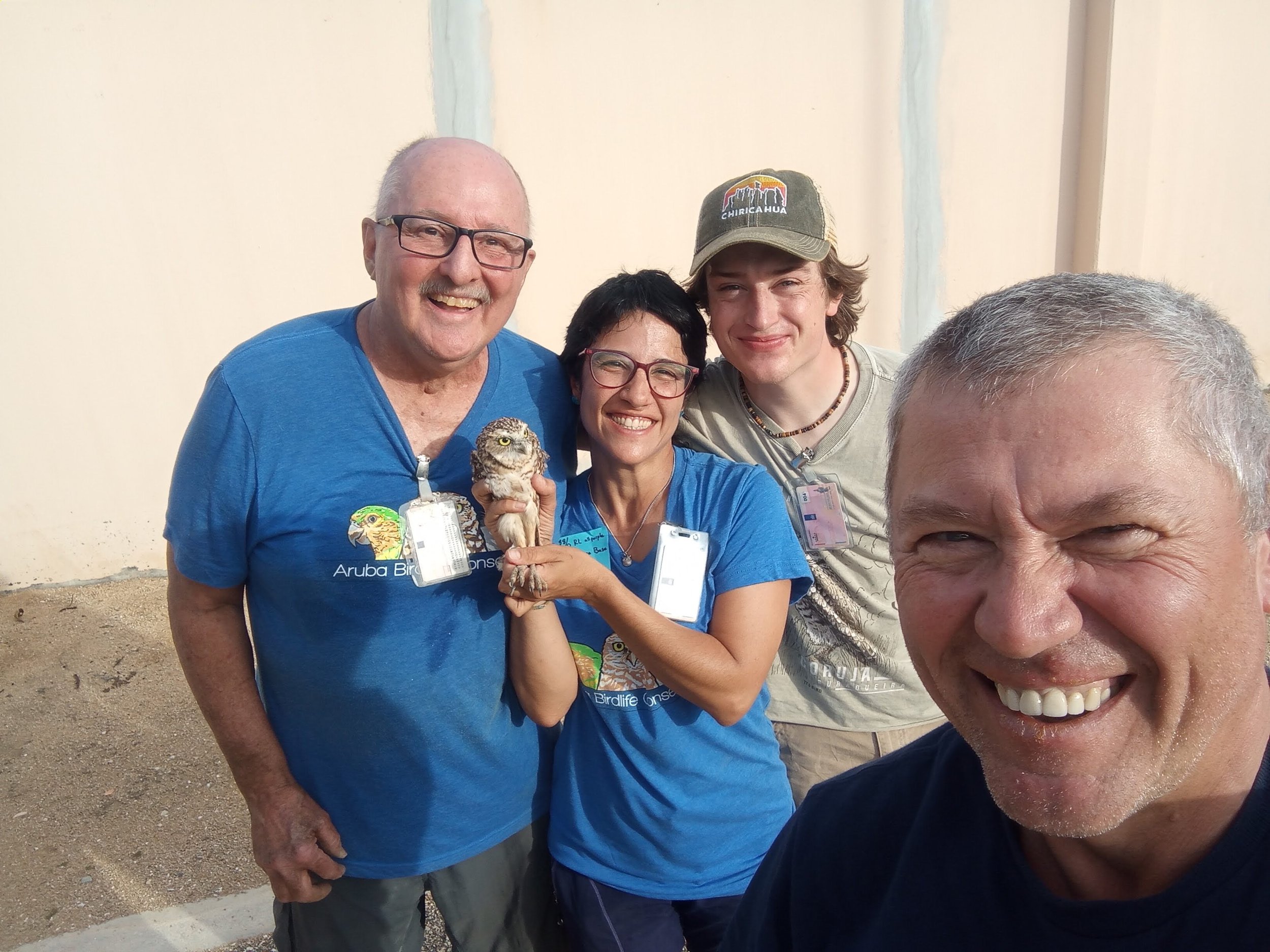
Selfie with DJ, Anahi, me, Dries, and a male Shoco.
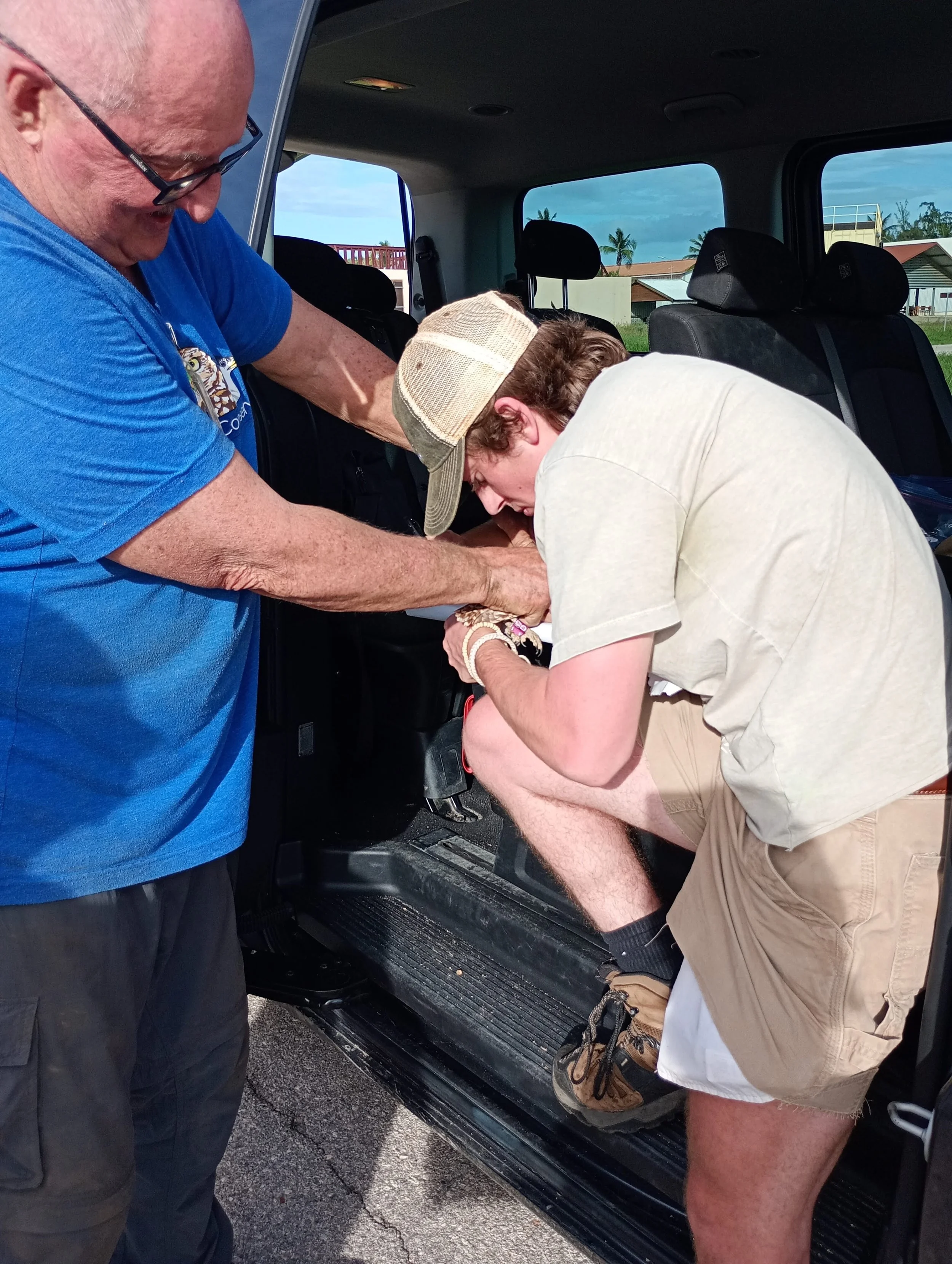
DJ and I recording some measurements.
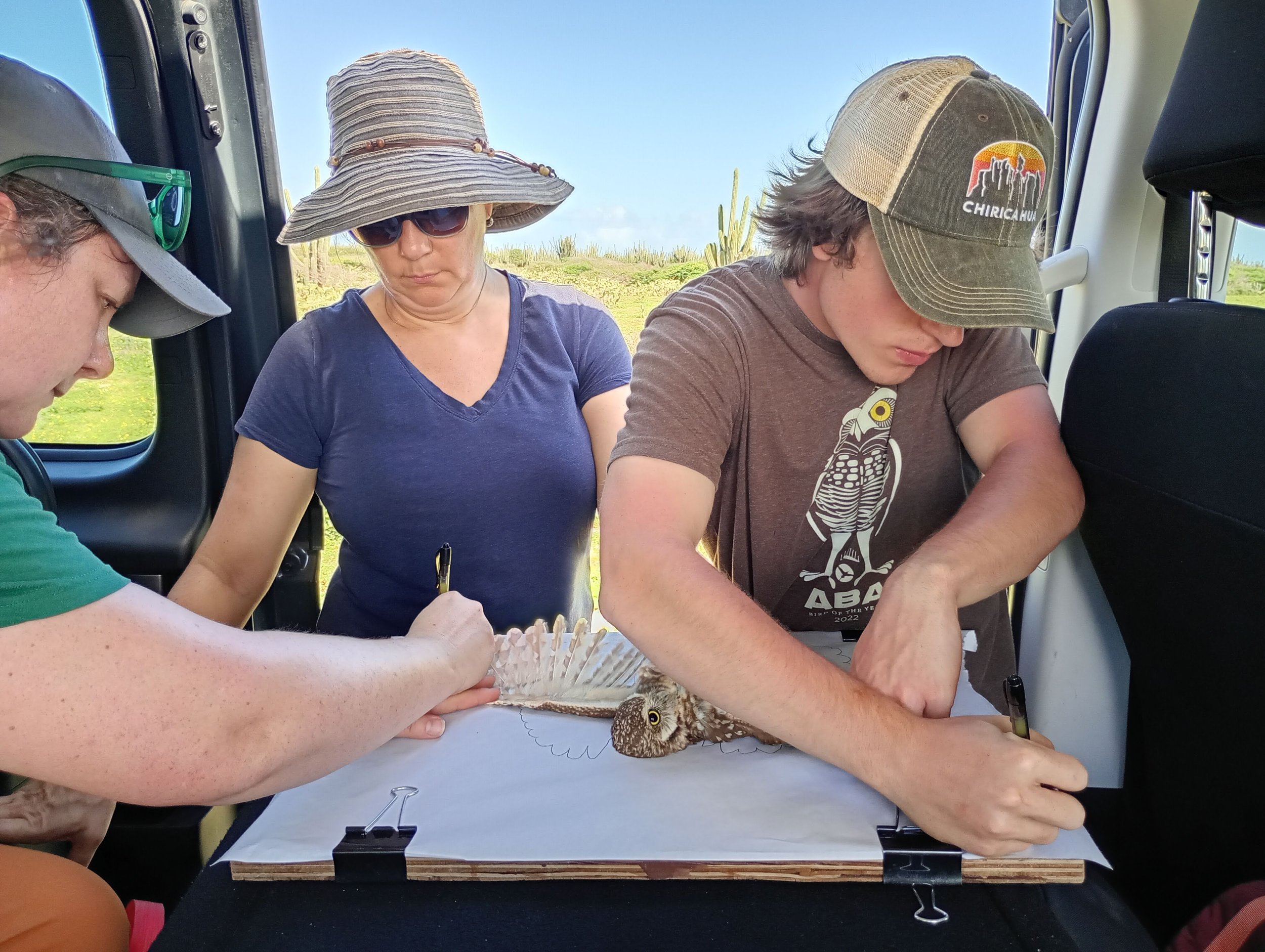
Lauren, Lia, and I measuring wingspan.
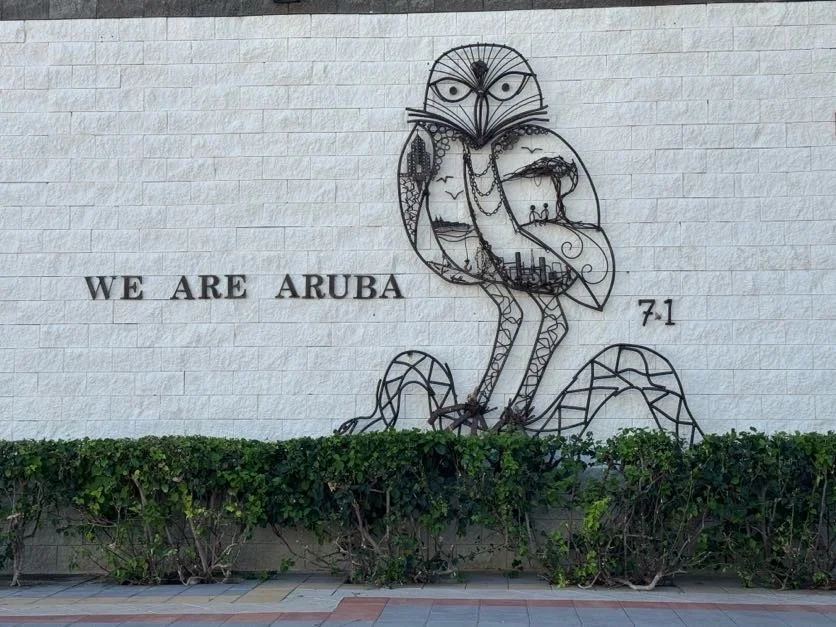
Local Aruban art.
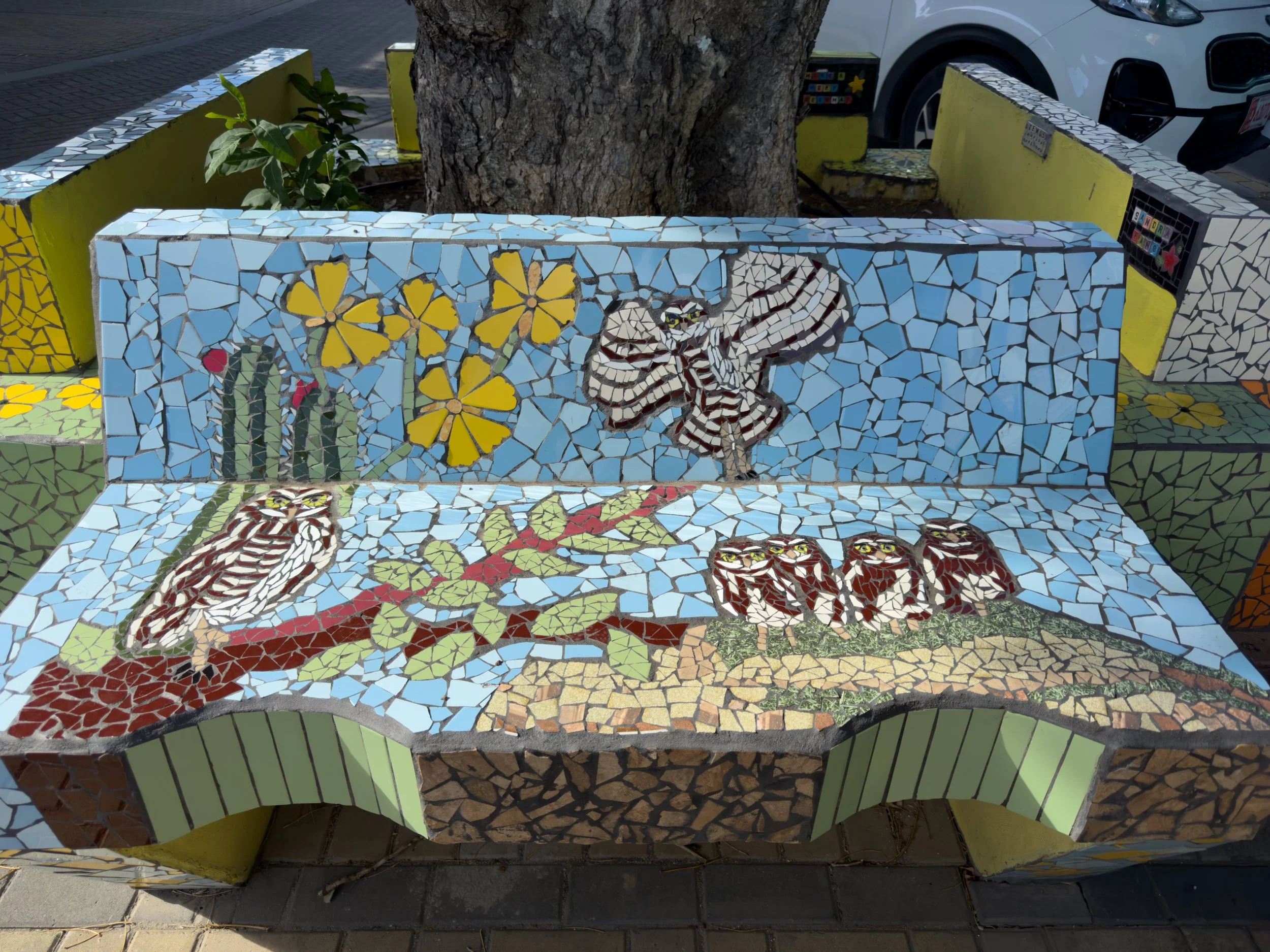
A beautiful bench showcasing a family of Shocos.
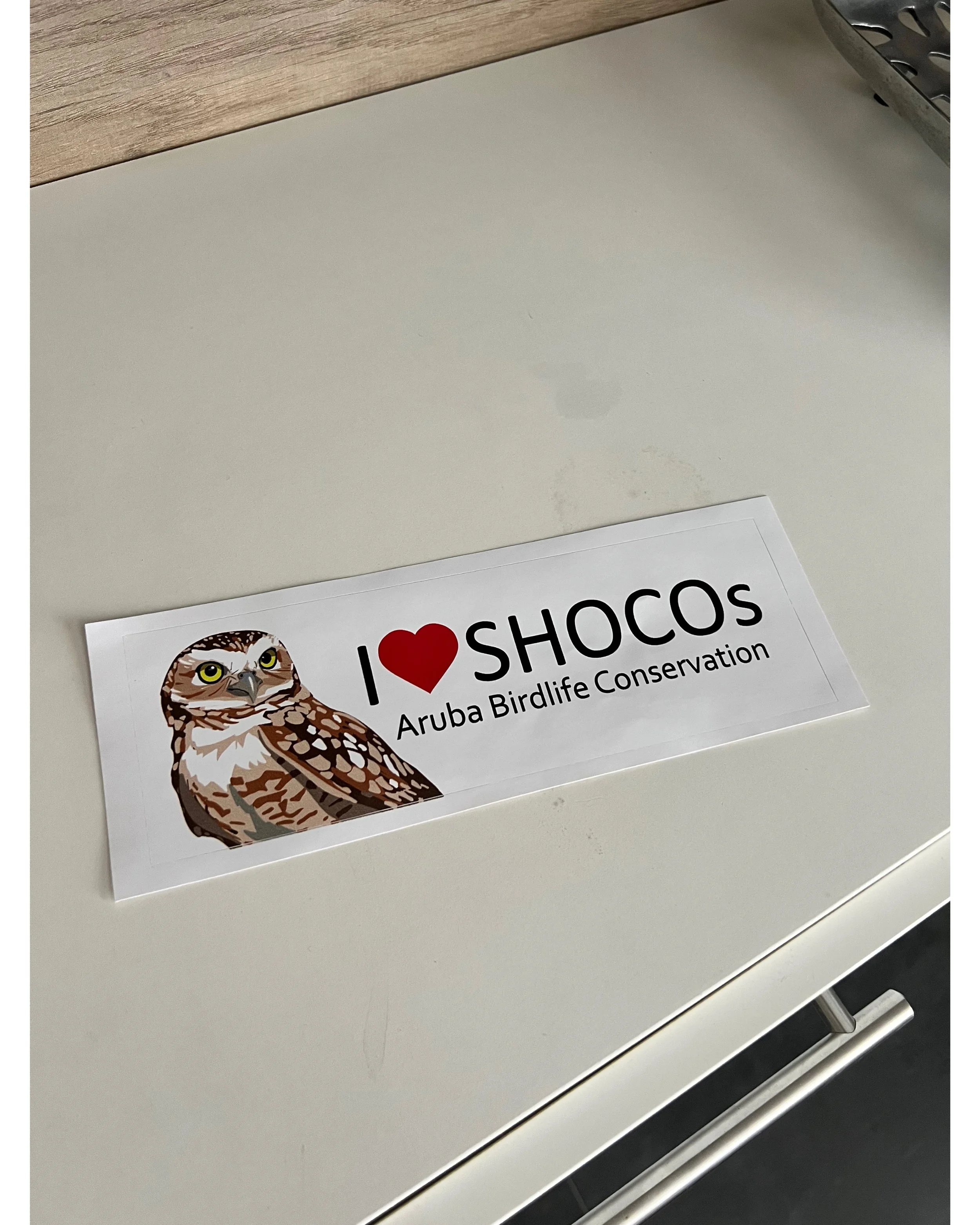
An amazing bumper sticker!
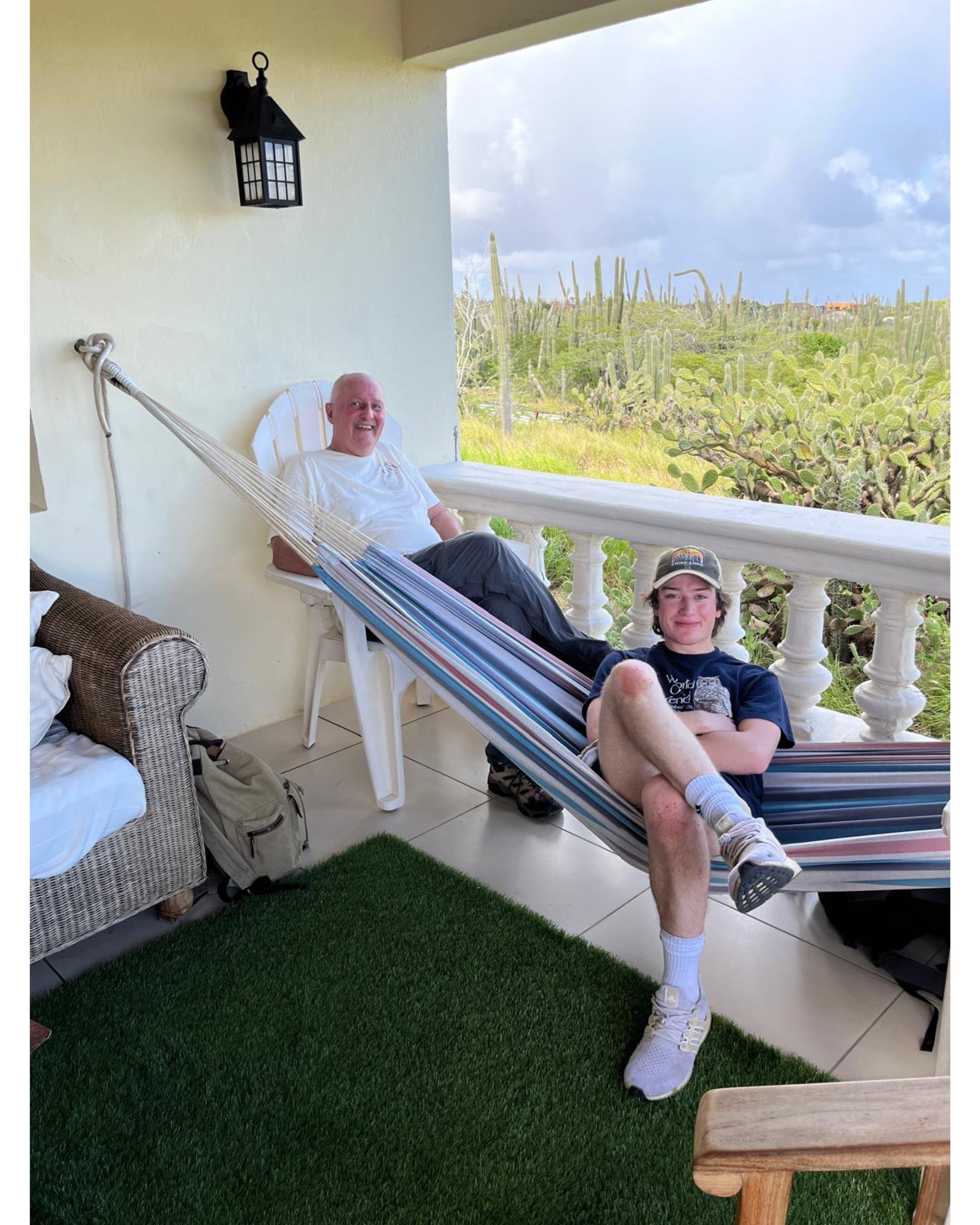
DJ and I taking shelter from the Aruban sun.
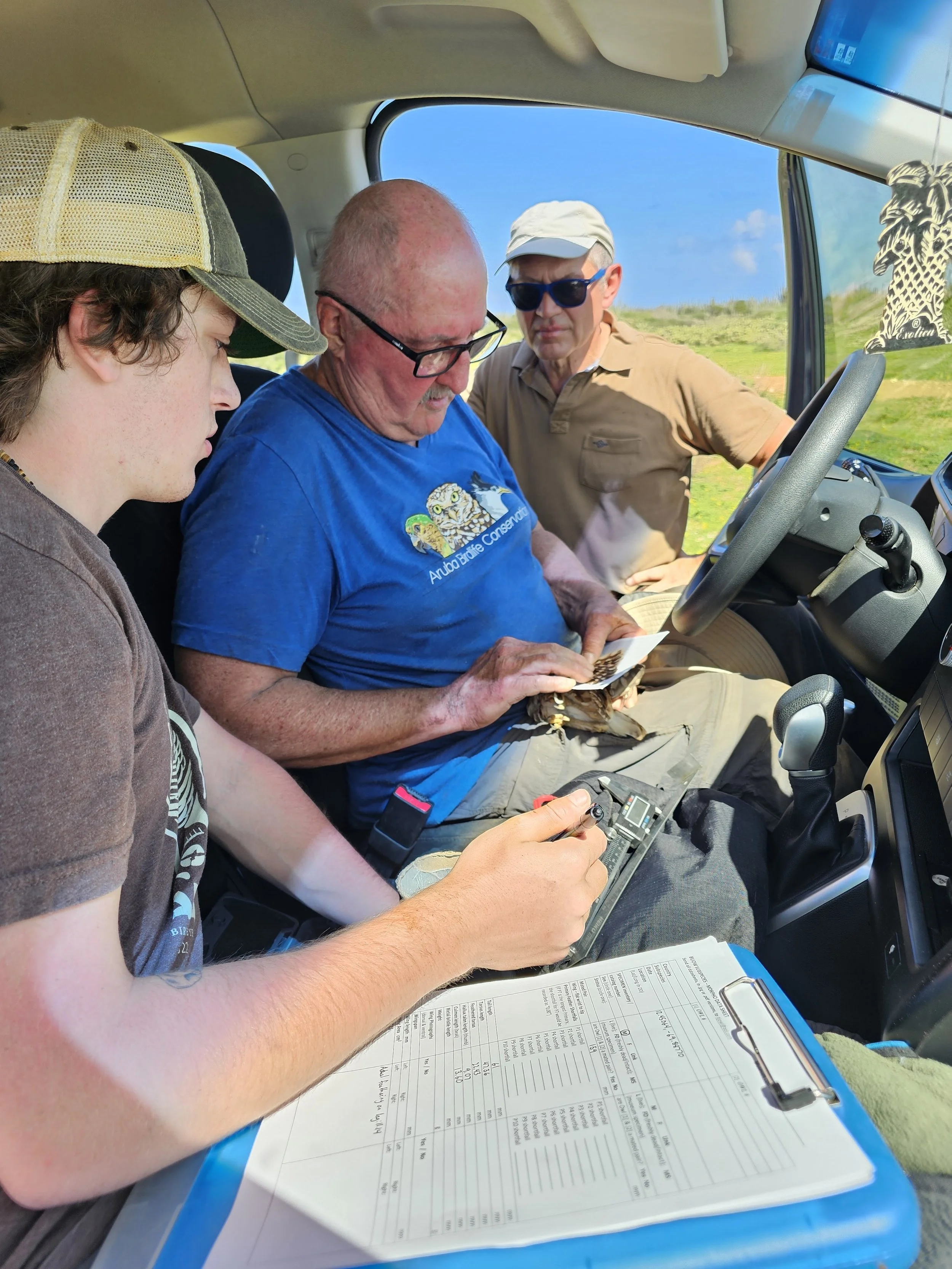
Collecting the primary shortfalls of a Shoco.